
Tea Collection: Da Hong Pao (Big Red Robe, China)
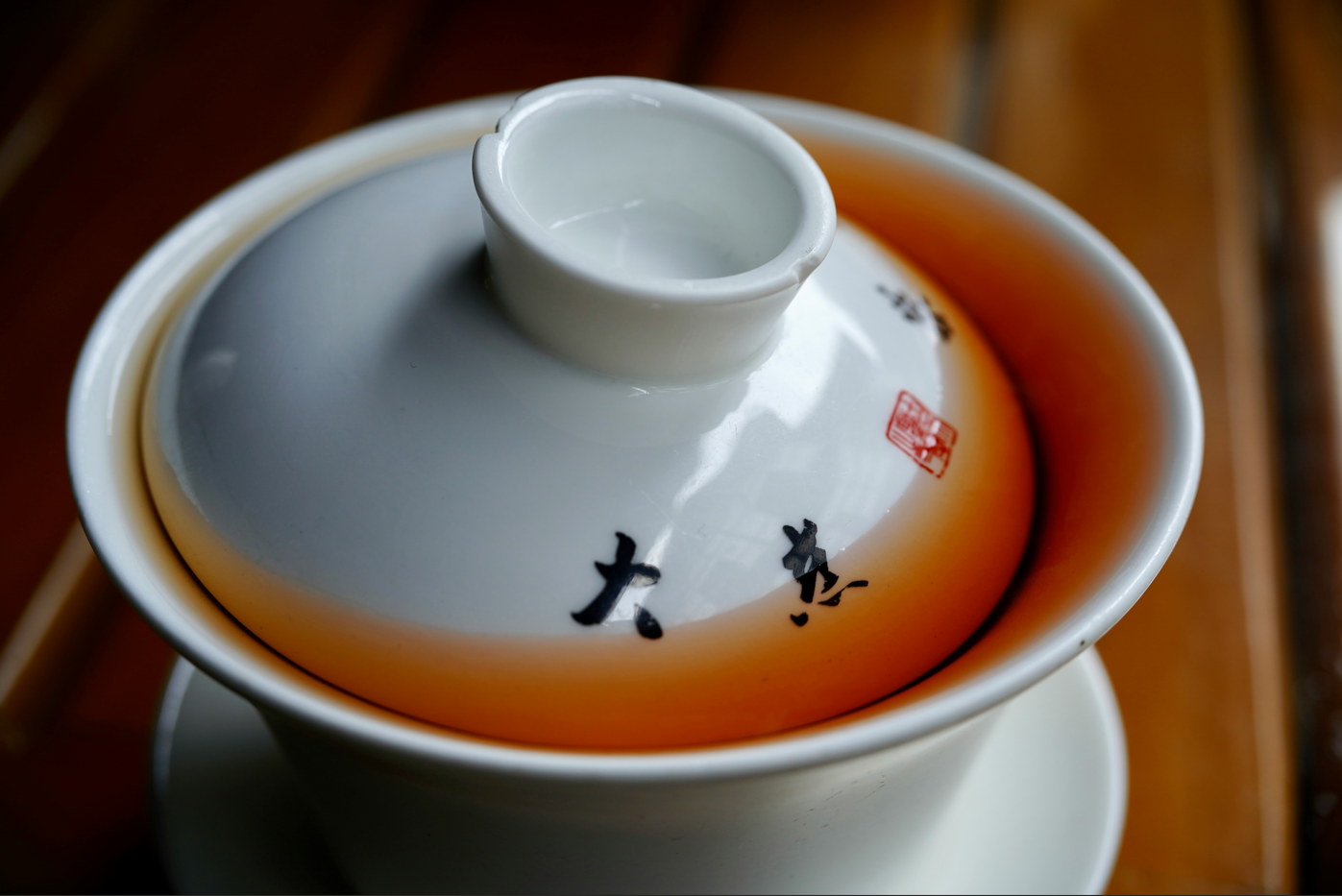
What is Da Hong Pao Tea?
Da Hong Pao is a tea wrapped in legend.
Grown in the ancient cliffs of Wuyi Mountain in Fujian, this heavily roasted oolong is shaped by stone, mist, and the centuries-old roots of mother bushes said to be among the most valuable plants on earth. For generations, monks, emperors, scholars, and travellers have brewed this tea in pursuit of something deeper — a flavour that feels carved from the rock itself.
In the cup, Da Hong Pao is warm and mineral-rich, with layers that unfold like the shaded pathways of the Wuyi canyons. Roasted charcoal notes give way to florals, then to caramel, then to the quiet sweetness of dried fruits. Its structure is bold but elegant: a tea of patience, complexity, and presence.
To understand Da Hong Pao, it helps to step into the broader world of oolong craftsmanship. High-mountain Taiwanese profiles such as Dong Ding Oolong reveal how altitude shapes butteriness and fragrance, while floral Chinese teas like Tie Guan Yin show what lighter oxidation can express. For a full cultural context, readers can explore The Art of Asian Tea to see how Wuyi rock teas fit into the map of China’s tea heritage.
Da Hong Pao also holds a quiet kinship with teas known for aromatic depth — such as the honeyed grace of Oriental Beauty and the apricot-like warmth of Osmanthus Oolong. Each expresses fragrance differently, yet all share a devotion to craftsmanship and tradition.
And when you want to understand roasted balance, contrasting teas such as Gunpowder Green Tea help illuminate how heat transforms structure, aroma, and texture.
Da Hong Pao is not a casual tea.
It is a story — a deep, mineral echo of the cliffs that shaped it.
Ingredients
5–7 g Da Hong Pao (Wuyi rock oolong)
150–200 ml water (95–100°C)
Equipment Needed
Gaiwan or Yixing clay teapot
Kettle
Tea pitcher (optional)
Strainer (optional)
Method
Heat water to a full boil.
Warm the gaiwan or clay pot, then discard the water.
Add Da Hong Pao leaves.
Rinse quickly (1–2 seconds) to awaken the aroma.
Steep for 5–10 seconds for the first infusion — rock oolongs open fast.
Increase time slightly with each infusion.
Expect 6–8 strong steeps, each revealing new layers.
Notes
Da Hong Pao rewards attentive brewing.
Go lighter for florals, deeper for roasted warmth.
Because of its mineral structure (yan yun, the “rock rhyme”), the aftertaste lingers long after the sip — a signature of true Wuyi craftsmanship.
For further contrast and exploration, floral and aromatic teas like Jasmine Silver Needle offer a gentler pathway, while grounded herbal notes in Hibiscus reveal how acidity and fruit interact with roast-driven teas.
