Tea Collection: Hibiscus (Roselle)
Inside the Tea
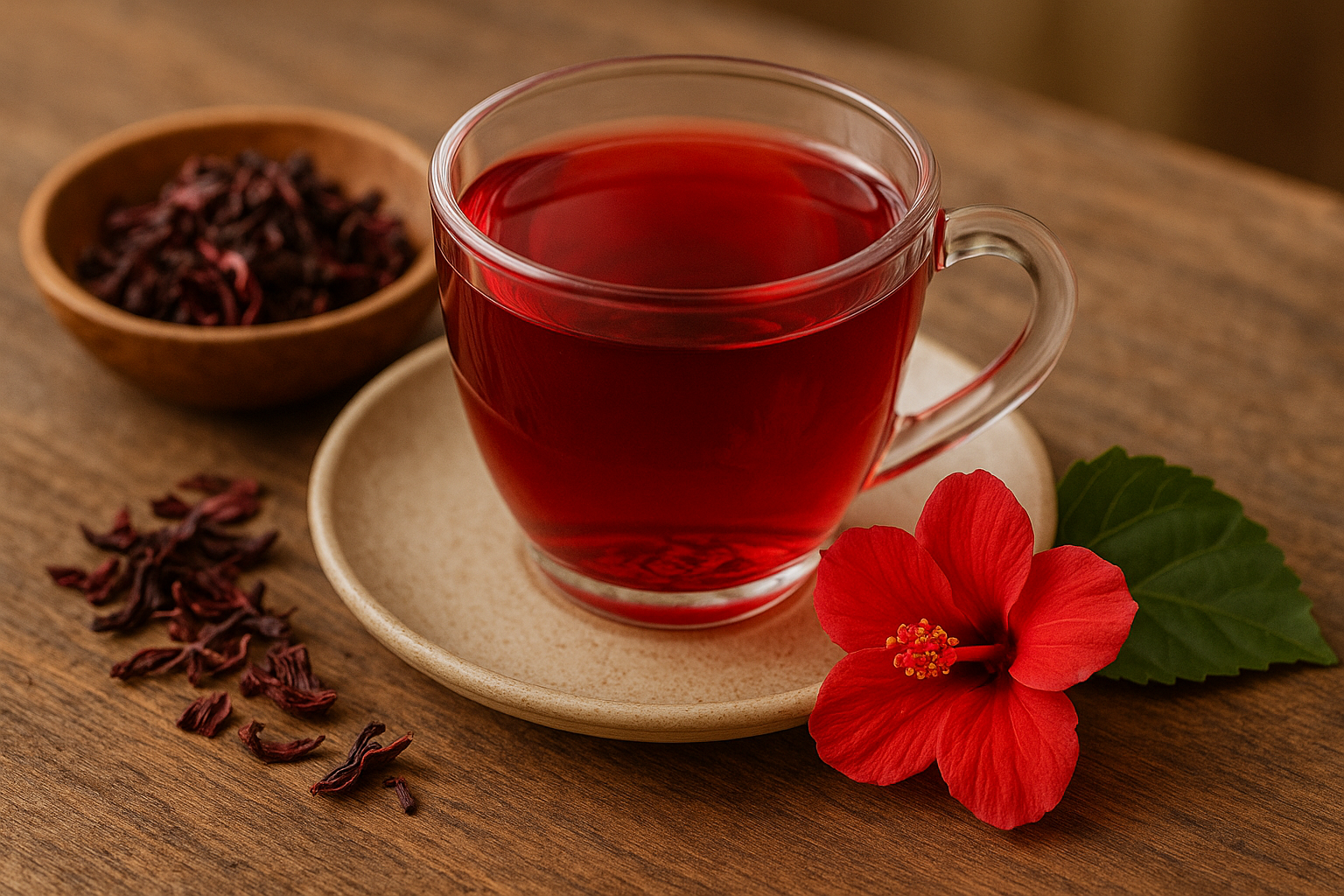
The first thing that strikes you about hibiscus is its colour—a liquid ruby that glows from the glass with almost otherworldly intensity. This vivid hue comes from the crimson calyces of Hibiscus sabdariffa, a flowering plant native to West Africa that has since taken root across the tropics. As the plant matures, its fleshy sepals swell around the seed pod, turning deep red. When harvest time comes, these calyces are plucked, dried, and preserved, locking in the tangy juice that will later dissolve in water with a flourish of red.
Hibiscus grows in places as diverse as the Sudanese plains, Thai homesteads, Egyptian gardens, and Mexican fields. In each culture, the drink is prepared differently: Egypt’s karkadé is served hot and sweet at weddings; Senegal’s bissap is blended with mint and pineapple; Mexico’s agua de jamaica is poured over ice on hot afternoons. The infusion carries with it the languages and customs of these regions, shifting in sweetness, spice, and even name, but always retaining a tart heart.
Processing hibiscus is simple and mostly sun-driven. After harvesting, the bright calyces are separated from the seed pods, then spread out to dry in the open air. The sun concentrates their colour and acid, transforming them into light, brittle forms. In many places, families gather to collect the dried hibiscus, storing it in woven baskets until it is needed. The simplicity of preparation—just calyces and heat—makes hibiscus a beverage that feels both accessible and honest.
In the cup, hibiscus offers a wine-like scent of berries and plums. One sip reveals a sharp, cranberry-like tartness that awakens the palate, followed by a fleeting floral sweetness and a puckering finish. Its acidity is bright, refreshing, and almost electric. Without sweetener, it can be bracing, but a touch of sugar or honey softens the edges into a more rounded fruit punch. When chilled, hibiscus becomes a thirst-quencher; when hot, it warms like mulled cider. Its versatility invites creativity—think of infusing it with spices like clove and cinnamon or pairing it with citrus or ginger.
Beyond its sensory pleasures, hibiscus is often celebrated for its nutritional qualities. Traditional medicine credits it with cooling properties, and modern wellness trends praise its vitamin C content and antioxidant profile. But perhaps more than anything, hibiscus is about vibrancy. It is a drink that looks and tastes alive, whether sipped at a market stall in Dakar or in a kitchen far away from its roots. When you brew hibiscus, you are capturing a little bit of tropical sunlight in a cup.
What People Notice Most Often
Tart, berry-like flavour reminiscent of cranberries or pomegranate
Deep ruby-red colour that intensifies with steeping
Naturally caffeine-free and suitable for all ages
Refreshing served iced, comforting when hot
Benefits from a touch of sugar or honey to balance acidity
Rich in vitamin C and antioxidants
Versatile: pairs well with spices like ginger or clove
Often used as a base for Caribbean sorrel, Mexican agua de jamaica, Egyptian karkadé
Steeping time and temperature influence tartness
Leaves a pleasantly puckering, clean finish
Tea at a Glance
Overview
Hibiscus isn’t technically tea but an herbal infusion made from the bright red calyces of Hibiscus sabdariffa. Celebrated in Africa, the Middle East, and the Americas, it yields a vivid red drink with a tart flavour and tangy finish. Caffeine-free and packed with tang, hibiscus is both an everyday refresher and a festive staple.
The Experience
Expect a rush of tartness akin to cranberries, balanced by subtle floral sweetness. The infusion pours an intense ruby colour and offers a crisp, refreshing finish. Hot, it feels warming and slightly spiced; iced, it’s cooling and vibrant.
Brew Notes to Try
Traditional Hot Brew
Steep dried calyces in boiling water for 5–7 minutes; sweeten to taste.Cold Brew
Soak overnight in cold water; results in a softer, less acidic flavour.Spiced Hibiscus
Add ginger, cinnamon, or clove while steeping for warming depth.Hibiscus-Mint Cooler
Combine with fresh mint and a squeeze of lime; serve over ice.Hibiscus-Chai Blend
Mix with black tea and spices for a tart, fragrant twist on masala chai.
Why People Love It
Hibiscus captivates with its ruby colour and bold tang. It’s caffeine-free yet invigorating, and its versatility invites experimentation. Many also appreciate its reputation as a source of vitamin C and its association with celebrations and hospitality.
Good to Know
Completely caffeine-free
Use boiling water for hot brew
Steep 5–7 minutes; longer steep = stronger tartness
Sweeten lightly to round out acidity
Can stain fabrics and some teaware
Often included in cold-brew blends and herbal blends
Popular in Caribbean and West African cuisines
Where It Comes From
Native to West Africa; now grown in Sudan, Egypt, Thailand, Mexico, Jamaica, and beyond
Part of the Malvaceae family (not Camellia sinensis)
Harvest season: late summer to early autumn
Also known as roselle, sorrel, karkadé, and flor de jamaica