
Tea Collection: Assam
Inside the Tea
In the sweltering lowlands of the Brahmaputra Valley in northeastern India, the Assam tea plant flourishes in thick, humid air. This is not a mist-shrouded mountain range but a river-fed, sun-drenched plain where monsoons swell the riverbanks and saturate the soil. Here, under a sky often heavy with rain, vast fields of Camellia sinensis var. assamica push out broad, lush leaves built for heat and moisture. These bushes drink in the moisture and sun, yielding a tea that mirrors its landscape—robust, deep, and full of life.
Assam’s story is tied to both the land and human enterprise. Unlike the Chinese variety of tea, which had been cultivated for millennia, Assam’s native tea bushes were “discovered” by Scottish adventurer Robert Bruce in the 1820s and later developed into one of the world’s largest tea industries. British planters recognised that these trees produced large leaves with unique character—thicker, hardier, and capable of withstanding the region’s extreme climate. They grafted, experimented, and eventually cultivated thousands of acres, creating the backbone of India’s black tea production.
Harvesting and processing Assam is a balance of speed and care. The leaves are plucked during flushes in spring and summer, then quickly withered to draw out moisture. Rolling bruises the surface so that oxygen can work its alchemy, turning green leaves into rich copper-brown. For orthodox teas, large leaves remain largely intact, producing a liquor with complex malt and fruit notes. For CTC (crush-tear-curl) teas, machinery chops the leaves into tiny pieces, yielding a dark, vigorous brew that stands up to milk and sugar. Each method honours a different side of Assam’s personality: the refinement of single-estate leaves and the everyday strength of breakfast blends.
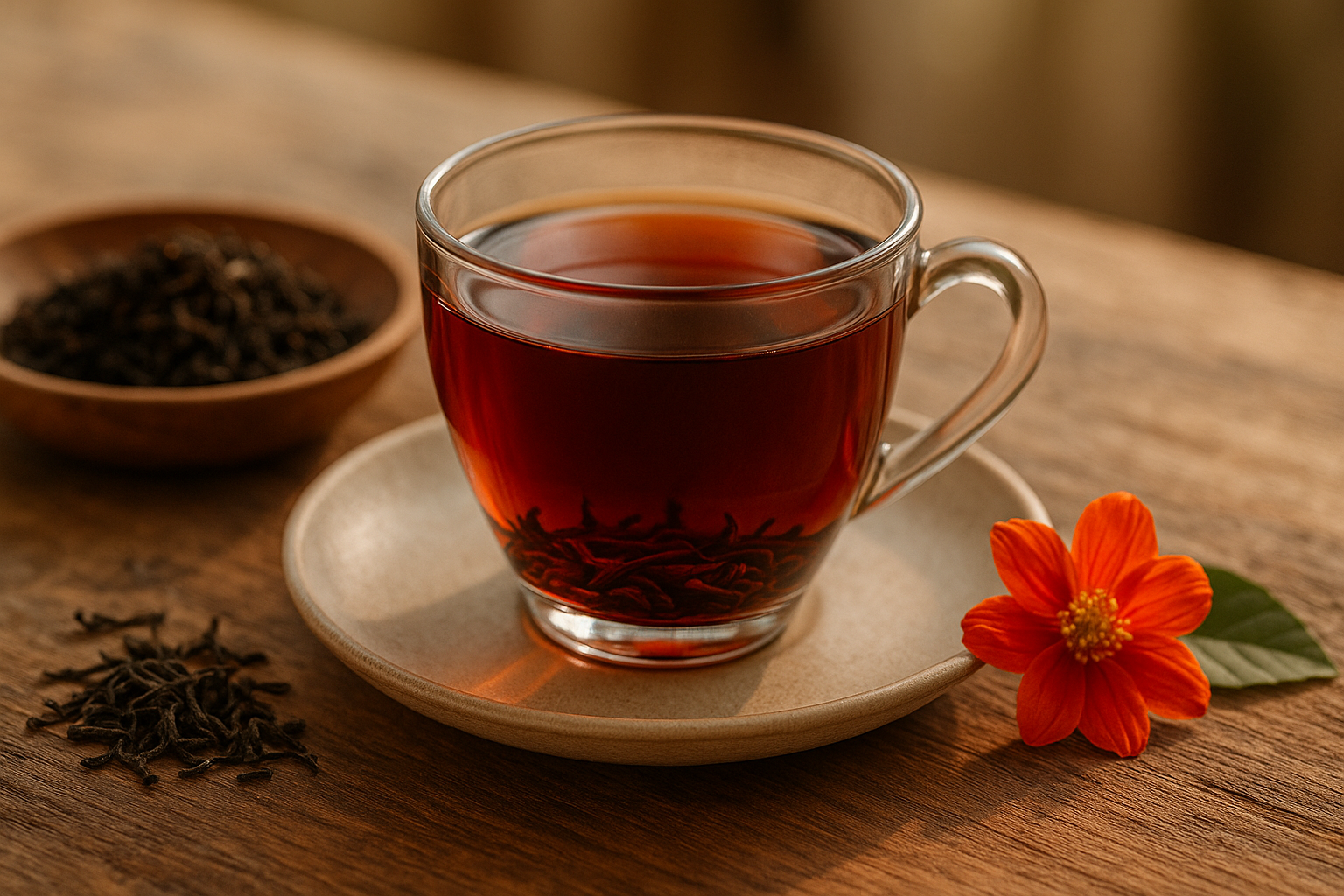
In the cup, Assam pours a deep amber. Aroma rises in warm waves of malt, wood, and hints of dried fruit. The first sip fills the mouth with a thick, almost honeyed body, quickly followed by a briskness that wakes the palate. There is an underlying warmth here—a savoury, almost bready sweetness—that lingers into the aftertaste. With milk, it turns creamy and comforting; with spices, it transforms into masala chai, laden with ginger, cardamom, and black pepper.
Beyond taste, Assam is woven into culture. It anchors British breakfast teas and fuels Indian railway chai stalls. It is poured at morning tables from Kolkata to London, at road-side dhabas and in porcelain teacups, connecting far-flung places through a single shared ritual. And yet, behind every cup lies the humidity of monsoon rains and the rhythmic work of pluckers who thread through leafy rows in the early dawn. To drink Assam is to drink something of the valley’s pulse and the energy of the people who bring it to life.
What People Notice Most Often
Bold, malty flavour with notes of bread and dried fruit
Full-bodied, brisk taste that holds up to milk and sugar
Dark amber liquor with a rich glow
High caffeine for a strong morning lift
Versatile: base for English Breakfast and masala chai
Often produced in CTC and orthodox styles
Naturally brisk without overwhelming bitterness
Can be steeped strong without collapsing in flavour
Big-leafed cultivar specific to the humid Assam valley
Quality ranges from everyday blends to exquisite, tippy harvests
Tea at a Glance
Overview
Assam is a black tea from India’s Brahmaputra Valley, made from the bold-leafed Camellia sinensis var. assamica. Known for its malty, full-bodied character, it has become a cornerstone of global breakfast teas and spiced chai. The region’s lowland heat and heavy monsoon rains endow the leaves with depth and vigour, making Assam both robust and comforting.
The Experience
Assam greets you with deep amber colour and aromas of malt and wood. On the palate, it is thick and warm, finishing briskly. Add milk, and it becomes creamy and mellow; drink it straight, and its strength shines through with a gentle sweetness.
Brew Notes to Try
Traditional Strong Cup
Brew 3–5 minutes in water just off the boil; enjoy plain or with milk.Masala Chai
Simmer with spices like ginger, cardamom, and cinnamon; add milk and sugar.Orthodox Loose Leaf
Use 95 °C water for 2–3 minutes to highlight nuanced fruit notes.Cold Brew
Steep overnight in cold water for a smooth, sweet concentrate.
Why People Love It
Assam offers a morning jolt without sacrificing flavour. Its malty richness pairs beautifully with breakfast foods and spices, and its reliability makes it a kitchen staple worldwide. For many, it is the taste of comfort and the aroma of dawn.
Good to Know
Use water at 90–95 °C
Steep 3–5 minutes for CTC; 2–3 for orthodox
High caffeine content
Takes milk and sugar easily
Affordable to premium grades available
Store in an airtight container away from moisture
Second flush teas (May–June) are often the most sought-after
Where It Comes From
Assam, India – Brahmaputra Valley
Elevation: lowland (sea level to 2,000 ft)
Cultivar: Camellia sinensis var. assamica
Harvest seasons: first flush (March–April), second flush (May–June), autumn flush (October)
