Tea Collection: Tie Guan Yin (Iron Goddess of Mercy)
Inside the Tea
High in the misty mountains of Fujian’s Anxi county, rows of deep-green tea bushes cling to terraced slopes. The air here smells of damp earth, orchids, and faint sea breeze. In this landscape, a revered oolong has been crafted for centuries: Tie Guan Yin, whose name translates to “Iron Goddess of Mercy.” Legend tells of a humble farmer who tended an abandoned temple of the Bodhisattva Guanyin. One night, the goddess appeared to him in a dream, guiding him to a hidden tea plant that would change his fortune. He propagated the plant and shared cuttings with neighbours, creating a tea that blossomed with transcendent aroma. To this day, many producers invoke the goddess in quiet thanks as they harvest and craft her namesake tea.
The making of Tie Guan Yin is a meditation in motion. Leaves are plucked in the morning—mature leaves with a tight bud attached, thick and glossy from the humid mountain air. They are withered in the shade until their surface moisture softens. Next comes the “shaking” stage: leaves are tumbled gently in woven bamboo trays, bruising the edges and encouraging partial oxidation. This shaking is repeated multiple times, interspersed with rest. With each cycle, the leaves deepen in scent, moving from green freshness to the floral complexity that defines Tie Guan Yin. After oxidation, the leaves are pan-fried or baked to halt the process, rolled into characteristic semi-ball shapes, then slowly dried. Some styles emphasize light oxidation, preserving green notes and orchid perfume; others involve medium oxidation and multiple roasts, yielding caramel, nut, and honey depths.
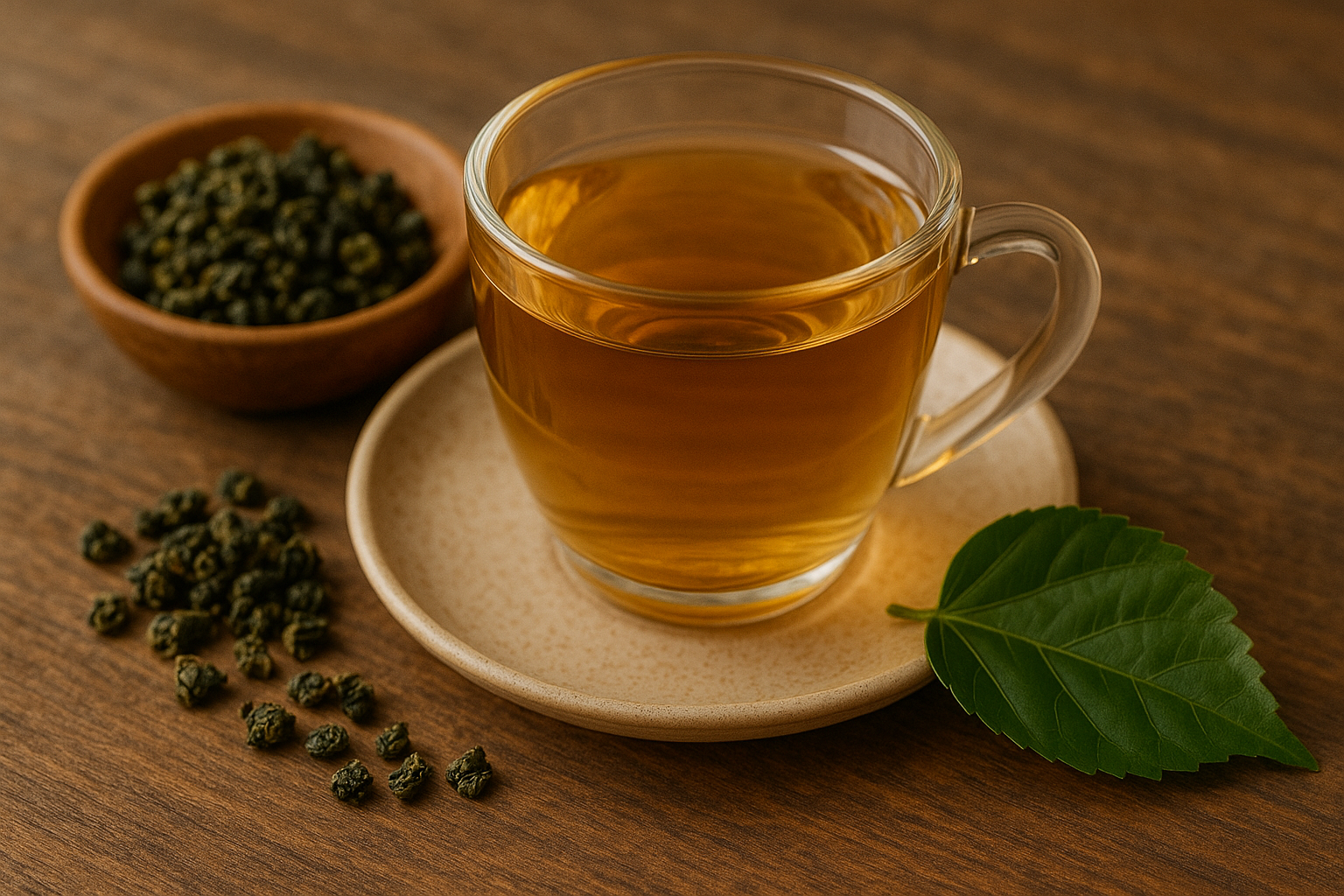
In a warmed gaiwan, the dry leaf exudes an enticing fragrance of flowers and cream. As hot water touches the rolled balls, they unfurl slowly, releasing a bouquet of orchid, osmanthus, and sometimes hints of lily. The liquor is a luminous chartreuse that turns more golden with subsequent infusions. First sips reveal a texture that is both silky and clean, carrying flavors of fresh flowers, melon, and sweet butter. A lightly oxidized Tie Guan Yin offers a crisp, ethereal clarity; a more traditionally roasted one wraps those florals in toasted nuts, baked sugar, and a tender smokiness. Regardless of style, each steep leaves a lingering hui gan—an echo of sweetness that rises in the throat after the cup is empty.
Culturally, Tie Guan Yin holds a place of honour in gongfu cha, the Chinese art of making tea through multiple small infusions. Its evolving flavour profile teaches patience and attention: one must watch the leaves open and follow the changes from infusion to infusion. Over cups shared among friends, this tea’s floral notes soften conversation and anchor quiet moments. Its mythic origin lends a spiritual dimension, and many producers still offer their first infusion to a small shrine in thanks to the goddess. Beyond the temple and tea table, Tie Guan Yin reflects the skill of artisans who have inherited knowledge from generations past and continue to interpret it in ways that suit modern palates.
What People Notice Most Often
Distinct orchid and osmanthus aroma
Smooth, creamy texture with hints of honey and stone fruit
Balanced mix of floral sweetness and gentle mineral notes
Medium body with a clear, lingering aftertaste
Moderate caffeine—refreshing without jitters
Leaves unfurl dramatically in the cup, revealing their beauty
Adapts to both light, green-forward and roasted, nutty styles
Steeps multiple times; each infusion tastes different
Notable “hui gan” (returning sweetness) after swallowing
Revered origin story tied to the Bodhisattva Guanyin
Tea at a Glance
Overview
Tie Guan Yin is a celebrated oolong from Anxi, Fujian, partially oxidized to balance floral fragrance with gentle roast. Its name honours the Bodhisattva of Compassion. Legend, craft, and terroir converge in this tea, producing a bouquet of orchid and fruit notes with a lingering sweetness.
The Experience
With its rolled leaves slowly unfurling, Tie Guan Yin brews to a pale jade or golden liquor. It is at once creamy and fresh, offering floral perfumes and honeyed whispers. The aftertaste rises sweetly and lingers long after the cup is drained.
Brew Notes to Try
Gongfu Brew
Use 90–95 °C water; steep 20–30 seconds, increasing time with each infusion; reveals evolving layers.Western-Style Steep
Steep 3–4 minutes with 90 °C water for a fuller-bodied cup.Traditional Roasted
Seek out medium-roast versions; brew slightly hotter to bring out nutty caramel notes.Modern Green Style
Choose lightly oxidized leaves; brew cooler (85 °C) to highlight orchid and cream.Cold Brew
Steep overnight in cold water for a sweet, gentle floral infusion.
Why People Love It
Tie Guan Yin is beloved for its harmony of aroma and flavour. Whether you prefer its fresh, spring-like versions or its warm, roasted interpretations, it offers depth without heaviness. Its legend adds a sense of ritual and grace to each brew.
Good to Know
Use water around 90 °C for most styles
Rinse quickly before the first infusion to awaken leaves
Multiple short infusions reveal complexity
Store in airtight container to preserve aroma
Choose between green-style (floral) or roasted (nutty) based on preference
Can be relatively costly due to artisanal processing
Where It Comes From
Anxi County, Fujian, China; also produced in Taiwan’s Muzha district
Partial oxidation: typically 20–40%
Harvest seasons: spring and autumn
Category: oolong tea