Tea Collection: Osmanthus Oolong
Inside the Tea
On a clear autumn day in the hills of southeastern China, the air is filled with the scent of osmanthus blossoms—tiny golden flowers that perfume streets and hillsides with a fragrance often likened to ripe apricots and honey. These blossoms are known as gui hua, and in traditional Chinese culture they herald the Mid-Autumn Festival and harvest celebrations. Once harvested, they are destined not only for cakes and syrups but also for an enchanting scented tea: osmanthus oolong. This tea is the union of two delicacies—the floral, fruity scent of osmanthus and the smooth backbone of a high-quality oolong.
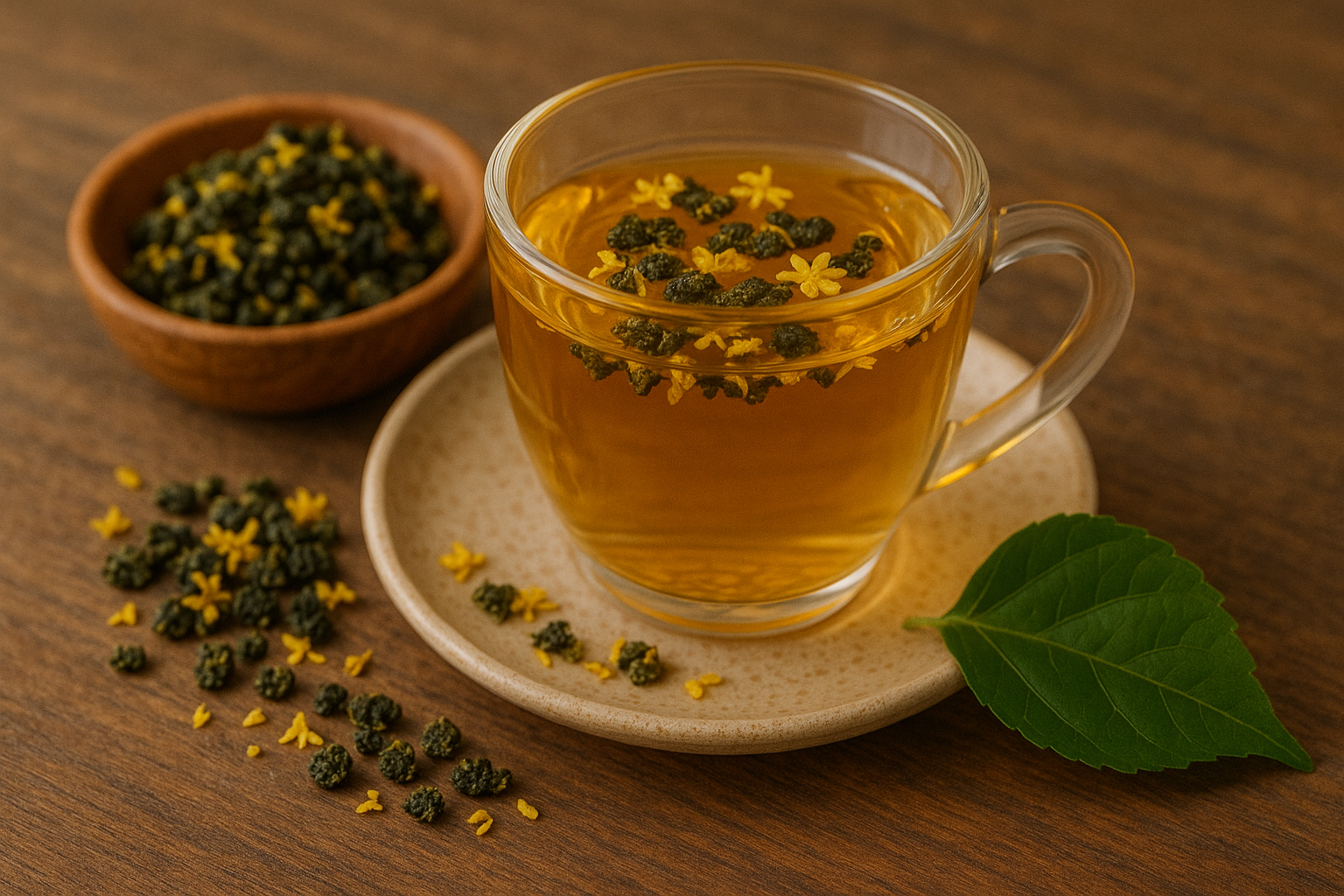
The foundation of osmanthus oolong typically begins with a lightly oxidized oolong. The leaves are plucked, withered, gently tossed to encourage slight oxidation, then fixed and rolled into tight balls or twisted strands. Some producers select Taiwan’s jade oolong for its creamy base; others use Anxi oolong for its floral notes. Separately, freshly picked osmanthus blossoms are dried quickly to preserve their aroma. The tea and flowers are layered together and left to mingle in a controlled environment. The blossoms release their perfume into the tea, which absorbs it slowly, developing a fragrance that feels baked into the leaf rather than sprayed on. The spent blossoms are often removed after scenting, leaving behind flecks of gold that occasionally peek out from the dark green leaves.
Once infused, osmanthus oolong pours a pale gold. The aroma is delicate yet unmistakable: the nectar-like scent of apricot jam mingles with the soft buttery notes of oolong. In the first sip, this sweetness blooms on the tongue without veering into cloying territory. It is subtle, natural, almost airy. The body of the tea is medium to light; it glides over the palate with a silkiness characteristic of lightly oxidized oolong but retains enough structure to carry the osmanthus fragrance. Unlike more assertive scented teas, osmanthus oolong maintains balance—the floral notes never overwhelm, instead weaving themselves through the tea’s natural creaminess and gentle vegetal hints.
Osmanthus blossoms have long been associated with love and fidelity in Chinese folklore, and osmanthus oolong is often served to celebrate romantic occasions or shared as a gentle offering of hospitality. It is equally at home in afternoon tearooms and in the quiet moments before bed, as it contains moderate caffeine but exudes a calming sweetness. The making of osmanthus oolong illustrates the craft of scenting tea done well: a slow, respectful marriage of two natural ingredients that results in something greater than the sum of its parts.
What People Notice Most Often
Sweet, apricot-like aroma from the osmanthus blossoms
Gentle honeyed flavour with floral undertones
Light to medium body; very smooth and silky
Pale golden liquor that is easy on the eyes
Moderate caffeine from the oolong base
Natural sweetness without added sugars or syrups
Balanced blend—floral notes complement rather than overpower
Pleasant both hot and iced
Excellent choice for new tea drinkers who enjoy fruity profiles
Often associated with Mid-Autumn Festival and romantic traditions
Tea at a Glance
Overview
Osmanthus oolong is a scented tea pairing lightly oxidized oolong with osmanthus blossoms. The result is a fragrant, honeyed brew that evokes ripe apricots and autumn. It retains the smooth, creamy mouthfeel of oolong while adding a natural, airy sweetness.
The Experience
Expect a gentle, nectar-like aroma and a smooth, medium-light body. The flavour is sweet and fruity but never overpowering, finishing with a soft floral whisper that lingers pleasantly.
Brew Notes to Try
Gongfu Style
Use 90 °C water; multiple short infusions bring out both the tea and floral layers.Western Steep
Brew at 85–90 °C for 2–3 minutes for a balanced cup.Iced Osmanthus Oolong
Brew double-strength and pour over ice; adds a refreshing sweetness.Cold Brew
Steep overnight in cool water to produce a delicate, fragrant infusion.Osmanthus Milk Tea
Combine brewed tea with warmed milk and honey for a dessert-like drink.
Why People Love It
This tea is beloved for its balance of gentle floral perfume and creamy oolong. It feels luxurious yet approachable, making it ideal for relaxing afternoons or special occasions. Osmanthus fans appreciate its natural sweetness and romantic history.
Good to Know
Best brewed at 85–90 °C
Steep 2–3 minutes or multiple short infusions
Contains moderate caffeine
Can be re-steeped 3–4 times
Store away from strong odours to preserve fragrance
Perfect gateway tea for those who enjoy fruit-floral blends
Where It Comes From
China (Guangxi, Fujian) or Taiwan
Base tea: lightly oxidized oolong
Scenting ingredient: osmanthus (Osmanthus fragrans) blossoms
Harvest seasons: late summer for osmanthus; spring/autumn for tea