Tea Collection: Gunpowder Green Tea
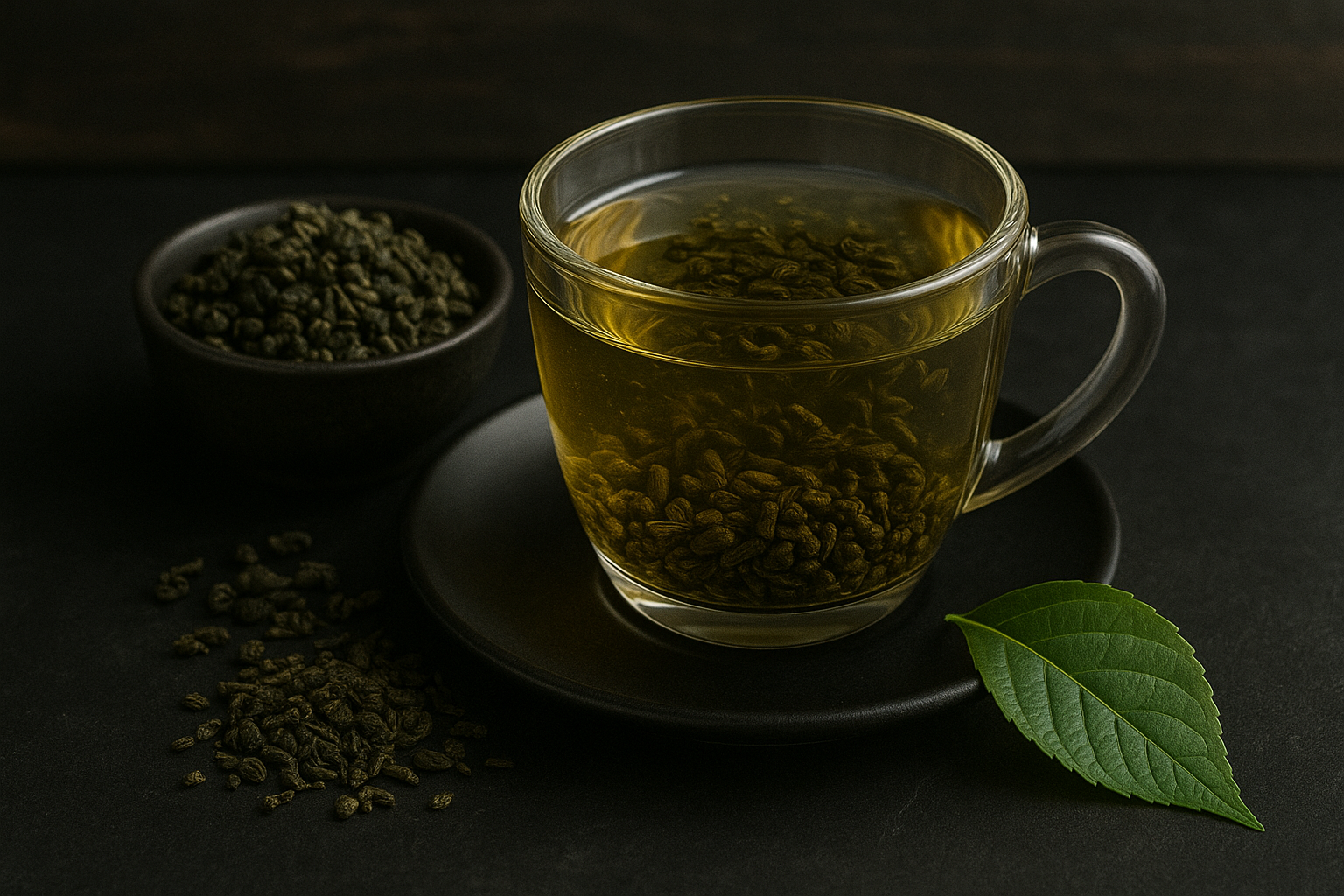
Inside the Tea
The dry leaves of gunpowder green tea look like small beads of jade. Each tiny pellet has been rolled and curled until it resembles shot—hence the name. This rolling method originated centuries ago in China’s Zhejiang province, where craftspeople sought to preserve green tea for long journeys. Compacting the leaf into tight pellets protected it from moisture, light, and mechanical damage, making it ideal for export along trade routes that stretched from East Asia to the Middle East and beyond.
The creation of gunpowder tea begins much like other green teas: tender leaves are plucked and quickly heated to halt oxidation, preserving their green colour and nutrients. Unlike pan-fired leaves that are left flat, gunpowder leaves are cooled and rolled repeatedly by hand or machine. This process causes the leaves to curl inward, trapping essential oils and locking in flavour. When properly executed, the pellets are firm and shiny; too loose a roll, and the tea may lack body; too tight, and the leaves might not open fully during brewing. After rolling, the pellets are dried until their outer layers harden, ready to be sealed in sacks and travel across the seas.
In the cup, gunpowder green tea unfurls from its coiled shape, slowly expanding to release its character. The first infusion yields a yellow-green liquor with aromas of roasted nut, mineral, and a faint smokiness from the pan-firing. The flavour is robust by green tea standards—full-bodied and slightly savoury, with hints of tobacco, dried hay, and toasted rice. A subtle sweetness lingers under the more assertive notes. Because the leaves are tightly rolled, the tea can be steeped multiple times, each infusion becoming smoother and less astringent. It is a green tea that stands up to stronger flavours and blends well with herbs and spices.
Gunpowder tea’s resilience made it a favourite among traders and travellers. In Morocco and other parts of North Africa, it forms the base of the famed Maghrebi mint tea, where it is boiled vigorously with fresh spearmint and large amounts of sugar. In the Middle East, it often appears alongside sage or cinnamon. Its firm pellets keep their shape even under hard boiling, releasing flavour gradually. At home, you can brew it gently to preserve its natural balance or push it into bolder territory by using hotter water and longer steeps. Its versatility has helped it remain a staple for centuries, bridging cultures from Chinese hillsides to North African medinas.
What People Notice Most Often
Tightly rolled pellets resembling tiny pearls
Bold, slightly smoky flavour with roasted nut and vegetal notes
Full-bodied by green tea standards
Pale yellow to golden liquor depending on steep time
Moderate to high caffeine
Leaves unfurl slowly over multiple infusions
Holds up well to higher temperatures and longer steeps
Often used in Moroccan mint tea and other blends
Slight mineral finish reminiscent of fresh spring water
Can be brewed strong without turning overly bitter
Tea at a Glance
Overview
Gunpowder green tea, originating in Zhejiang, China, is made by rolling green tea leaves into small pellets. This technique preserves the tea’s flavour and allows it to travel well. Known for its robust, slightly smoky character, it is the backbone of many traditional blends, especially in North Africa.
The Experience
Gunpowder brews to a golden yellow with a bold flavour that combines roasted nuts, minerals, and a hint of smoke. It offers more body than delicate green teas and withstands strong brewing methods without collapsing into bitterness.
Brew Notes to Try
Classic Chinese Style
Steep 1 teaspoon of pellets in 80–85 °C water for 2–3 minutes; savour its natural strength.Quick Rinse
Rinse pellets briefly with hot water before brewing to remove dust and awaken flavours.Moroccan Mint Tea
Simmer gunpowder with fresh spearmint and sugar for a sweet, refreshing blend.Multiple Infusions
Re-steep leaves several times, increasing steep time by 15–30 seconds with each brew.Iced Citrus Brew
Brew strong, then chill and add lemon or orange slices.
Why People Love It
People enjoy gunpowder for its hearty, unpretentious character and its ability to pair with herbs and sugar. Its compact pellets make storage easy, and its history links far-flung cultures. For those who find most green teas too delicate, gunpowder offers something more substantial.
Good to Know
Use 75–85 °C water for the best flavour
Steep 1–3 minutes; longer steeps yield stronger, more tannic cups
Moderate caffeine
Rinse if you detect dust or smokiness
Stores well thanks to its rolled form
Versatile for blending with mint, citrus, or spices
Where It Comes From
Primarily Zhejiang province, China; also produced in Anhui and other regions
Chinese name: zhū chá (“pearl tea”)
Category: green tea
Exported widely across Asia, the Middle East, and North Africa