Cocktail Archive: Boulevardier (United States)
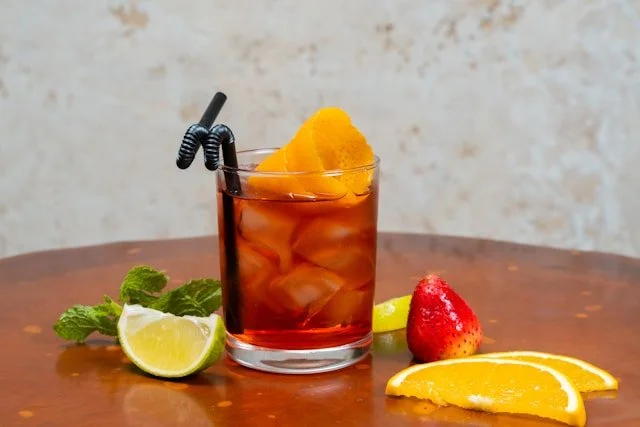
The Boulevardier feels like an evening turning inward. It carries the familiarity of a well-known structure, yet wears a darker coat — richer, warmer, more deliberate. Served cool and steady, it leans into depth rather than brightness, offering a bitterness that feels grounded rather than sharp. Where some cocktails lift the mood, the Boulevardier settles it.
There is an elegance to its weight. The first sip is firm, the second revealing, the third quietly persuasive. It’s a drink that suits low light and slow conversation, the kind that grows more comfortable as the glass empties.
Origin & Cultural Context
The Boulevardier emerged in the early 20th century, credited to Erskine Gwynne, an American expatriate in Paris and publisher of a magazine called The Boulevardier. Built on the same bones as the Italian Negroni, it replaces gin with American whiskey — a small shift that dramatically changes the drink’s character.
This transatlantic exchange reflects a broader moment in cocktail history, when American spirits and European aperitifs began to mingle more freely. The Boulevardier carries that dialogue in every pour: Italian bitterness meeting American warmth, Old World structure softened by New World confidence.
What Defines the Boulevardier
The Boulevardier is defined by substitution and balance. Structurally, it mirrors the Negroni, but whiskey introduces a rounder mouthfeel and deeper spice. Compared to the sharper profile of a Manhattan, it is more bitter and aromatic, with the vermouth and amaro sharing equal footing rather than supporting roles.
It is neither purely aperitivo nor fully digestif. Instead, it occupies a comfortable middle ground — contemplative without being heavy, assertive without excess.
Ingredients
Bourbon or rye whiskey
Sweet vermouth
Campari
Orange peel
Equipment Needed
Mixing glass
Bar spoon
Strainer
Chilled rocks glass
Method
Add all ingredients to a mixing glass filled with ice
Stir until well chilled and properly diluted
Strain over a large cube or into a chilled glass
Express orange peel over the surface and garnish

Batch Smarter, Serve Faster
Planning drinks for a party or event? Our Pre-Batch Calculator helps you scale recipes accurately, so every guest gets the perfect pour without the guesswork.
Notes & Variations
Choosing between bourbon and rye subtly shifts the drink’s personality. Bourbon emphasizes sweetness and roundness, while rye introduces a drier, spicier edge that reins in the bitterness. Both remain faithful to the Boulevardier’s identity.
Some modern interpretations adjust ratios to favour whiskey slightly, especially when using higher-proof spirits. Regardless of proportions, balance remains the guiding principle. As with all stirred drinks, dilution is essential — too little and the drink feels rigid, too much and it loses definition.
When to Drink It
The Boulevardier belongs to late afternoon drifting into evening. It works well before dinner, especially when appetite calls for bitterness but comfort still matters. In spirit, it sits comfortably alongside classics like the Old Fashioned and the Negroni, offering a familiar framework with a deeper register.
For readers curious about how small structural changes reshape classic cocktails, our guide to 20 must-try modern classics offers useful perspective. Understanding presentation also matters, and the art of garnishing explains why a single orange peel is enough. To explore the Boulevardier’s lineage more fully, revisiting the Negroni provides essential context.
The Boulevardier endures because it doesn’t try to reinvent the wheel — it simply changes the road, and lets the journey feel richer for it.