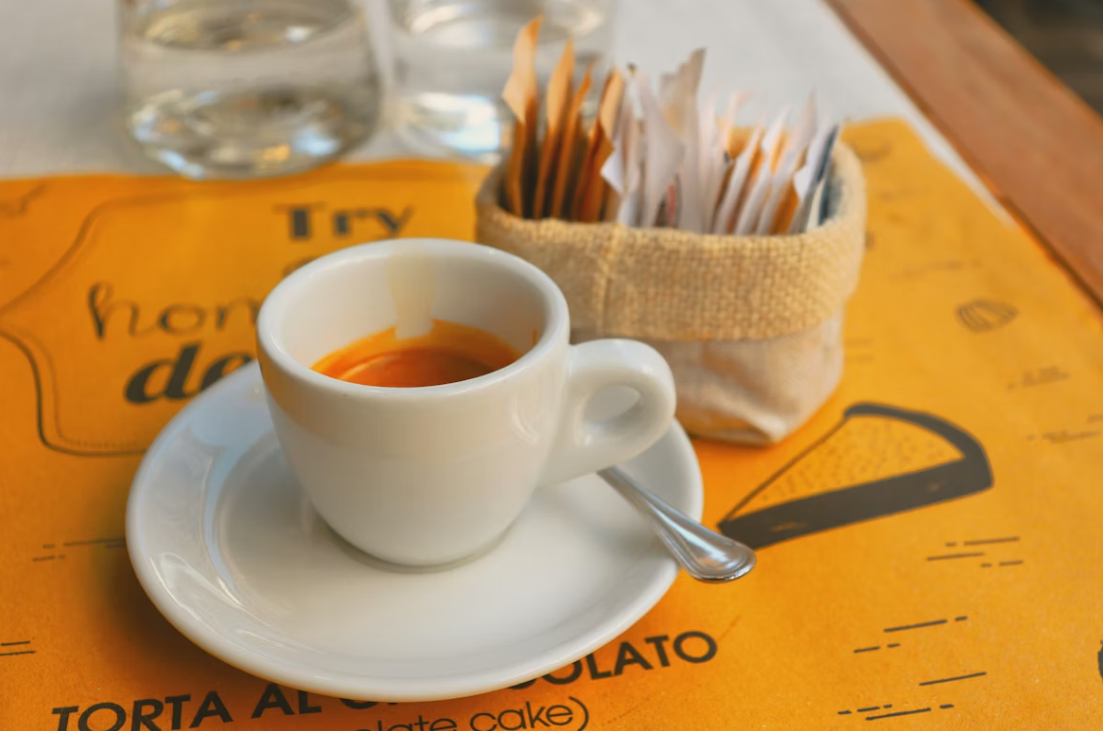
In Colombia, coffee is more than export—it’s daily life. Tinto, meaning “inky” or “dye,” is the country’s ubiquitous cup: small, strong, and usually sweetened with panela (unrefined cane sugar). Street vendors sell tinto from thermos flasks on Bogotá sidewalks; farmers sip it at dawn. Traditionally, tinto is prepared using a cloth filter or colador. Boiling water and panela are simmered with ground coffee, then filtered into thin glasses. The ratio of coffee to sugar is often about 60:40, yielding a drink that balances bitterness and sweetness. Specialty shops like Gracenote Coffee echo this attention to sweetness and body in their own pour‑overs.
Tinto is not fancy; its charm lies in its honesty. It’s a morning friend and an afternoon pick‑me‑up. The flavour is robust, sometimes gritty, always comforting.
Dawn light.
Street vendor flask.
A humble cup of fuel.
Ingredients
For four small servings:
2 cups (480 ml) water
2½ tablespoons ground coffee (medium grind)
1½ tablespoons panela or brown sugar
Optional: dash of cinnamon
Equipment Needed
Small saucepan – to boil coffee, sugar, and water together.
Cloth filter or muslin bag – traditional filtration method that allows oils through.
Heatproof jug or cups – to collect the brew.
Stirring spoon.
Method
Boil water and panela: Combine water and panela in a saucepan and bring to a boil, stirring until the sugar dissolves.
Add coffee: Stir in ground coffee and reduce heat. Let the mixture simmer for 2–3 minutes.
Steep: Turn off the heat and allow it to rest for another 2 minutes to enhance body.
Filter: Pour the mixture through a cloth filter or fine mesh into a jug or directly into small cups.
Serve: Drink tinto hot and sweet; in Colombia it is often served in small glass cups.
Notes
Panela adds a deep, molasses‑like sweetness; substitute brown sugar if unavailable.
A cloth filter (media agua) gives tinto its characteristic body; paper filters yield a lighter cup.
Some regions add spices such as cinnamon or cloves during boiling.
Tinto is typically consumed without milk, unlike café con leche.