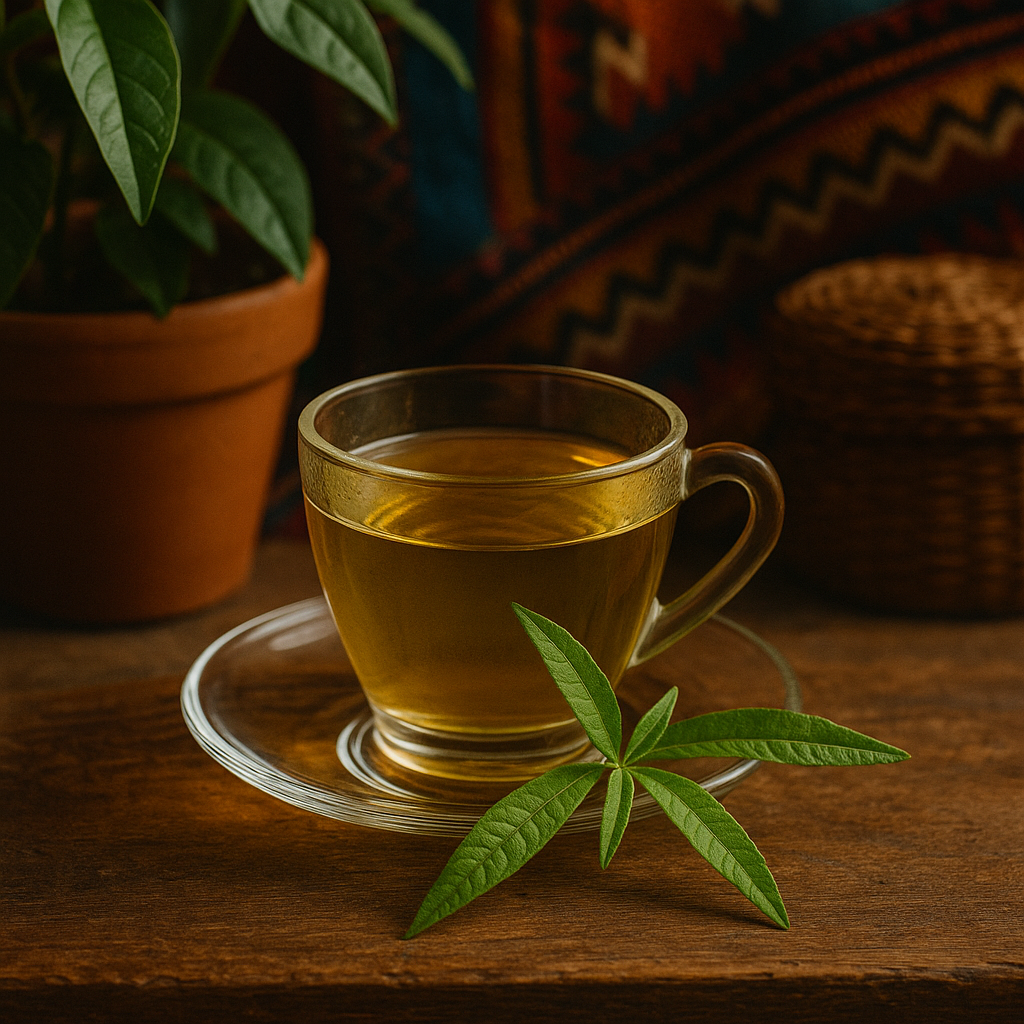
Lemon Verbena Tea is a cup defined by clarity and light. The leaves release a bright citrus fragrance the moment they touch warm air, a scent that feels clean, uplifting and quietly sweet. The infusion settles into a pale golden colour with a shimmering freshness. Each sip carries a gentle lemon note that is smooth rather than sharp, followed by a soft herbal sweetness that lingers at the edges of the palate.
This is a tea often enjoyed in the afternoon, when the mind wants calm without heaviness. Its flavour is delicate, yet expressive enough to refresh the senses. Readers who appreciate floral or fruit-forward teas may find a familiar brightness here, similar to the lively clarity of Hibiscus, though Lemon Verbena remains softer and more rounded. For an understanding of how herbal infusions sit within the broader world of tea, the Modern Tea Lover’s Guide offers helpful perspective.
Lemon Verbena also pairs well with teas that highlight fragrance. The gentle floral lift in Jasmine Silver Needle creates a beautiful contrast, while the honeyed depth of Oriental Beauty shows how oxidation and natural sweetness influence the final cup. For a grounding herbal comparison, the warmth of Peppermint Tea brings a cooling counterpoint to Lemon Verbena’s citrus clarity.
For readers who enjoy refined tea spaces, Melbourne’s Hopetoun Tea Rooms offers a classic reference for how light, aromatic tisanes can be served with grace and attention.
Lemon Verbena Tea is simple, bright and quietly comforting. It carries the feeling of sunlight through a window and the calm pause that follows a long breath.
Ingredients
Dried lemon verbena leaves
Fresh filtered water
Equipment Needed
Teapot or mug
Kettle
Strainer
Tasting cup
Method
Heat water to 90 to 95°C.
Add one teaspoon of dried leaves.
Pour water gently over the herbs.
Steep for 3 to 5 minutes.
Strain and enjoy.
Adjust steep time for brightness or sweetness.
Notes
Lemon Verbena is naturally sweet and requires no additions. Its flavour also remains stable when cooled, making it suitable for iced infusions. For contrast, try tasting it beside Hibiscus to study how tartness and sweetness differ across herbal teas, or pair it with Oriental Beauty to observe how floral and citrus tones interact.