Coffee Classics: Chorreador Coffee (Costa Rica)
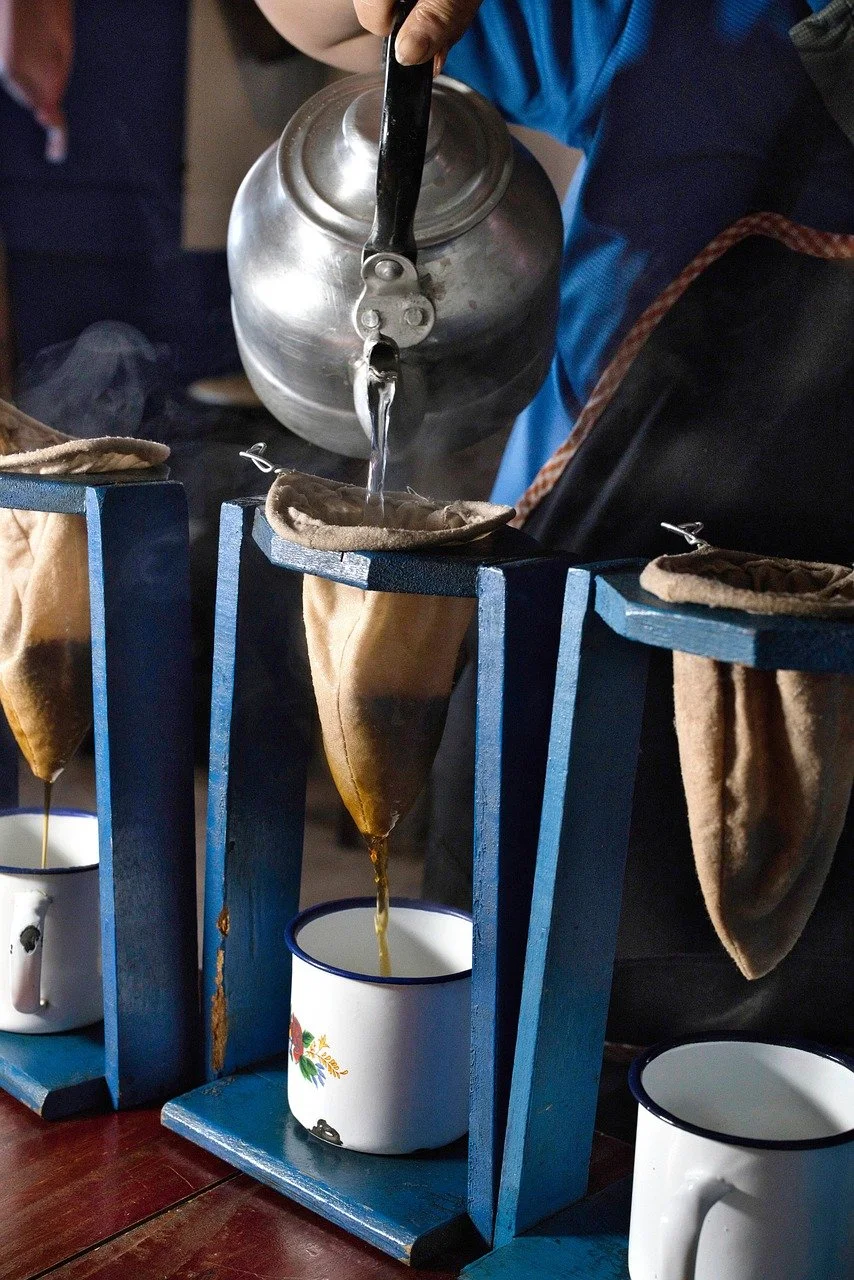
Costa Rican coffee culture values patience and simplicity. The chorreador—a wooden stand holding a cloth bag called a bolsita—embodies those qualities. To brew café chorreado, hot water is poured over freshly ground coffee in the cotton filter, allowing oils and flavours to pass through slowly. This method highlights the country’s love for clean, balanced brews and the belief that good coffee should be savoured. In Costa Rican homes, the chorreador stands on the counter next to the fruit bowl, ready for the next pot. Cafés that emphasise careful hand brewing, like Glasshouse Coffee at the Palace Gardener, mirror the same dedication to slow extraction.
The brew produced by a chorreador is smooth, aromatic, and medium‑bodied. The cloth filter allows fine particles to remain, giving a richer mouthfeel than paper filters. Serving chorreado coffee is often accompanied by conversation about the harvest and the region’s volcanic soils.
Wooden stand.
Steam drifting.
A cloth bag that cradles a nation’s brew.
Ingredients
2 cups (480 ml) hot water (just off the boil)
2 tablespoons (about 12 g) medium‑grind coffee—preferably Costa Rican single‑origin
Optional: panela or brown sugar to sweeten
Equipment Needed
Chorreador stand – a decorative wooden frame that holds the bolsita above the cup.
Bolsita (cloth filter) – usually made of cotton; it captures grounds while allowing oils to pass.
Heatproof carafe or mug – to collect the brewed coffee.
Kettle – for heating water to about 93 °C (200 °F).
Method
Prepare the chorreador: Place the cloth filter in the wooden stand and position a mug or carafe underneath.
Measure coffee: Add medium‑ground coffee to the filter, tapping gently to level it.
Heat water: Bring water to a boil and let it cool slightly (about 30 seconds).
Pour: Slowly pour a small amount of water over the grounds to bloom. Continue pouring in a circular motion until all water has been added, letting it drip through at its own pace.
Serve: Once the dripping stops, remove the filter and enjoy the café chorreado immediately.
Notes
The cloth filter should be rinsed thoroughly after each use and stored in water in the refrigerator to prevent off‑flavours.
Café chorreado is less concentrated than espresso but richer than typical drip coffee.
Some Costa Ricans sweeten their coffee with tapa de dulce (panela sugar).
The chorreador method is more about ritual and heritage than speed; take your time.