Tea Collection: Liu Bao Hei Cha (Guangxi, China)
What is Liu Bao Hei Cha?
Liu Bao Hei Cha is a tea shaped by earth, humidity, and time.
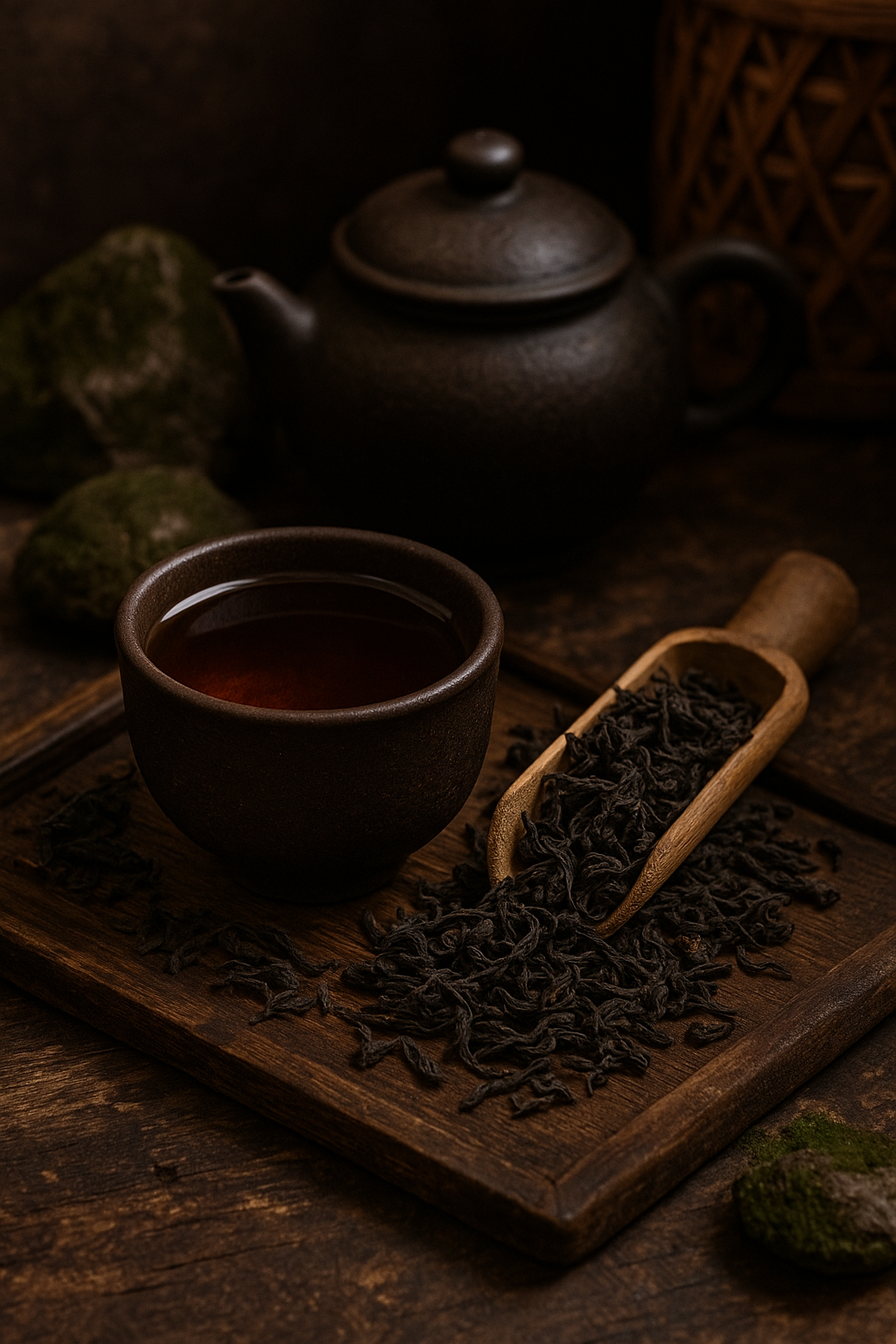
Originating from Guangxi, this fermented dark tea has been prepared for centuries as both a daily comfort and a medicinal tonic, prized for its grounding warmth and its unmistakable camphor character. Its leaves, dark and coarse, carry the scent of forest floors after rain — wood, moss, and quiet depth.
Where many Chinese teas speak in florals or roast, Liu Bao speaks in soil and age. The fermentation process, known as wo dui, transforms the leaves into something mellow and rounded, allowing the liquor to pour with a deep mahogany hue. Each sip is steady and reassuring: earthy at first, then cooling, then unexpectedly sweet.
To understand Liu Bao is to explore the world of dark teas. Guides such as The Art of Asian Tea give context to its lineage alongside pu-erh and other fermented styles. For comparison, richly fragrant teas like Hibiscus or the smooth warmth of Assam show how dramatically flavour shifts when oxidation and fermentation diverge.
Liu Bao also shares a quiet kinship with other grounding cups—like the mineral steadiness of Tie Guan Yin or the fragrant depth of Oriental Beauty. And for tea drinkers tracing global traditions, the energising ritual of Yerba Mate reminds us that cultures across the world turn to earthy, grounding brews for social warmth and quiet strength.
With Liu Bao, each cup feels ancient — as if holding the memory of cellars, forests, and the slow breath of time.
Ingredients
3–5 g Liu Bao Hei Cha
200 ml water (95–100°C)
Equipment Needed
Gaiwan or small teapot
Kettle
Strainer (if needed)
Method
Rinse the leaves briefly with hot water to awaken their aroma.
Add Liu Bao to your vessel.
Pour boiling water slowly over the leaves.
Steep for 20–30 seconds for the first infusion.
Increase steeping time by 10–15 seconds with each subsequent brew.
Enjoy across multiple infusions—the flavour deepens and cools over time.
Notes
Good Liu Bao carries a comforting camphor sweetness, a sign of proper fermentation and storage. Cooler, wetter climates often encourage its best expression. If the tea tastes overly sharp or dusty, shorter steeps or a second rinse can soften it.
Where lighter teas like Sencha emphasise freshness and green brightness, Liu Bao offers introspection — a slow, grounded cup made for reflective evenings. It pairs beautifully with rain, dim rooms, or moments when the world feels too fast.