Tea Collection: Phoenix Dancong. Mi Lan Xiang (Guangdong, China)
What is Pheonix Dancong Tea?
Phoenix Dancong — especially the celebrated Mi Lan Xiang (“Honey Orchid Fragrance”) cultivar — is one of Guangdong’s most poetic tea expressions.
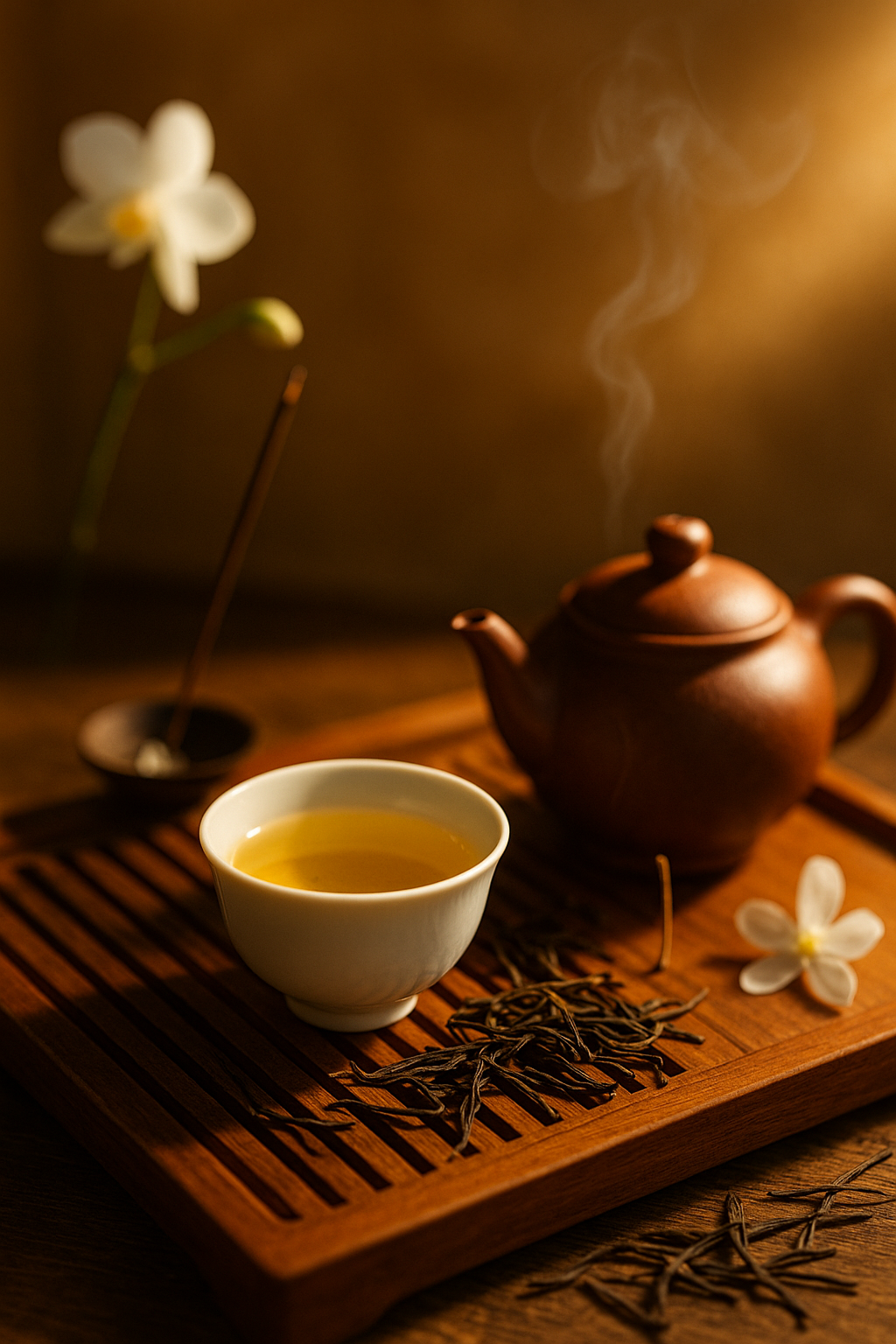
Grown on the mist-wrapped slopes of the Phoenix Mountain range (Fenghuang Shan), this oolong tea is famous for its naturally occurring aromatics: ripe fruit, orchid blossom, honey, and a subtle mineral backbone shaped by rocky soils and high elevation.
Unlike tightly rolled Taiwanese oolongs, Dancong leaves are long, wiry, and impossibly fragrant even before the first steep. When hot water touches them, the room fills with the scent of orchids carried on warm air — a fragrance so distinct that many first-time drinkers assume it has been artificially scented. But this is simply the nature of the leaf.
Phoenix Dancong is a tea shaped by altitude, by ancient shrubs, by generations of craft passed down through families in Chaozhou.
To place Dancong within the broader world of aromatic teas, consider tasting it alongside the honey-touched Taiwanese Oriental Beauty — both teas carry sweetness, yet express entirely different cultural and environmental signatures. For those curious about floral expressions across regions, the delicacy of Jasmine Silver Needle highlights how blossoms influence aroma differently from naturally floral cultivars. And if you enjoy building a foundation of tea knowledge, our guides — The Art of Asian Tea and The Modern Tea Lover’s Guide — offer context that reveals how Phoenix Dancong fits into the landscape of Chinese oolongs.
Phoenix Dancong is a tea of elegance.
A tea of mountain wind and ancient orchards.
A tea that invites the drinker into a story much older than the cup in their hands.
Ingredients
6–7 g Phoenix Dancong (Mi Lan Xiang)
100–150 ml water (95–100°C)
Equipment Needed
Gaiwan or Chaozhou-style clay pot
Kettle
Tasting cup
Fairness pitcher (optional)
Method
Heat water to 95–100°C.
Warm your gaiwan and tasting cup.
Add the long Dancong leaves and inhale their honey-orchid fragrance.
Rinse very briefly (1–2 seconds) to awaken the aroma.
For the first infusion, pour water quickly and steep for 5–8 seconds.
Decant fully.
Increase steeping times gradually, allowing the tea’s stone fruit and mineral notes to deepen.
Enjoy 6–10 infusions — Dancong is generous.
Notes
Phoenix Dancong shines when brewed with confidence.
Its flavours are layered: orchid on the surface, honey beneath, and a quiet mineral dryness at the finish that gives structure to its softness.
For drinkers exploring the spectrum of oolongs, it pairs beautifully in tasting sessions with teas like Tie Guan Yin — another floral-forward oolong, but one shaped by roasting rather than natural cultivar aromatics.
If you enjoy Dancong’s silky mouthfeel, you may also appreciate the aromatic, fruit-laced warmth of Hibiscus Roselle, which offers a deep ruby contrast in colour and tone. For an understanding of how brewing technique influences clarity and aroma, How to Choose the Right Brewing Method remains a helpful companion.
Phoenix Dancong is not simply a tea — it is a landscape in motion.
A record of wind, stone, elevation, blossom, and time.