Tea Collection: Kukicha (Japan)
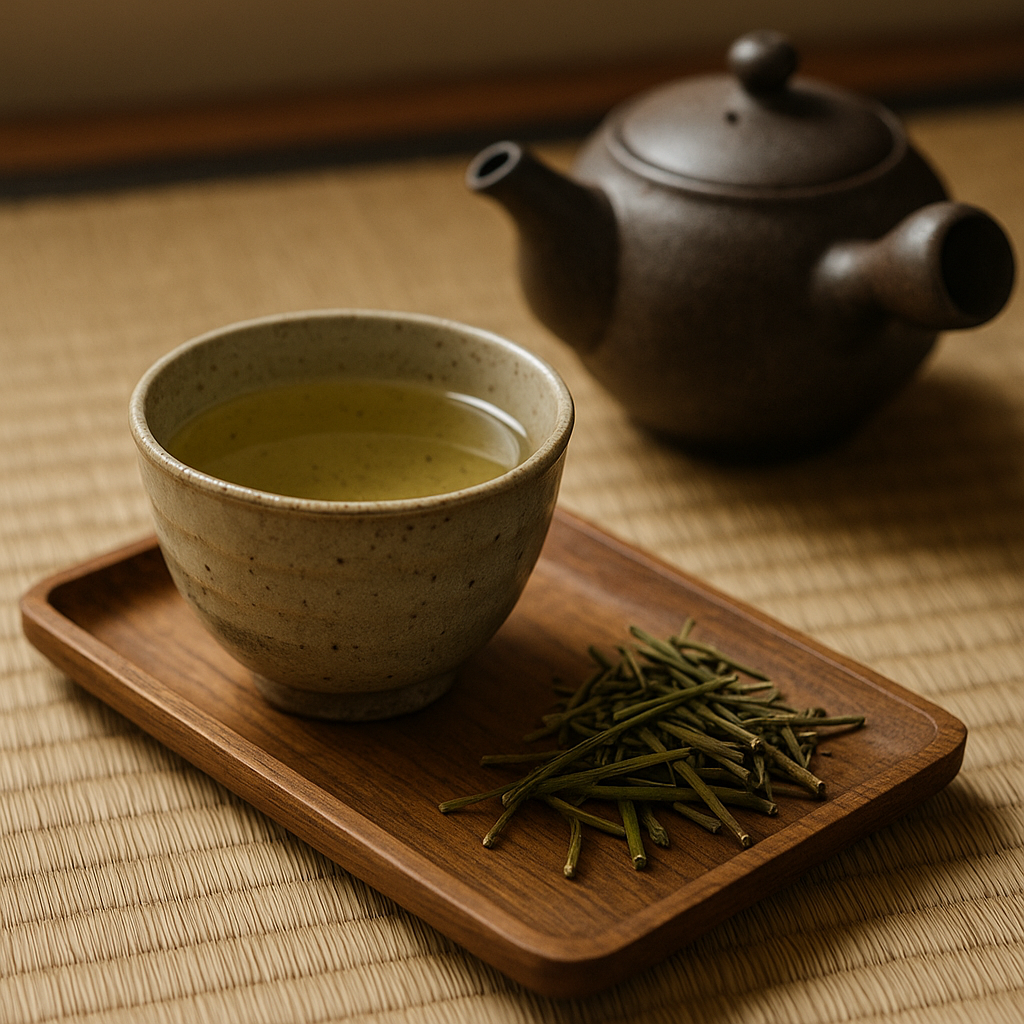
What is Kukicha
Kukicha is one of Japan’s quiet treasures—a tea made not from leaves alone, but from the tender stems and twigs of the Camellia sinensis plant. Pale, fragrant, and softly sweet, it carries a subtle creaminess that sets it apart from more vegetal Japanese greens. Where Sencha offers brightness and umami, Kukicha brings warmth and gentleness, like early morning light settling across tatami mats.
Born from a tradition of using every part of the tea plant, Kukicha embodies the Japanese philosophy of mottainai—nothing wasted, everything respected.
The stems, collected during the production of Sencha and Gyokuro, lend the tea its signature notes of milk, grain, and roasted nuts, depending on how it is processed. The result is a drink that is both comforting and refined, especially when brewed at a cooler temperature to coax out its sweetness.
To situate Kukicha within Japan’s broader green-tea landscape, it helps to explore teas like Sencha, with its grassy, umami-forward character, or to look at the wider Asian tradition through guides such as The Art of Asian Tea and The Modern Tea Lover’s Guide. These contexts help reveal how a humble stem tea can feel just as expressive as the more celebrated leaf varieties.
Ingredients
2–3 g Kukicha
180 ml water (70–80°C)
Equipment Needed
Teapot or kyusu
Fine strainer
Kettle
Cup
Method
Heat water to 70–80°C to preserve sweetness.
Warm the teapot briefly and discard the water.
Add the Kukicha.
Pour water gently over the stems and leaves.
Steep for 1–2 minutes, adjusting for desired strength.
Strain and enjoy the mild, creamy aroma immediately.
Notes
Kukicha is versatile. Brewed lightly, it tastes sweet and mellow; steeped a bit longer, it reveals toasted grain, soft umami, and a gentle depth. For those exploring Japanese teas, drinking Kukicha alongside Jasmine Silver Needle shows a fascinating contrast between floral delicacy and the understated richness of stem tea.
To deepen the experience, comparing Kukicha with lightly oxidised oolongs—such as Oriental Beauty—highlights how texture, oxidation, and aroma shift across regions. Venues like Yugen Tea Bar in South Yarra also offer tasting environments where these subtleties are appreciated with focus and calm.
Kukicha reminds us that beauty can be found in what is often overlooked.
A tea built from stems becomes a cup full of warmth.