Tea Collection: Lychee Oolong (China / Taiwan)
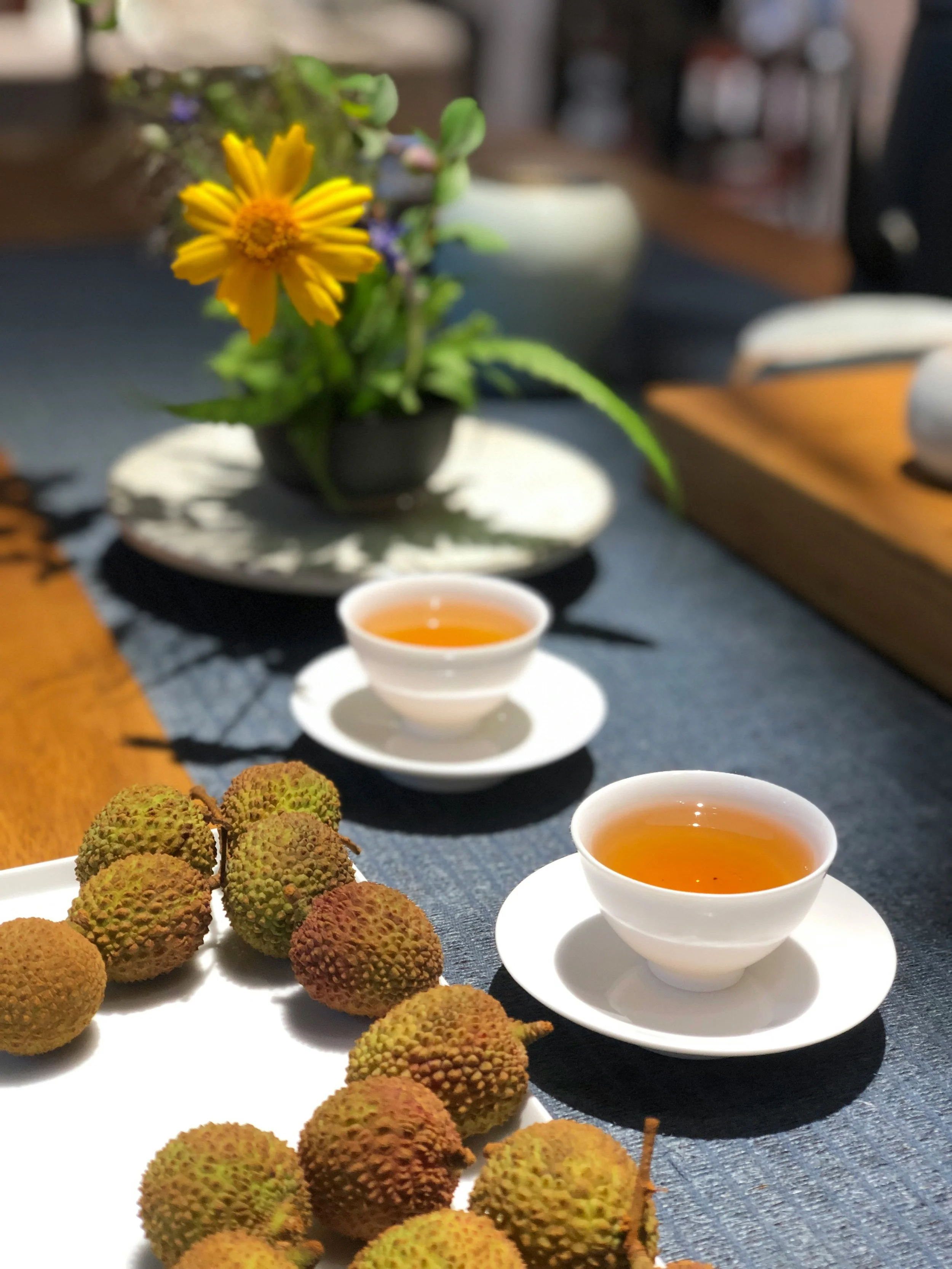
Lychee Oolong sits in a fascinating space between fragrance and craftsmanship. It begins with oolong leaves known for their supple body and natural creaminess, then intertwines them with the bright sweetness of lychee fruit. The result is a tea that feels both playful and elegant. Its aroma rises softly as soon as the leaves warm in the vessel, releasing notes of sun-ripened fruit, soft florals and honeyed warmth. Beneath the lychee perfume, the oolong structure remains steady and assured.
The roots of this blend stretch back to traditional Chinese scented-tea practices, where fruits, blossoms and leaves were layered together to produce gentle, aromatic infusions. Modern versions refine this process, pairing carefully oxidised oolong with lychee essence or lychee-scented air-drying. Whether produced in Fujian, Guangdong or Taiwan, Lychee Oolong carries a sense of summer brightness. It feels like a breeze drifting through an orchard when the fruit is at peak ripeness.
When brewed, the liquor settles into a warm golden hue. The first sip glides across the palate with the smoothness characteristic of mid-oxidised oolongs. Lychee arrives at the top of the flavour, soft and sweet, never sticky or artificial. It lifts the tea with a natural brightness that feels refreshing rather than heavy. As the flavour settles, gentle floral tones emerge, accompanied by a calm mineral finish that belongs distinctly to oolong. This layered progression is what makes the tea so delightful to drink slowly, allowing each infusion to reveal something slightly different.
For readers who enjoy fruit-forward teas, Lychee Oolong stands comfortably beside sweeter Chinese fruit blends such as Lychee Black Tea. Yet its oolong base gives it more nuance, offering a deeper, rounder sip that feels closer to the buttery warmth of Dong Ding Oolong. Comparing these two makes the role of oxidation and roasting immediately clear. Those who appreciate gentle florals may also enjoy exploring Jasmine Silver Needle, which highlights a different way fragrance interacts with leaf structure.
For a broader sense of how scented teas fit into Asian tea tradition, the Art of Asian Tea provides beautiful context. Meanwhile, tasting Lychee Oolong against the bright acidity of Hibiscus reveals how fruit sweetness contrasts with tartness. And for those who enjoy experiencing expressive teas in modern spaces, Yugen Tea Bar offers a contemporary approach to serving aromatics with refined ceremony.
Lychee Oolong is lively yet composed. It offers the joy of fruit without losing the structure and elegance of oolong craftsmanship. It is a tea for warm afternoons, for moments when sweetness needs lightness and fragrance should drift rather than overwhelm.
Ingredients
Lychee Oolong leaves
Fresh filtered water
Equipment Needed
Gaiwan or teapot
Kettle
Scale (optional)
Tasting cup
Method
Heat water to 90 to 95°C.
Warm the vessel and pour out the water.
Add 3 to 5 grams of Lychee Oolong.
Rinse quickly to awaken the aroma.
Steep for 20 to 30 seconds.
Increase each subsequent infusion by 10 to 15 seconds.
Taste the transitions from fruit brightness to soft floral and mineral depth.
Notes
Lychee Oolong can be brewed hotter than green teas but still benefits from shorter infusions to protect its gentle fruit notes. Longer steeps emphasise the oolong’s depth and reduce the perceived sweetness. To explore how different flavour profiles behave across infusions, try tasting this tea beside Dong Ding Oolong for warmth or Jasmine Silver Needle for floral delicacy.