Coffee Classics: Bedouin Coffee (Levant / Arabian Peninsula)
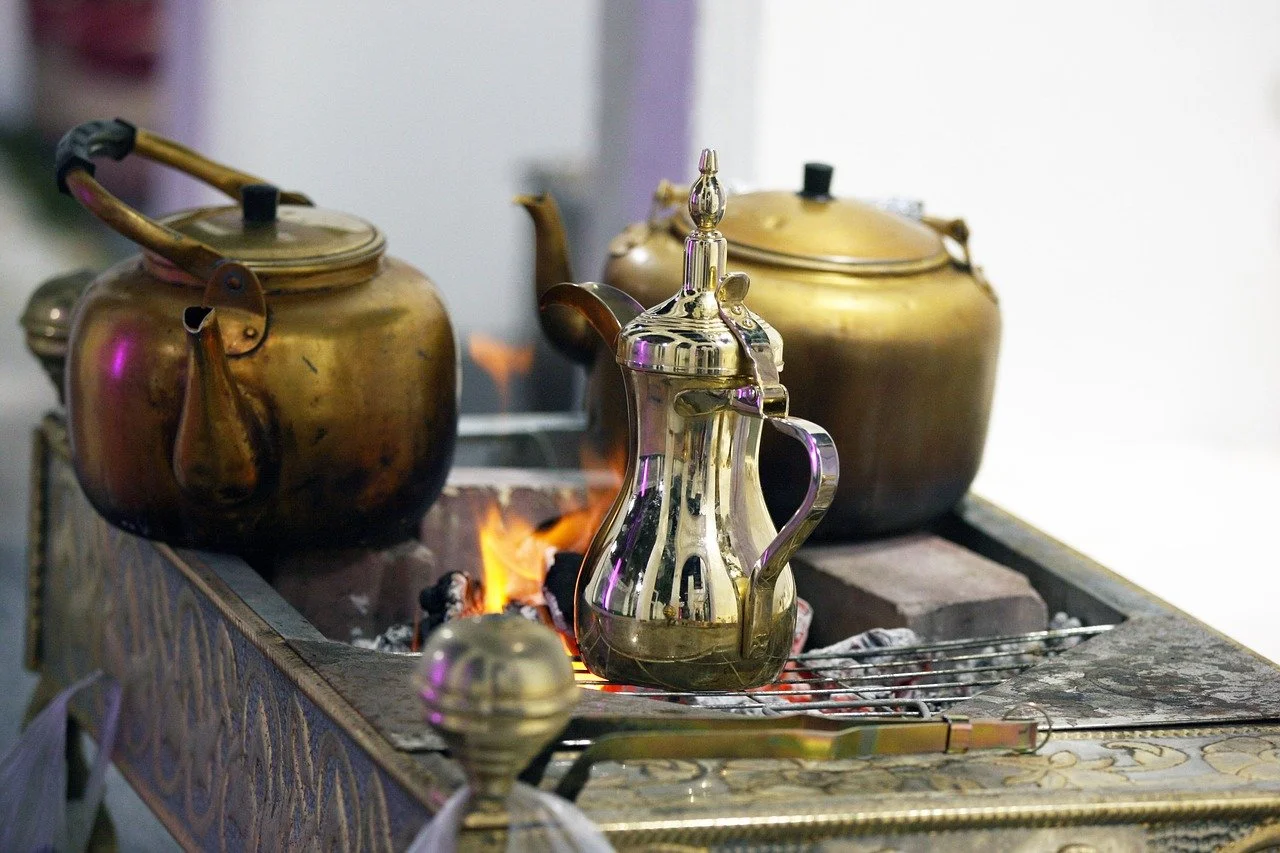
Bedouin Coffee is one of the oldest and most enduring expressions of hospitality in the Levant and Arabian Peninsula. It is served not simply as a beverage but as a gesture of welcome, respect, and peaceful intention. Traditionally brewed over hot coals and poured from a long-spouted dallah pot into small finjan cups, Bedouin Coffee is light in body, fragrant with cardamom, and deeply tied to the cultural rhythms of desert life. Every step, from roasting to the final pour, carries meaning.
The beans are roasted to a pale or medium colour, far lighter than Western styles. This keeps the flavour bright, clean, and gently nutty. Once roasted, the beans are ground to a fine sand-like texture and combined with crushed cardamom pods. The aroma that rises during brewing feels warm and welcoming, a soft blend of citrus, spice, and earth. This is a coffee meant for conversation and connection, its strength lying in clarity rather than heaviness.
In many parts of the Middle East, the first cup is symbolic. It is poured for the guest of honour, and the server stands while the guest drinks. The host does not sip until the visitor has finished. This ritual respects the traveller’s journey and acknowledges the bond created through sharing coffee. Insights into how cafes preserve or reinterpret cultural traditions can be found in places like Sarnies Café Sukhumvit, where pacing and atmosphere give drinks the space to express themselves fully.
Modern brewing guides such as A Beginner’s Guide to Understanding Specialty Coffee help explain why Bedouin Coffee tastes the way it does. Light roasts preserve natural acidity and aroma compounds, while the dallah’s tall shape creates a gentle circulation that lifts the spice notes without darkening the brew. It is simple, clear, and aromatic. A coffee of lightness rather than weight.
Desert mornings.
Warm cardamom rising.
A cup shared in peace.
Ingredients
For 3 to 4 small finjan servings:
2 tablespoons lightly roasted Arabica coffee beans
1 cup water (240 ml)
¼ to ½ teaspoon ground cardamom
Optional:
1 cracked cardamom pod for stronger aroma
1 to 2 saffron strands
A pinch of cloves (use sparingly)
Sugar is traditionally not added, though some modern homes use a small amount
Equipment Needed
Essential
Dallah pot
The tall neck encourages aromatic lift and soft convection while brewing.
Mortar and pestle
Light grinding preserves freshness and ensures even extraction.
Small heat source
Traditionally charcoal, but a stovetop works well.
Optional or Modern Alternatives
Small saucepan
Acceptable substitute though the flavour will be slightly sharper.
Fine strainer
Useful if you prefer a cleaner cup without sediment.
Method
1. Roast the Beans (Optional but Traditional)
Roast the green beans in a pan over medium heat until pale gold or light brown.
The goal is a light roast with aromatic brightness, not deep caramelisation.
Stop when the beans release a warm, nutty scent.
2. Grind with Cardamom
Grind the roasted beans to a fine sand-like texture.
Add ground cardamom or crush a whole pod gently into the mixture.
Cardamom should enhance, not overpower, the coffee.
3. Heat the Water
Pour 1 cup of water into the dallah and warm it until soft bubbles appear around the edges.
Preheating the pot helps preserve the aromatic oils in the coffee.
4. Add Coffee and Spices
Add the coffee and cardamom mixture into the hot water.
If you are using saffron or cloves, add them at this stage.
Do not boil aggressively. Vigorous heat makes the brew harsh.
5. Slow Simmer
Simmer gently for 5 to 8 minutes.
You will notice a light foam forming at the surface.
The colour will remain pale because the roast is light, yet the aroma will grow complex and warm.
6. Rest and Settle
Remove from heat and let the coffee rest for 1 to 2 minutes.
This allows finer particles to sink naturally and clarifies the pour.
7. Serve in Finjan Cups
Pour slowly from the dallah into small handleless finjan cups.
Serve no more than one-third full; Bedouin etiquette prefers small, frequent pours.
Notes
Bedouin Coffee is intentionally light and aromatic. The roast level is the key.
Adding too much cardamom can overshadow the coffee, so start modestly.
If you enjoy comparing brewing cultures, visit How to Choose the Right Brewing Method to see how vessel shape affects taste.
For a wider cultural exploration, 20 Must-Try Classic Coffee Beverages From Around the World gives context to Bedouin Coffee’s place in global tradition.
In many homes, guests signal they are finished by gently shaking the cup before returning it to the server.