Tea Collection: Chrysanthemum Pu-erh Blend (Cantonese Tradition)
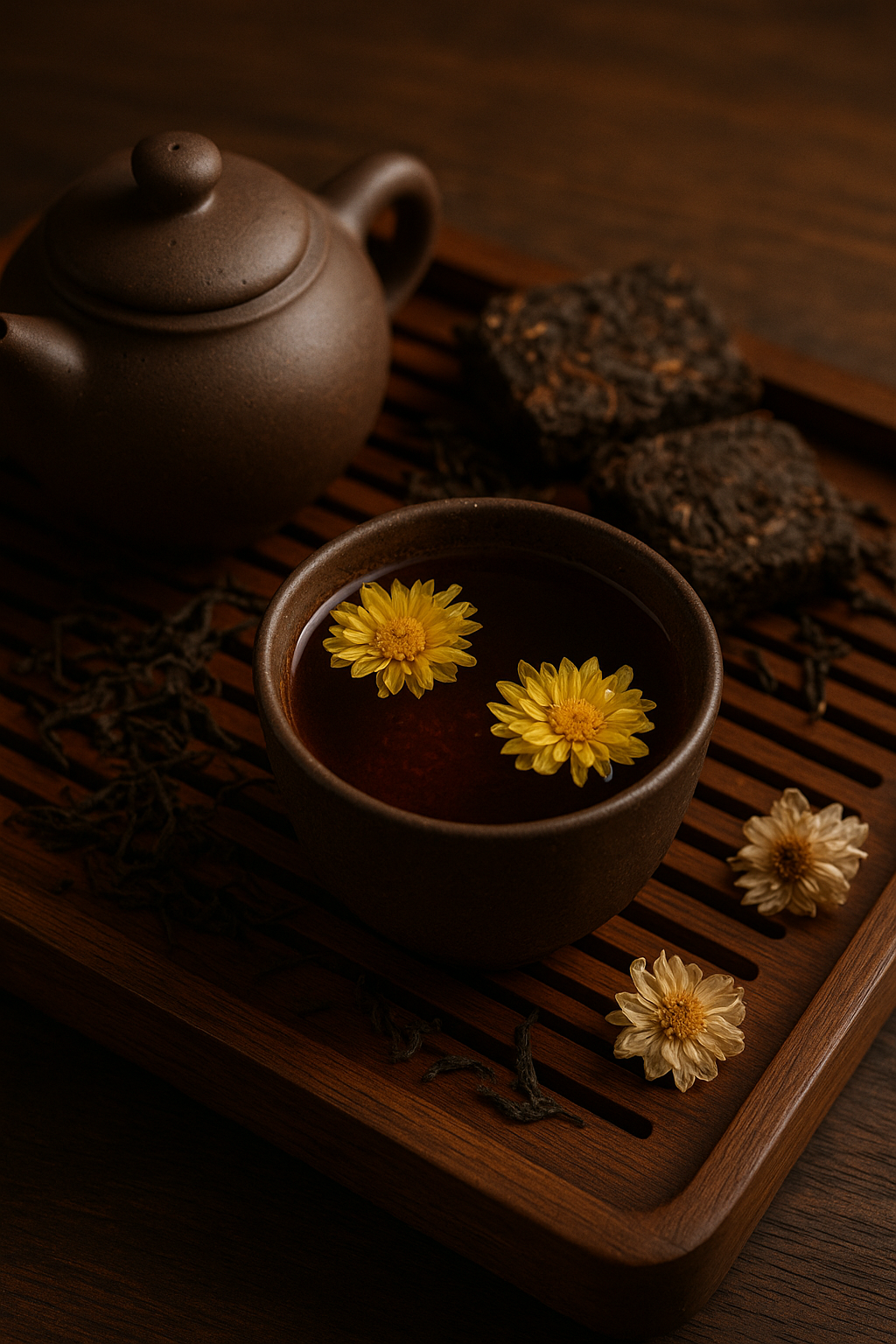
Chrysanthemum Pu-erh is a deeply traditional Cantonese pairing — an infusion that balances earth with light, depth with floral clarity. On its own, pu-erh can feel dark, grounding, almost meditative: a tea shaped by fermentation, time, and the slow transformation of leaf into something deeper. Chrysanthemum, by contrast, is bright and cooling, a golden flower long used in herbal traditions for soothing the body and clearing the mind.
Together, they create harmony. The chrysanthemum softens pu-erh’s earthiness, adding clarity to its depth, while the pu-erh anchors the floral sweetness, preventing it from drifting away too lightly. The result is a cup that feels restorative — warm on the palate, calming in the chest, and steady in its finish.
It is a tea that tastes like a remedy, even when you drink it for pleasure.
Understanding this blend becomes easier when compared with other floral pairings, such as the fragrant delicacy of Jasmine Silver Needle, where scenting elevates without masking. Meanwhile, the tangy brightness of Hibiscus (Roselle) reveals how herbal acidity interacts differently with dark teas. For those curious about how oxidation and fermentation create depth in teas like pu-erh, The Modern Tea Lover’s Guide offers a structured framework.
Drinkers who enjoy earthy warmth often find connection with the roasted character of Tie Guan Yin — Iron Goddess of Mercy, which shares pu-erh’s comforting depth while expressing a completely different style of craftsmanship. And for an exploration of how blend traditions travel through cultures, profiles like Tealeaves, Olinda offer a look at how curated tea houses reinterpret heritage brews with modern sensibilities.
Chrysanthemum Pu-erh is the taste of Cantonese dining tables, medicinal halls, and quiet afternoons — a cup that soothes without dulling, deepens without overwhelming.
Ingredients
3–4 g pu-erh tea
4–6 dried chrysanthemum flowers
200 ml water (95–100°C)
Equipment Needed
Teapot or gaiwan
Kettle
Strainer
Cup
Method
Rinse the pu-erh leaves briefly with hot water.
Add chrysanthemum flowers to the teapot.
Pour hot water over both ingredients.
Steep for 1–2 minutes.
Strain and serve.
Increase steep time slightly for subsequent infusions.
Notes
Using fewer chrysanthemum flowers keeps the blend balanced; too many can overpower the pu-erh.
For a lighter brew, steep the chrysanthemum separately and blend infusions to taste.
If you appreciate the grounding depth of this blend, explore the warm, woody sweetness of Assam as a non-fermented counterpart.
For insight into how tea traditions evolved across Asia, revisit The Art of Asian Tea.
Chrysanthemum Pu-erh is balance itself — earth and flower, warmth and clarity, tradition and comfort.