
How to Choose the Right Teaware for Different Types of Tea
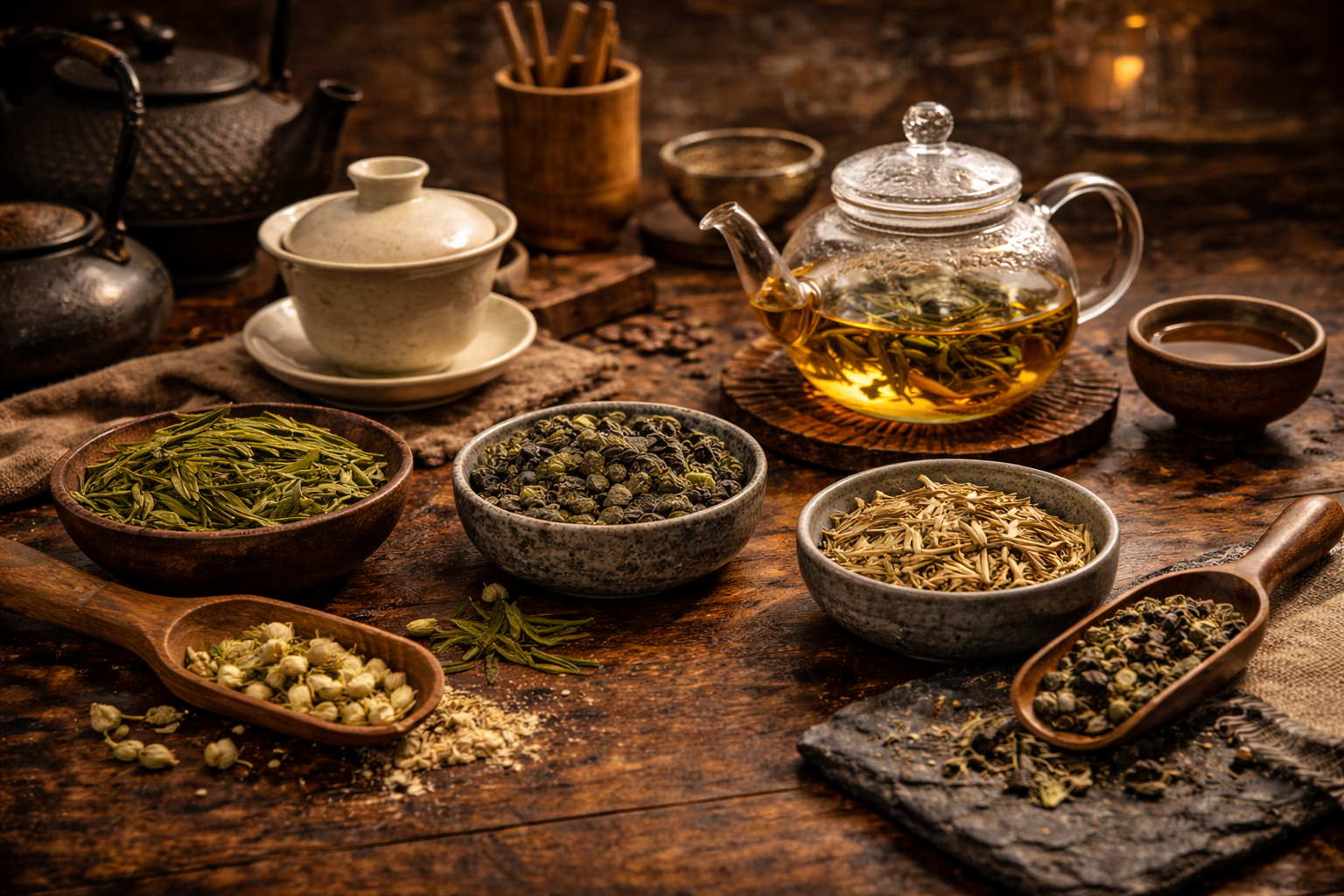
Teaware is often treated as decoration, but in practice it is a quiet collaborator. The vessel you choose shapes temperature, aroma, texture, and even how patiently you drink. Locals rarely overthink this. They match tea to teaware the same way they match weather to clothing — by feel, habit, and respect for tradition.
This guide is not about collecting objects. It is about choosing vessels that serve the tea, allowing each style to express itself clearly and calmly. That philosophy sits at the core of how we approach tea across The Drink Journal — attentive, grounded, and led by experience rather than excess.
Start With What the Tea Needs, Not What Looks Beautiful
Different teas ask for different conditions. Heat retention, airflow, and space for leaves to expand all matter more than ornament.
Before choosing teaware, ask three simple questions. Does the tea prefer high heat or gentle warmth? Does it benefit from repeated short infusions or one long steep? Does aroma play a leading role, or is texture more important?
Once you answer those, the vessel often becomes obvious.
If you want a broader framework for how teas are traditionally approached, The Art of Asian Tea: 12 Traditional Tea Styles Every Drinker Should Know provides helpful cultural context.
Green Teas Prefer Space and Gentle Control
Green teas are sensitive. They respond poorly to excess heat and thrive when given room to breathe.
Porcelain gaiwans and glass teapots are ideal here. They do not retain excessive heat, and they allow you to observe the leaves as they unfurl — a visual cue that helps prevent overbrewing.
This approach works beautifully for teas like Sencha, where clarity, freshness, and restraint define the experience. The transparency of glass or porcelain reinforces that delicacy rather than masking it.
Oolong Teas Benefit From Balanced Heat Retention
Oolong teas sit between green and black tea in both oxidation and personality. Their complexity often reveals itself gradually over multiple infusions.
Unglazed clay teapots or thicker porcelain gaiwans are well suited here. They hold enough heat to support aromatic development without overwhelming the leaves.
For high-mountain styles such as Dong Ding Oolong, the vessel should encourage repetition. A teapot that pours cleanly and cools at a measured pace allows the tea to evolve cup by cup.
Black Teas Prefer Structure and Warmth
Black teas are more forgiving. They welcome heat and reward consistency.
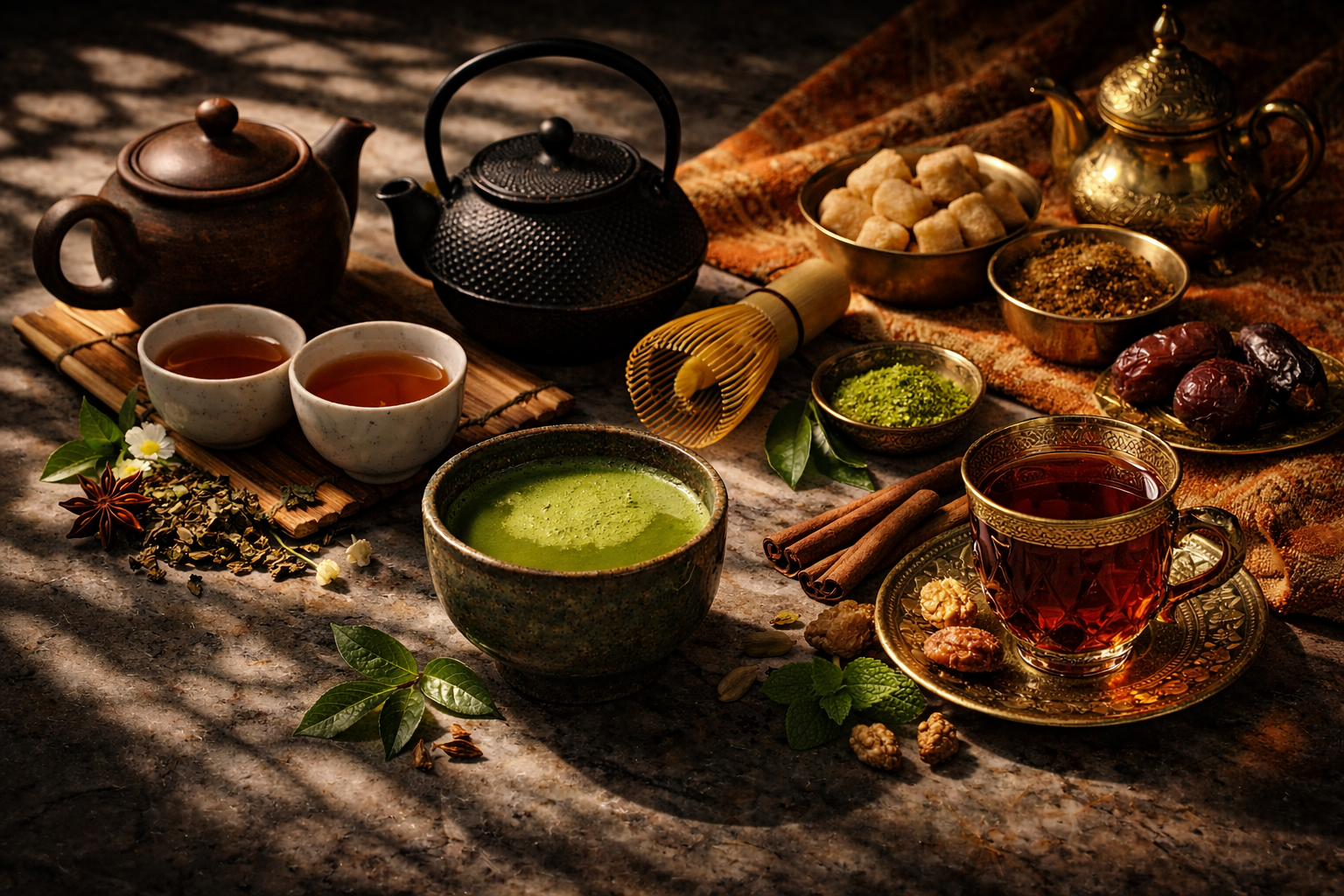
Ceramic or porcelain teapots with good thermal mass help maintain a steady temperature throughout the brew. Cups with slightly thicker walls preserve warmth and round out texture, especially when the tea carries malt or honeyed notes.
Teas like Assam shine in this setup, where body and depth matter more than fleeting aromatics.
Herbal Teas Ask for Openness and Volume
Herbal infusions are less about precision and more about release.
Glass teapots or large ceramic pots allow ingredients like flowers, leaves, and roots to expand fully. Because bitterness is rarely the concern, generous volume and longer steeping times are welcome.
This is especially true for calming infusions such as Chamomile, where visual openness and gentle warmth reinforce the tea’s purpose rather than distract from it.
Fragrant Teas Benefit From Aroma-Focused Vessels
Floral and scented teas live through aroma as much as taste.
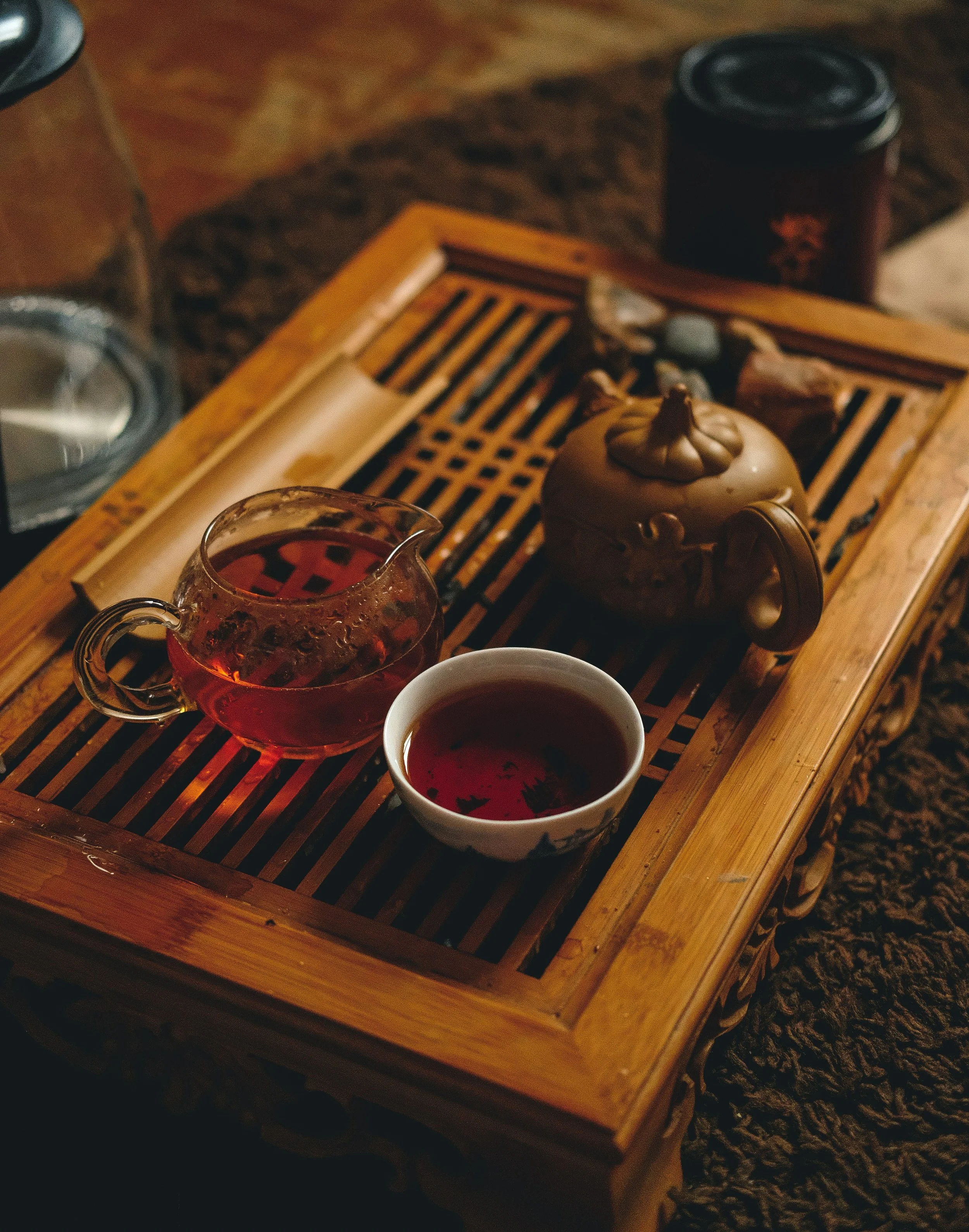
Thin porcelain cups and lidded gaiwans help trap volatile compounds briefly before release, allowing fragrance to arrive in waves rather than all at once.
Teas like Jasmine Silver Needle are best served in vessels that encourage slow, attentive drinking — where lifting the cup becomes part of the experience.
Let Teaware Disappear Into the Ritual
The right teaware should eventually fade from your awareness.
When the vessel is well matched, you stop noticing it. The pour feels natural. The temperature feels right. The tea speaks clearly. Locals don’t rotate teaware constantly — they settle into combinations that work and return to them without ceremony.
If you ever feel uncertain, choosing simple porcelain is rarely wrong. It is neutral, forgiving, and lets the tea lead.
Choose Fewer Pieces, Use Them Often
A small, thoughtful collection beats a crowded shelf.
One gaiwan, one medium teapot, and a few comfortable cups can carry you across most tea styles with grace. Over time, wear and familiarity deepen the ritual far more than novelty ever could.
