13 Tea Textures Explained: Light, Creamy, Oily, and Dry
Tea flavour gets most of the attention.
Texture does the quiet work.
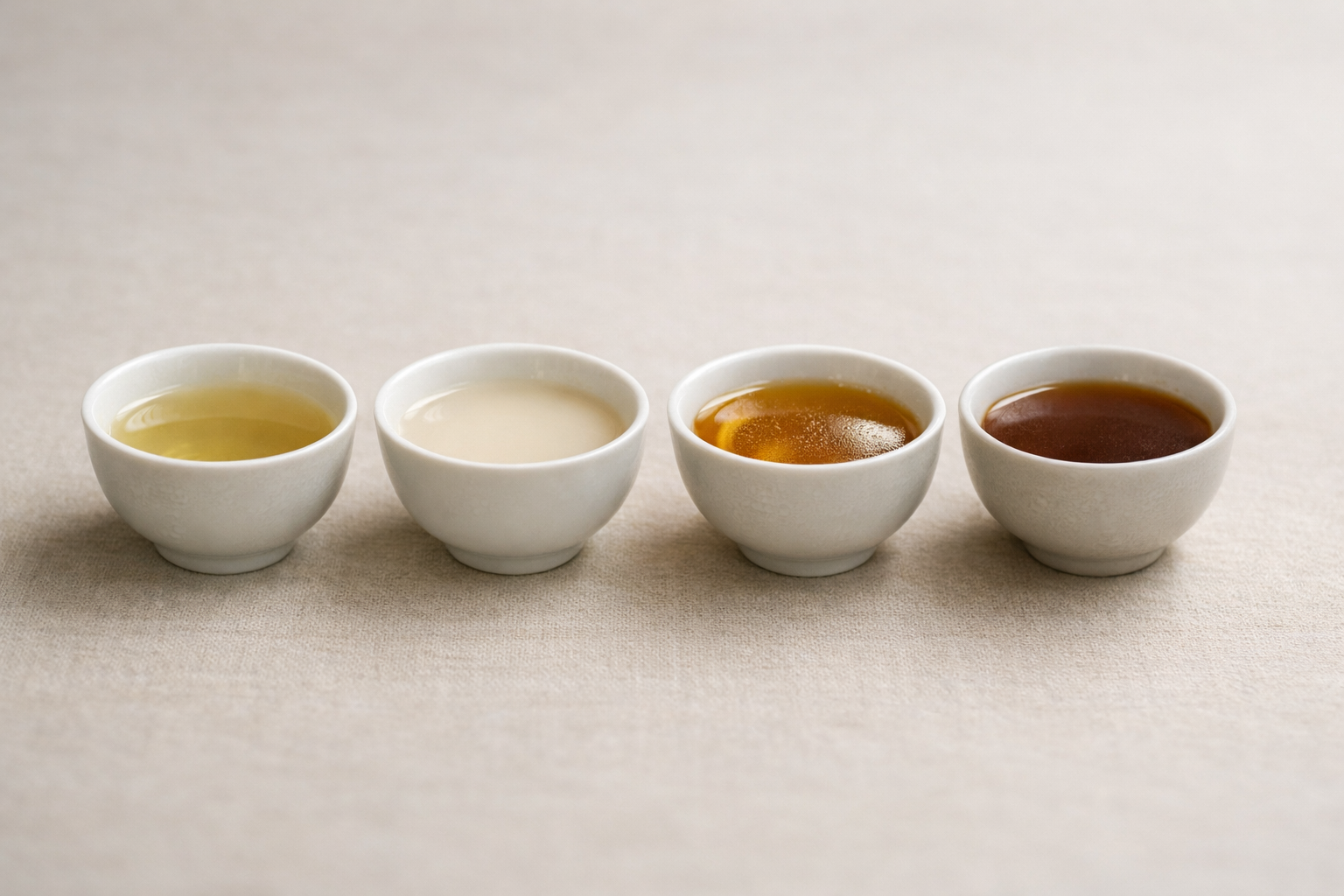
Texture is what makes a tea feel thin or round, silky or drying, fleeting or lingering. It shapes how aroma arrives, how flavour unfolds, and how long the experience stays with you after the cup is empty. Many people struggle to describe why a tea feels satisfying or disappointing because they are tasting texture without having language for it.
This guide breaks down the most common tea textures and explains what creates them, how to recognise them, and why they matter more than tasting notes alone.
1. Light
What it feels like: Clean, quick, airy
Light-textured teas move fast across the palate. They refresh rather than linger and often feel uplifting rather than grounding.
Green teas like Sencha are classic examples. When brewed correctly, they feel bright and clear, leaving behind a soft sweetness rather than weight.
Sencha Tea Collection
Light texture does not mean weak. It means precise.
2. Watery
What it feels like: Thin, fleeting, empty
Watery texture is not a style. It is a flaw.
It usually comes from under-dosing leaf, brewing too cool, or cutting steep times too short. Aroma may be present, but the body collapses immediately.
If a tea smells good but disappears on contact, texture is the missing piece.
3. Silky
What it feels like: Smooth, cohesive, polished
Silky teas coat the palate gently without heaviness. They feel refined and continuous rather than segmented.
High-quality white teas and some lightly oxidised oolongs often express this texture naturally. Silky texture allows aroma and flavour to move together instead of arriving separately.
4. Creamy
What it feels like: Round, soft, comforting
Creamy texture comes from dissolved solids and careful oxidation. It creates fullness without weight.
Oolongs like Tie Guan Yin often display this quality when brewed with enough leaf and proper temperature.
Tie Guan Yin: Iron Goddess of Mercy
Creaminess amplifies sweetness and softens bitterness.
5. Oily
What it feels like: Glossy, lingering, mouth-coating
Oily texture is often misunderstood. It does not mean greasy. It refers to a sheen on the palate created by aromatic oils and compounds.
Teas like Oriental Beauty (Bai Hao Oolong) are famous for this sensation, where aroma clings long after swallowing.
Oriental Beauty Bai Hao Oolong
This texture carries fragrance more than flavour.
6. Juicy
What it feels like: Plump, mouth-watering, expansive
Juicy teas stimulate salivation. They feel alive, almost fruit-like, even when no fruit notes are present.
This sensation often comes from balanced acidity and freshness rather than sweetness. Juiciness keeps a tea engaging sip after sip.
7. Velvety
What it feels like: Soft, dense, smooth-edged
Velvety teas feel thick without heaviness. They cushion the palate and slow perception.
Black teas with careful processing often fall into this category, where tannins are present but rounded rather than sharp.
8. Dry
What it feels like: Chalky, tightening, astringent
Dryness comes from tannins binding to proteins in your mouth.
In moderation, dryness adds structure. In excess, it strips pleasure. Teas like Assam can show beautiful dryness when balanced, or harsh roughness when over-brewed.
Assam Tea Collection
Dry texture should frame flavour, not dominate it.
9. Powdery
What it feels like: Fine, dusty, coating
Powdery texture appears when tiny particles remain suspended in the liquid. It can be pleasant or unpleasant depending on intention.
Some green teas exhibit this naturally. In others, it signals poor filtration or leaf quality.
10. Thick
What it feels like: Heavy, slow, weighty
Thick texture slows everything down. Flavour arrives later and stays longer.
This quality often emerges in fermented or heavily oxidised teas, especially when brewed strongly. Thickness demands patience and rewards contemplation.
11. Hollow
What it feels like: Present at first, gone immediately
Hollow teas lack mid-palate presence. Aroma arrives, but nothing follows.
This texture often results from brewing shortcuts or old leaves rather than inherent tea character.
12. Crisp
What it feels like: Sharp-edged, clean, refreshing
Crisp texture is defined by clarity rather than weight. It leaves a clean finish with minimal residue.
Herbal infusions like Peppermint often express this texture naturally.
Peppermint Tea Collection
Crisp teas reset the palate.
13. Lingering
What it feels like: Echoing, returning, persistent
Some teas stay with you long after swallowing.
This is not flavour intensity. It is after-feel. High-quality teas reveal themselves slowly, resurfacing minutes later through breath and warmth.
Learning to notice this texture changes how you judge tea entirely.
Final Thought
Texture is the hidden architecture of tea.
Once you start noticing how a tea feels, not just how it tastes, your understanding deepens immediately. Aroma becomes clearer. Balance becomes easier to recognise. Good tea becomes harder to forget.
👉 Explore more tea collections, guides, and sensory insight at
The Drink Journal