How to Order Cocktails With Confidence Even If You’re a Beginner




Standing at the bar shouldn’t feel like an exam. Yet for many people, it does. The menu looks unfamiliar, the bartender looks busy, and suddenly the safest option feels like saying, “I’ll just have a beer.” Confidence isn’t about knowing everything. It’s about knowing just enough to enjoy the moment.
At The Drink Journal, we believe ordering a drink should feel natural — not intimidating.
Step One: Understand What You Actually Like
Before you worry about cocktail names, ask yourself something simpler:
Do you prefer sweet or dry?
Bright and citrusy?
Spirit-forward and strong?
Light and refreshing?
You don’t need technical vocabulary. Even saying, “I usually like something not too sweet, maybe citrus-forward,” gives a bartender direction.
If you’re unsure how flavour structures work, our piece on the Whiskey Sour is a great place to start. It’s a perfect example of sweet, sour, and spirit working in harmony.
Step Two: Read the Room (Not Just the Menu)
Bars have personalities.
Some focus on classics. Some lean experimental. Some are quiet and precise. Others are loud and celebratory.
Confidence comes from observation. What are other guests drinking? What’s on the bar top? Is the bartender shaking sours or stirring spirit-forward drinks?
Understanding etiquette helps tremendously. In The Ultimate Guide to Bar Etiquette for Guests and Bartenders, we explore how small interactions create smoother experiences. A polite question asked at the right time goes a long way.
Step Three: Ask for Guidance — Clearly
A confident beginner doesn’t pretend to be an expert.
Instead of saying, “What’s good?”, try:
“I usually like citrusy drinks — what would you recommend?”
“I don’t like overly sweet cocktails — is there something balanced?”
“I’m new to whiskey — what’s approachable?”
This gives structure to the conversation.
Bartenders appreciate clarity. It helps them craft something tailored instead of guessing.
Step Four: Pay Attention to Presentation
Ordering confidently also means noticing the craft.
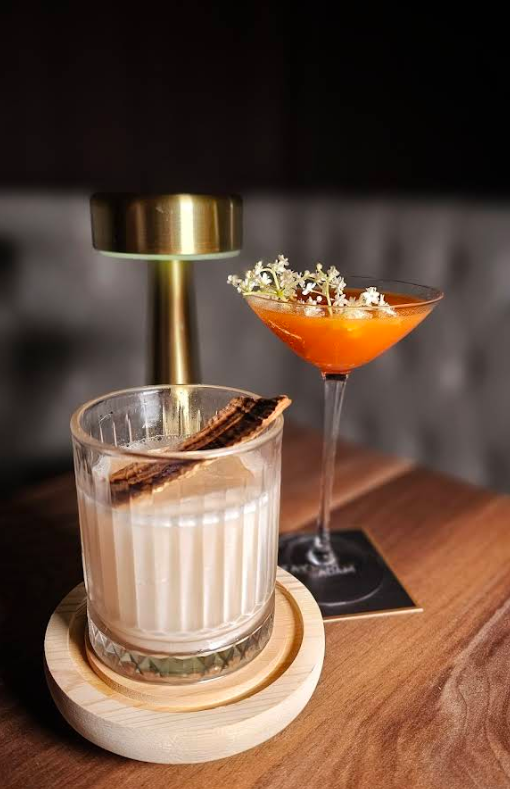
Garnish, glassware, and preparation tell you about the drink before you taste it. If you’ve read The Art of Garnishing: Elevating the Cocktail Experience, you’ll understand how aroma and visual cues shape perception.
When you notice these details, you begin participating in the experience rather than just consuming it.
Step Five: Start With a Classic
If in doubt, order something foundational.
Classics exist for a reason — they teach you balance. A Whiskey Sour, an Old Fashioned, a Martini. These drinks are templates. Once you understand them, menus become easier to navigate.
Much like learning to read a coffee menu — as we explored in How to Read a Coffee Menu Like a Local Anywhere in the World — familiarity builds fluency.
And fluency builds confidence.
Confidence Is Not Performance
The biggest misconception is that confidence means sounding knowledgeable.
It doesn’t.
It means being comfortable saying, “I’m new — what would you suggest?”
It means knowing your taste preferences.
It means understanding that good bars welcome curiosity.
At The Drink Journal, and in our story shared in About TDJ, we explore drinks as culture — not as gatekeeping rituals.
You don’t need to memorise cocktail history.
You just need to show up curious.
That’s more than enough.
FAQ — Ordering Cocktails as a Beginner
1. Is it okay to tell a bartender I’m new to cocktails?
Yes. Clear communication makes the experience smoother. Most bartenders appreciate honesty over guesswork.
2. What if I don’t like the drink I ordered?
It happens. Politely explain what you didn’t enjoy (too sweet, too strong, too bitter). That feedback helps refine your next order.
3. Should I always order classics first?
Classics are helpful starting points because they teach flavour structure, but you’re free to explore if something catches your interest.
4. Is there a “wrong” way to order a cocktail?
Only if you’re disrespectful or unclear. Courtesy and clarity go further than technical knowledge.
5. How do I build my palate over time?
Try different base spirits gradually. Notice sweetness, acidity, bitterness, and texture. Pay attention, and patterns will emerge quickly.
More Like This, More About Cocktails