Cocktail Archive: Paper Plane (United States)
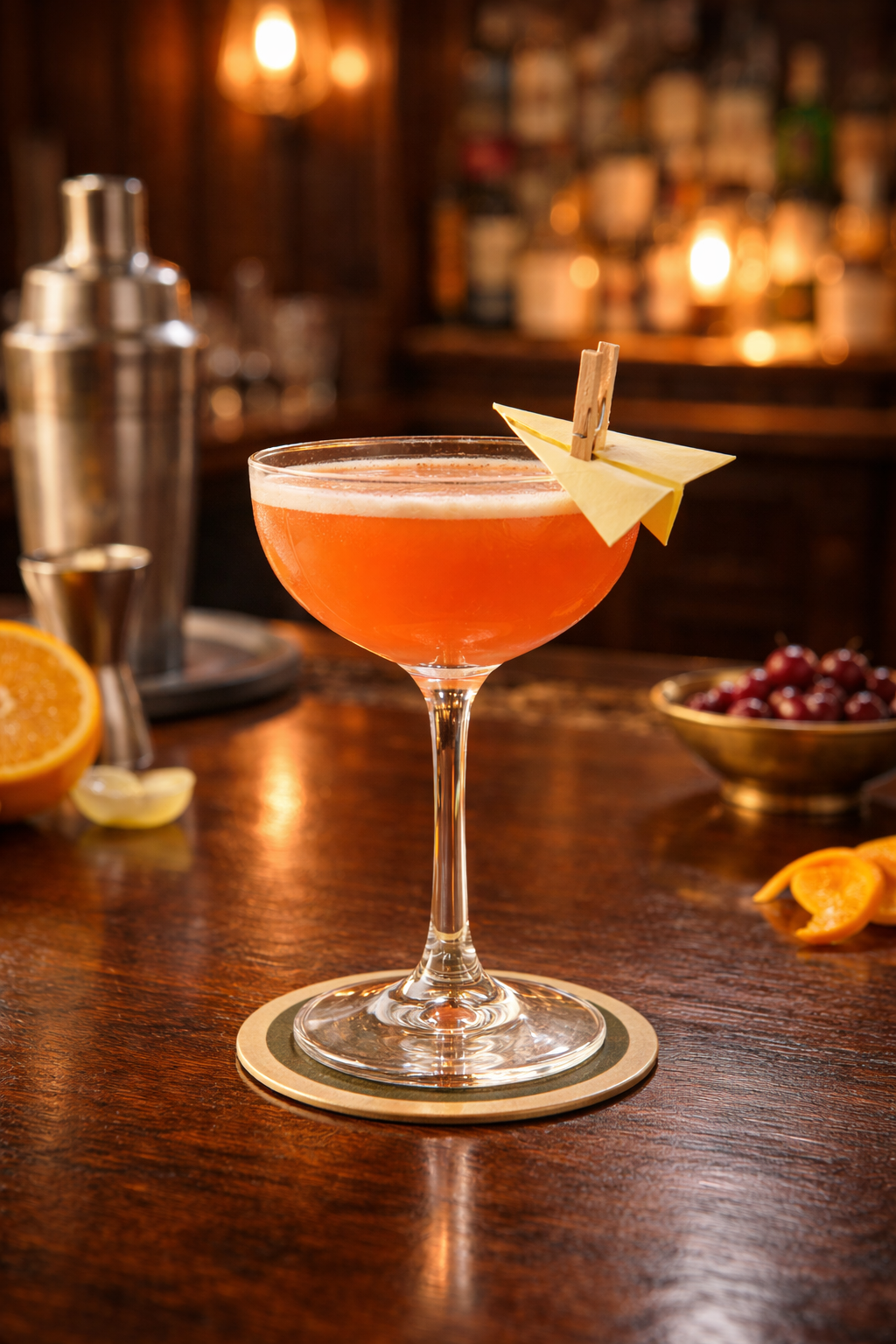
The Paper Plane feels light before it ever reaches the glass. Pale, chilled, and quietly inviting, it carries a sense of motion and ease. Nothing about it is loud. The aroma is bright, the texture smooth, and the finish gently warming. It is a cocktail that feels modern without trying to be clever, confident without being heavy.
Often ordered early in the evening, the Paper Plane suits moments of transition. It works after work, before dinner, or at the start of a long conversation. The first sip is citrus-led and refreshing, followed by soft herbal notes and a subtle bourbon warmth that settles comfortably rather than asserting itself.
Origin & Cultural Context
The Paper Plane was created in 2007 by Sam Ross in New York City during a period when bartenders were revisiting classic structures with a lighter, more approachable touch. Built on an equal-parts framework similar to the Negroni, it reorients the balance away from bitterness and toward brightness, using citrus and amaro to create lift instead of weight.
It belongs to the same contemporary lineage as drinks like the Whiskey Sour, where structure and accessibility coexist. The Paper Plane spread quickly through cocktail bars not because it was novel, but because it felt immediately intuitive.
What Defines the Paper Plane
The Paper Plane is defined by balance without sharpness. Equal parts keep the structure clear, but the flavour arc is softer than many classic aperitifs. Citrus arrives first, followed by gentle herbal bitterness and a rounded bourbon finish. Compared to spirit-forward drinks such as the Boulevardier, the Paper Plane feels lighter and more buoyant, designed to refresh rather than anchor.
It is a cocktail that rewards accuracy, yet remains forgiving. When made well, no single ingredient announces itself. Everything arrives together.
Ingredients
Bourbon
Aperol
Amaro Nonino
Fresh lemon juice
Equipment Needed
Shaker
Fine strainer
Chilled coupe glass
Method
Add all ingredients to a shaker filled with ice
Shake firmly until well chilled
Double strain into a chilled coupe
Serve immediately
Notes & Variations
Fresh citrus is essential here. Lemon juice should be bright and recently squeezed to maintain clarity. Proper dilution keeps the drink open and integrated, preventing the amaro from feeling dense. While some variations explore different amaros or base spirits, the original composition remains the most balanced expression.
The Paper Plane is often referenced alongside modern interpretations of classic formats, sitting comfortably between aperitif-style drinks and citrus-forward sours. It shares a similar sense of ease with cocktails like the Manhattan, though expressed in a lighter register.
When to Drink It
This is a cocktail for early evenings and unhurried pacing. It works as an aperitif or a first round, especially for those easing into whiskey-based drinks. Served cold and unadorned, it makes its point through balance rather than embellishment.
For readers interested in how presentation and restraint shape the experience, the art of garnishing offers useful context, while the ultimate guide to bar etiquette explores the pacing and ritual that suit a drink like this.
The Paper Plane does not linger loudly. It moves through the evening with composure, clarity, and just enough lift to invite the next sip.