Tea Collection: Rooibos Vanilla
Inside the Tea
Under the bright blue sky of South Africa’s Cederberg Mountains, slender, needle-like shrubs stretch across sandy soils. This is Aspalathus linearis, better known as rooibos, which translates to “red bush” in Afrikaans. Indigenous Khoisan communities have brewed its leaves for generations, and in the twentieth century rooibos found its way into teapots worldwide. Rooibos itself is naturally sweet and nutty; when blended with vanilla, it becomes a dessert-like infusion that is as comforting as a warm blanket.
Harvesting rooibos begins in late summer. Workers cut the stems and leaves, then bruise them to encourage oxidation—an unusual step for an herbal infusion. As the plant oxidizes, it changes from green to the characteristic brick-red colour. The cut leaves and stems are then spread out to dry under the African sun. This process intensifies rooibos’ natural sugars and caramel notes. For rooibos vanilla blends, pieces of vanilla bean or natural vanilla flavour are added, marrying the base’s nutty sweetness with creamy, floral warmth. The resulting blend looks like reddish needles dusted with flecks of dark brown vanilla.
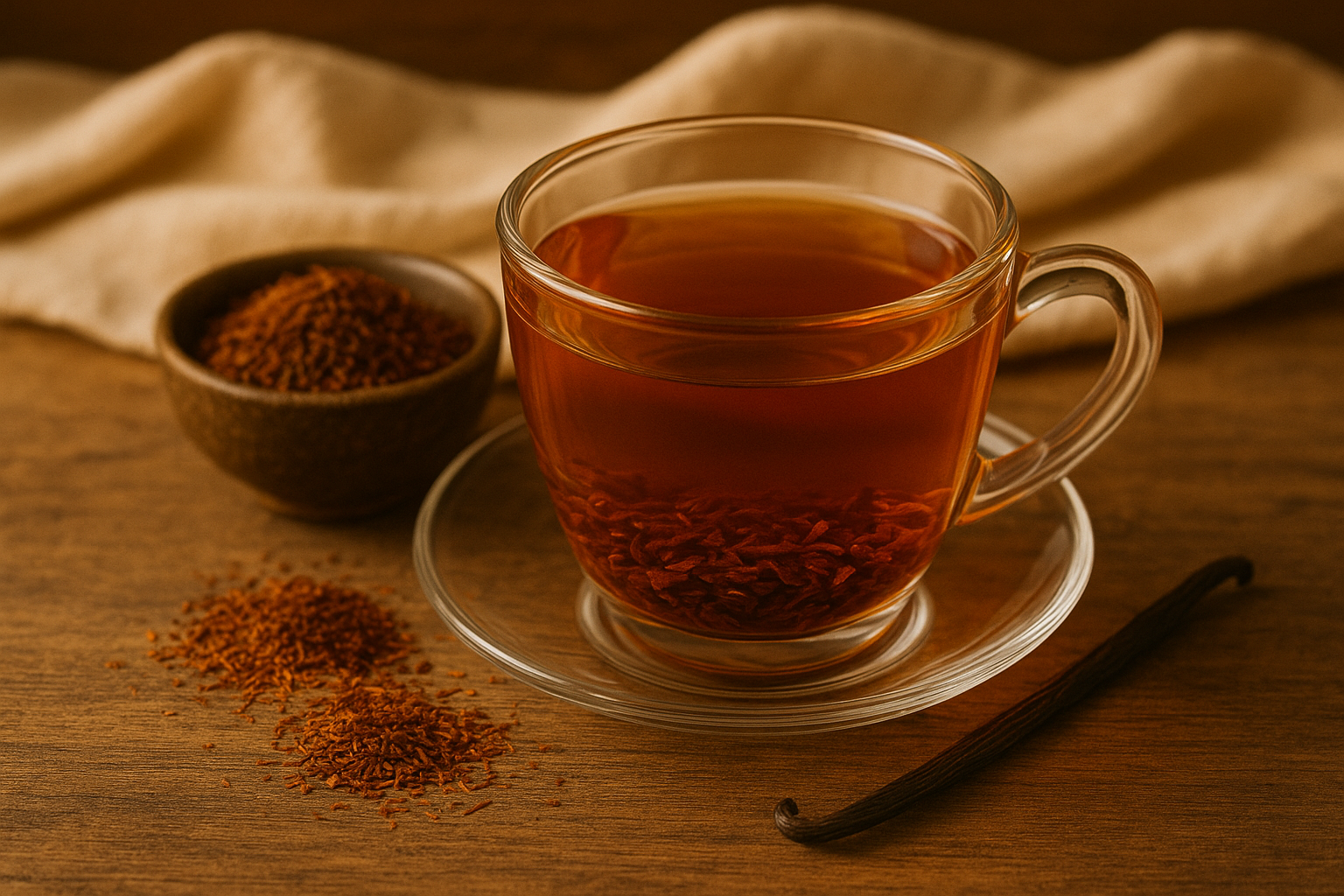
Steeped, rooibos vanilla yields a deep mahogany liquor that fills the air with aromas of honey, caramel, and gentle vanilla. Unlike teas made from Camellia sinensis, rooibos contains no caffeine, so its flavour is free of bitterness or astringency. On the palate, it is round and smooth, with hints of dried fruit, roasted nuts, and a soft vanilla finish that coats the tongue. Because it lacks tannins, rooibos can steep for a long time without becoming harsh. Many people brew it strong and then add milk, making a rooibos “latte” that rivals hot cocoa for comfort. Chilled, it transforms into a naturally sweet iced beverage that needs little or no sugar.
Culturally, rooibos is woven into South African life. It is served to children and elders alike, at breakfast and in the evening. During the lean years of global war and trade disruption, rooibos provided a satisfying tea substitute. Today, it continues to gain popularity for its health benefits—rich in antioxidants and free of caffeine—and for its adaptability in herbal blends. Rooibos vanilla, specifically, sits at the intersection of indulgence and wellness: a cosy, dessert-like infusion that contains no sugar but satisfies the sweet tooth.
What People Notice Most Often
Naturally sweet, nutty base with creamy vanilla overlay
Deep red-brown liquor like mahogany
Caffeine-free and gentle on digestion
Smooth, almost syrupy mouthfeel
Notes of caramel, honey, and dried fruit
Rich in antioxidants and minerals
Safe and appealing for children and evening sipping
Delicious plain or with milk and honey
Maintains flavour even with long steep times
Inviting aroma that fills the room with warmth
Tea at a Glance
Overview
Rooibos Vanilla is an herbal blend pairing South African red rooibos with vanilla bean. Free of caffeine and tannins, it offers a naturally sweet, creamy flavour reminiscent of caramel and honey. It’s a relaxing drink for any time, especially when you crave a dessert-like treat without sugar.
The Experience
This infusion pours a deep red-brown and smells like warm biscuits and vanilla cream. Each sip is smooth and sweet, coating the palate with nutty rooibos and soft vanilla that lingers.
Brew Notes to Try
Classic Hot Brew
Steep in boiling water for 5–7 minutes; enjoy straight or with milk.Rooibos Latte
Brew strong; froth with steamed milk and a drizzle of honey.Iced Rooibos Vanilla
Chill brewed rooibos and serve over ice with a splash of citrus.Chai-Style Rooibos
Simmer rooibos with cinnamon, cloves, and ginger; add vanilla to finish.Cold Brew
Steep overnight in cool water for a smoother, less earthy cup.
Why People Love It
Rooibos Vanilla combines indulgence and wellbeing. It delivers the comfort of a sweet treat without caffeine or calories. Its smooth, gentle flavour makes it a favourite for bedtime or midday relaxation, and it feels special even though it’s easy to prepare.
Good to Know
Use boiling water; long steeping is welcome
Naturally caffeine-free
Store in a cool, dark place to preserve fragrance
Doesn’t turn bitter even when over-steeped
Great alternative to sugary hot chocolate or dessert teas
Safe during pregnancy and for children
Where It Comes From
Cederberg region, Western Cape, South Africa
Plant: Aspalathus linearis (“red bush”)
Vanilla sourced from beans (often Madagascar or Tahitian)
Category: herbal tisane