Tea Collection: Osmanthus Black Tea (China)
What is Osmanthus Black Tea?
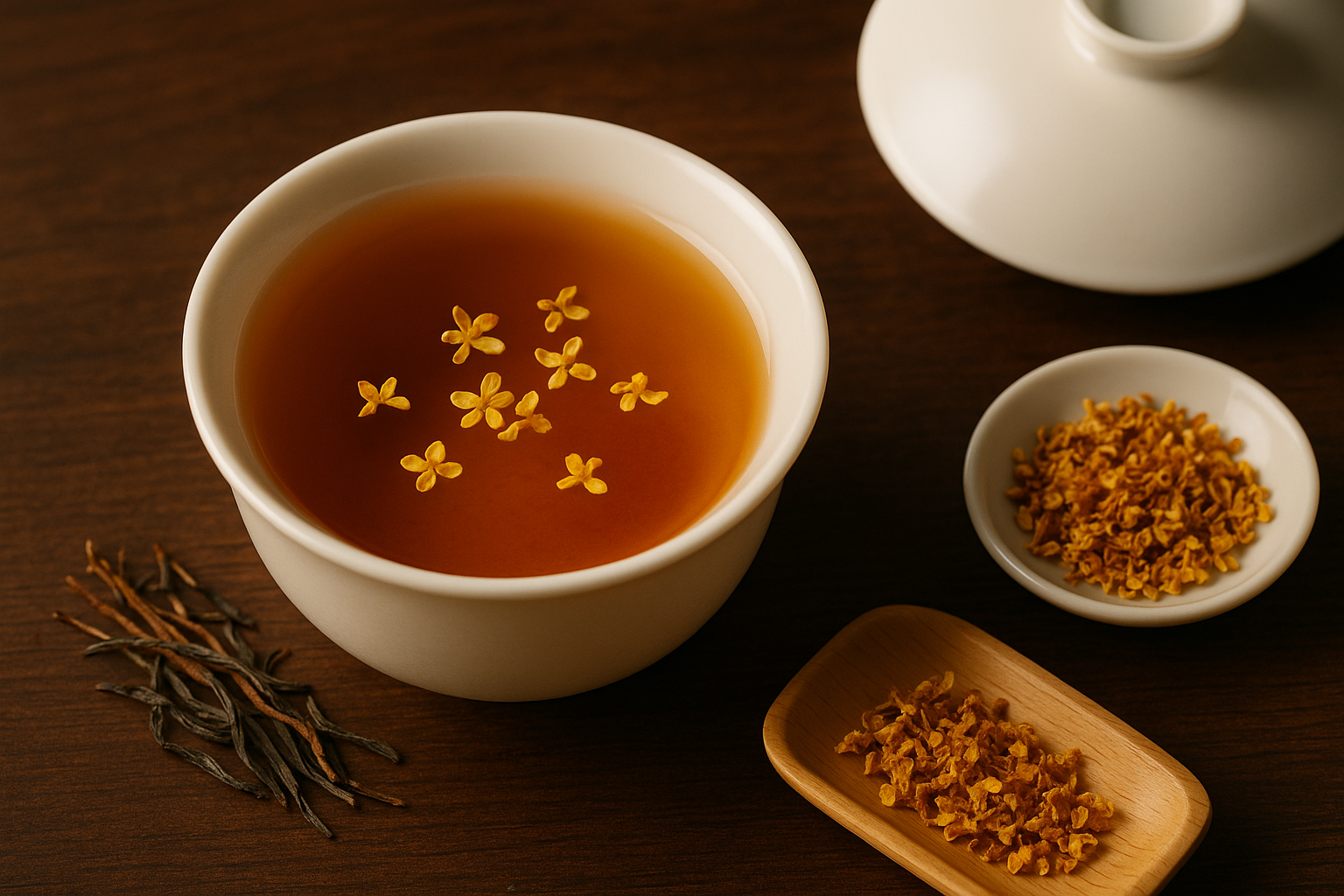
Osmanthus Black Tea is a meeting of two beloved Chinese traditions: the warmth of fully oxidised black tea and the sweet, apricot-like fragrance of osmanthus blossoms. Originating in southern China — particularly in regions such as Guangxi and Zhejiang — this tea is crafted by layering fresh osmanthus flowers with black tea leaves, allowing the blossoms’ natural oils to perfume the leaf until the scent becomes inseparable from the tea itself.
The resulting cup is golden-amber and softly radiant, carrying notes of honey, dried fruit, peach skin, and a delicate floral lift. Compared to the sharper edge of unscented black teas such as Assam, osmanthus brings roundness and lightness — a sweet, almost nectar-like clarity. The floral character here is not as overt as in teas like Jasmine Silver Needle; instead, osmanthus whispers, barely rising above the tea’s depth until the aftertaste blooms gently across the palate.
To understand Osmanthus Black Tea more deeply, it helps to explore teas shaped by similar craftsmanship. The honey-rich aromatics of Oriental Beauty highlight how oxidation and natural leaf chemistry can create fruit-like sweetness without added blossoms. Meanwhile, the bright, inviting body of Lychee Black Tea demonstrates how scenting traditions vary across regions — each fruit or flower lending a different cultural and sensory identity.
For a broader view of how floral, fruity, and fermented notes are interpreted across global tea practices, guides such as The Modern Tea Lover’s Guide and The Art of Asian Tea offer grounding context. They help place Osmanthus Black Tea within the larger tapestry of Asian scenting methods, regional traditions, and historical craftsmanship.
Osmanthus Black Tea tastes like autumn sunlight drifting through open windows, like late-afternoon warmth settling onto fruit trees.
It is gentle, fragrant, comforting — a tea that softens the day.
Ingredients
3–4 g Osmanthus Black Tea
200 ml water (90–95°C)
Equipment Needed
Teapot or gaiwan
Kettle
Strainer
Tasting cup
Method
Heat water to 90–95°C.
Warm your teapot or gaiwan, then discard the rinse.
Add the tea leaves; inhale the soft osmanthus fragrance rising from the warmed vessel.
Pour water over the leaves and steep 2–3 minutes.
Strain completely.
Re-steep for 3–4 minutes, noticing how the floral notes persist but soften.
Notes
Osmanthus Black Tea is best brewed gently — too much heat or time can overshadow the blossoms and mute their sweetness. When brewed well, the cup becomes round, fruity, and elegant.
For those exploring how sweetness expresses differently across regions, tasting Osmanthus Black Tea alongside Hibiscus Roselle reveals a striking contrast: one leans toward floral warmth, the other toward vibrant acidity. If you enjoy digging deeper into brewing technique and how it affects structure and aroma, How to Choose the Right Brewing Method offers a useful foundation for crafting the perfect cup.
Osmanthus Black Tea feels like a bridge — between aroma and body, between fruit and flower, between warmth and light.
It is a deeply comforting tea, one that lingers softly on the palate long after the cup is empty.