
How to Brew Loose Leaf Tea Properly Without Oversteeping
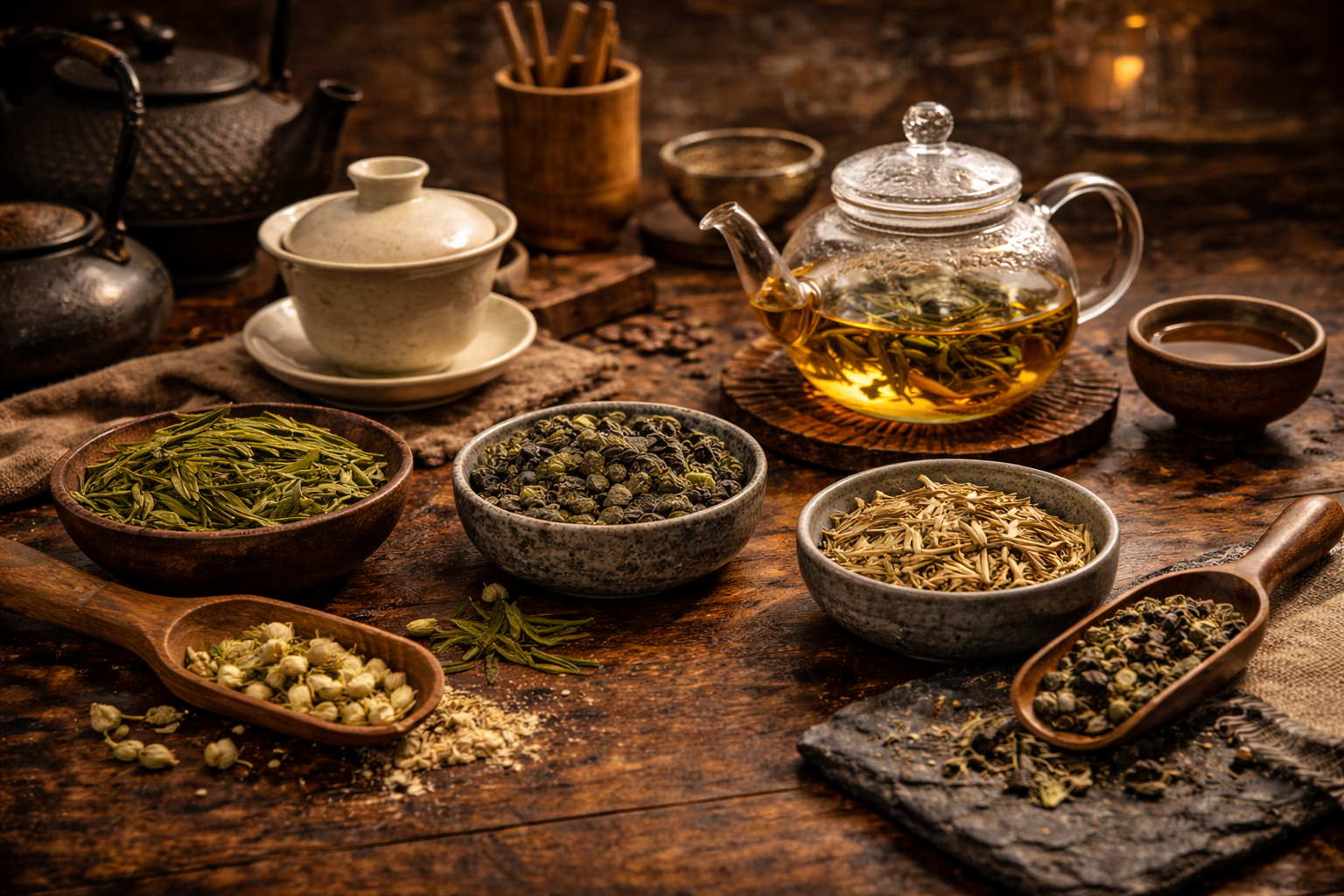
Loose leaf tea has a reputation for being delicate, temperamental, and easy to ruin. In reality, it is far more forgiving than most people expect. Oversteeping happens not because loose leaf tea is difficult, but because it is often brewed without understanding what it needs to express itself clearly.
This guide focuses on how to brew loose leaf tea in a way that preserves aroma, texture, and balance — without bitterness, dryness, or that dull, flattened taste that comes from pushing the leaves too far.
Why Loose Leaf Tea Oversteeps More Easily Than Tea Bags
Loose leaf tea contains whole or partially intact leaves. These leaves unfurl as they steep, releasing flavour gradually rather than all at once. This is precisely what makes loose leaf tea expressive and layered.
Tea bags, by contrast, usually contain broken leaves or dust. They release flavour quickly and aggressively, which is why bitterness often feels unavoidable.
Loose leaf tea oversteeps when it is treated like a tea bag. Too much heat, too much time, or too little space causes the leaves to dump everything at once instead of unfolding naturally.
Understanding this difference changes everything.
Use More Space, Not Less Time
One of the most common mistakes is reducing steep time drastically in an attempt to avoid bitterness. This often leads to thin, unsatisfying tea.
A better approach is to give the leaves room to expand.
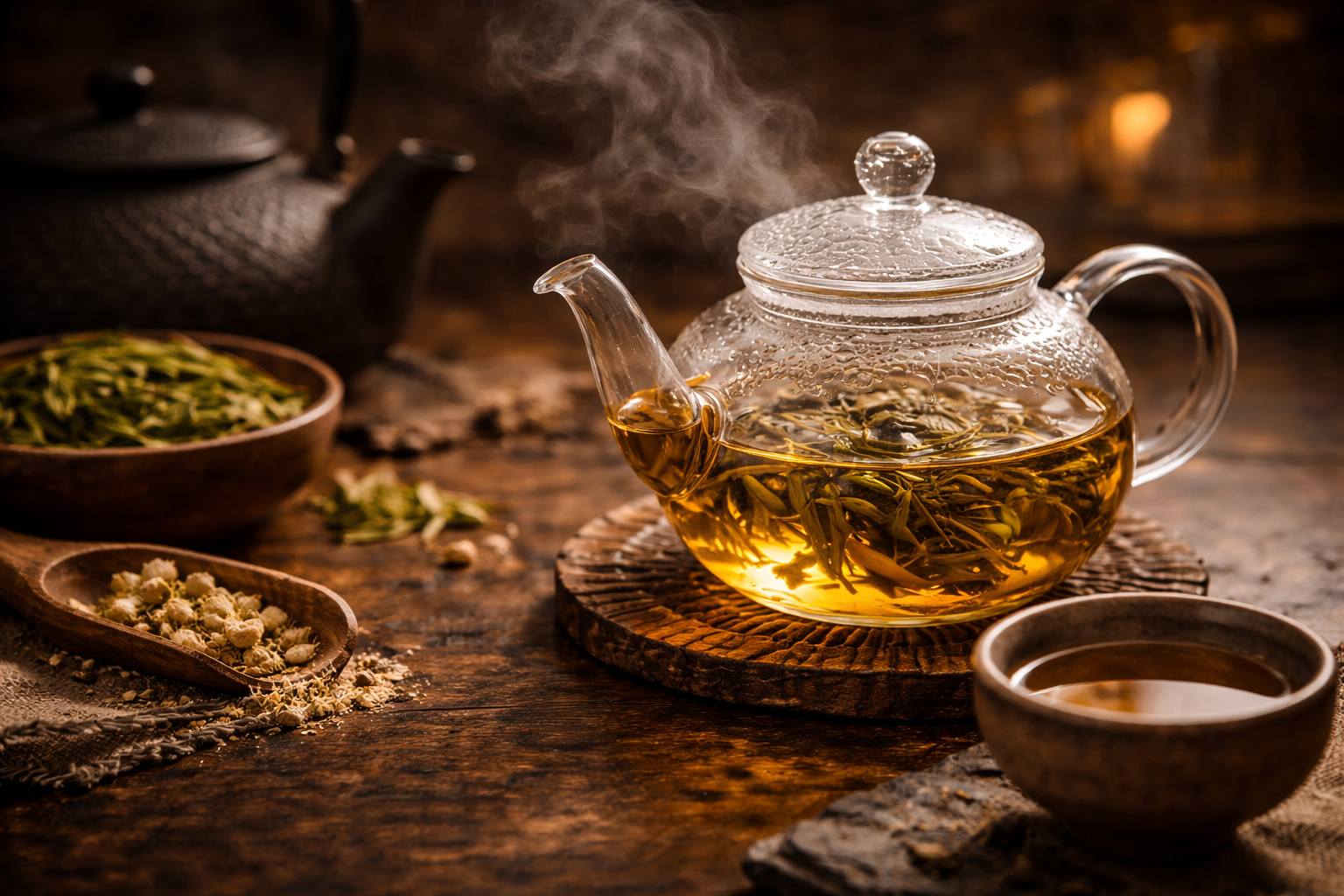
When loose leaf tea has space, it releases flavour evenly. Cramped leaves extract unevenly, producing harshness even at short steep times. This is why teapots, gaiwans, and wide infusers outperform narrow baskets and cramped strainers.
This principle is especially important when brewing fragrant or lightly oxidised teas, such as those explored in The Modern Tea Lover’s Guide: Floral, Fruity, Smoky and Fermented Teas Explained.
Water Temperature Matters More Than the Clock
Time is only one variable. Temperature is often the real culprit behind oversteeping.
Water that is too hot extracts bitterness rapidly, especially from green, white, and lightly oxidised teas. Cooler water slows extraction, allowing sweetness and aroma to emerge before tannins dominate.
Many traditional tea styles discussed in The Art of Asian Tea: 12 Traditional Tea Styles Every Drinker Should Know are brewed well below boiling, precisely to protect delicacy.
If your tea tastes bitter even at short steep times, lowering the water temperature will usually solve the problem faster than shortening the brew.
Measure Tea by Leaf Volume, Not Weight Alone
Loose leaf tea varies dramatically in size and density.
Rolled oolong, wiry green tea, fluffy white tea, and broken black tea all occupy space differently. Measuring purely by weight can lead to accidental overdosing, especially with tightly rolled leaves that expand significantly.
A visual measure that allows space for expansion is often more reliable at home. This prevents over-extraction caused by overcrowding and keeps the brew balanced from the start.
Shorter Steeps, Multiple Infusions
One of the quiet advantages of loose leaf tea is that it can be brewed more than once.
Instead of one long steep, use shorter infusions and rebrew the same leaves. This method reduces bitterness while revealing how flavour shifts over time. Early infusions highlight aroma. Later ones emphasise body and depth.
This approach is central to traditional brewing styles and pairs beautifully with teas such as Dong Ding Oolong and Tie Guan Yin (Iron Goddess of Mercy), both of which are designed to evolve across multiple steeps.
Remove the Leaves Completely
Loose leaf tea continues extracting as long as it remains in contact with water.
Partial draining or lifting an infuser halfway is not enough. Leaves should be fully removed once the infusion is complete. Even a small amount of residual water trapped with the leaves can push the brew into bitterness over time.
This is especially noticeable with green and floral teas, where oversteeping expresses itself as dryness rather than obvious harshness.
Taste Earlier Than You Think
Many people wait for the timer to finish before tasting. This is a habit inherited from tea bags.
Loose leaf tea benefits from early tasting. A small sip midway through the infusion tells you more than any timer can. When aroma and sweetness feel present, the tea is ready. Waiting longer rarely improves it.
This habit builds intuition quickly and removes anxiety from the process.
Why Some Teas Forgive Oversteeping Better Than Others
Not all teas respond the same way.
Herbal and naturally caffeine-free infusions tend to be forgiving. Teas like Chamomile or Peppermint rarely become bitter, even when steeped generously.
By contrast, delicate green and white teas require more attention, while black teas and roasted oolongs sit comfortably in the middle.
Understanding the category you’re brewing is often enough to prevent oversteeping before it happens.
Good Tea Is Calm, Not Aggressive
When brewed properly, loose leaf tea does not shout.
It should feel rounded, aromatic, and composed. Bitterness, when present, should feel supportive rather than dominant. If a tea tastes sharp or drying, it is usually a signal that something was rushed or pushed.
Brewing loose leaf tea well is less about precision and more about restraint. Giving the leaves space, respecting temperature, and paying attention early leads to cups that feel settled and complete.
And once you experience that balance, oversteeping stops being a constant worry — it becomes an easily avoided habit.
