How to Brew Better Coffee at Home Without Changing Your Beans
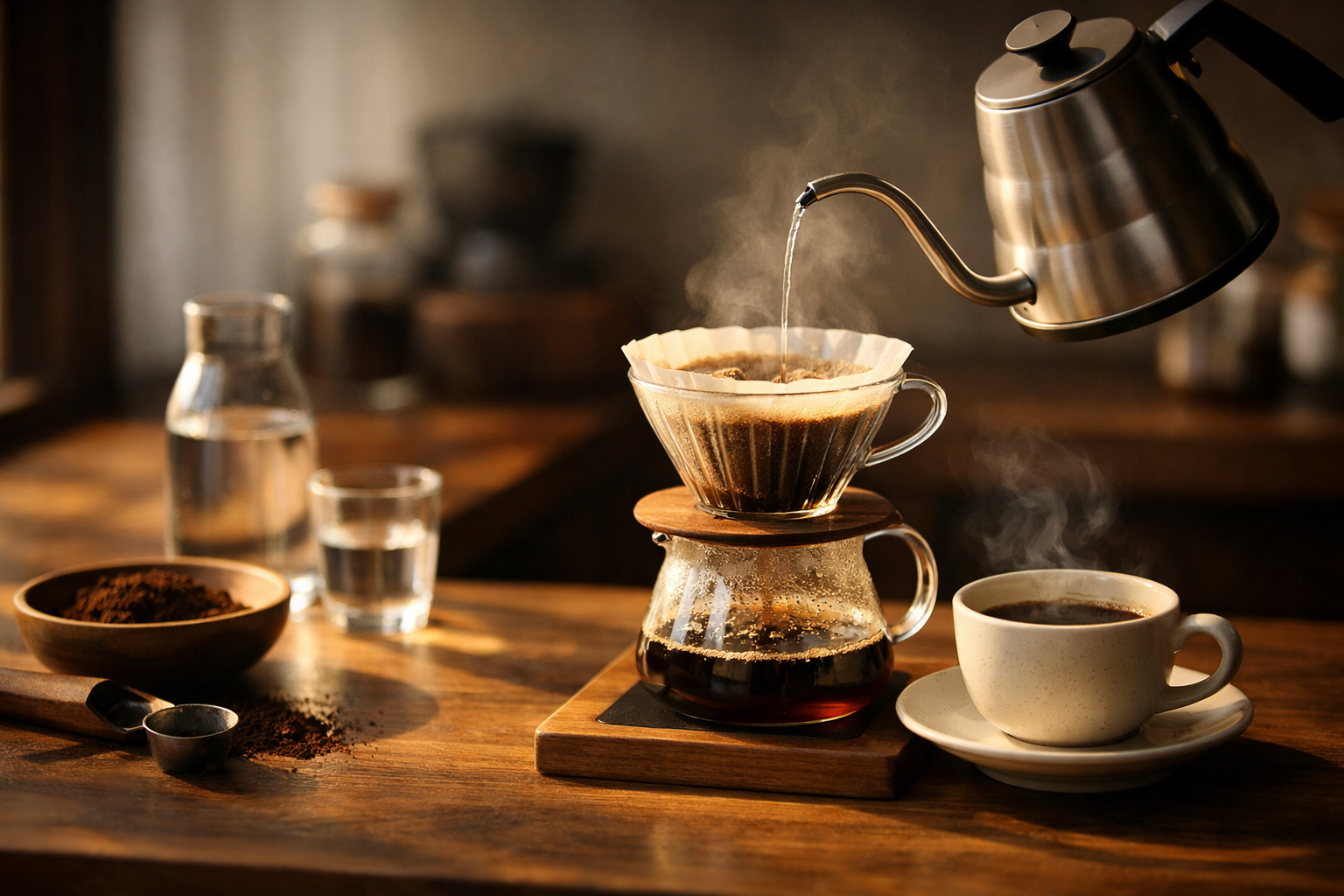
Many people assume that better coffee begins with buying better beans. While quality beans matter, they are rarely the main reason home coffee tastes flat, sour, or overly bitter. In most cases, the difference between an average cup and a genuinely satisfying one comes from small adjustments in how coffee is brewed, not what is brewed.
This guide focuses on the controllable elements already within reach. The things that quietly shape flavour long before the beans ever need replacing.
Start With Water, Not Coffee
Coffee is mostly water. Yet water is often the least considered variable.
Tap water that tastes metallic, overly chlorinated, or flat will always carry those traits into the cup. Even with excellent beans, poor water dulls aroma and compresses flavour.
Filtered water does not need to be perfect. It simply needs to be neutral. Once water stops interfering, coffee is finally allowed to speak clearly. This is one of the simplest upgrades you can make without touching your beans or equipment.
Water temperature matters too. Water that is too hot extracts bitterness aggressively. Water that is too cool leaves coffee hollow and sour. Most home brews benefit from water just off the boil, slightly rested before pouring.
Grind Size Is Doing More Work Than You Think
Grind size controls extraction more than almost any other variable.
If coffee tastes sharp, thin, or acidic, the grind is usually too coarse. If it tastes harsh, dry, or overwhelmingly bitter, the grind is often too fine. These flavour problems are frequently blamed on beans when they are actually mechanical.
Adjusting grind size is one of the most direct ways to improve coffee without changing anything else. Even small changes can dramatically reshape balance. This relationship between grind, flow, and extraction is explored in detail in How to Choose the Right Brewing Method: Coffee Equipment Explained Simply.
Consistency matters as much as size. Uneven grinding creates uneven extraction, where some grounds are overworked while others barely contribute. This is why cafés invest so heavily in grinders rather than constantly rotating beans.
Use Less Coffee Than You Think
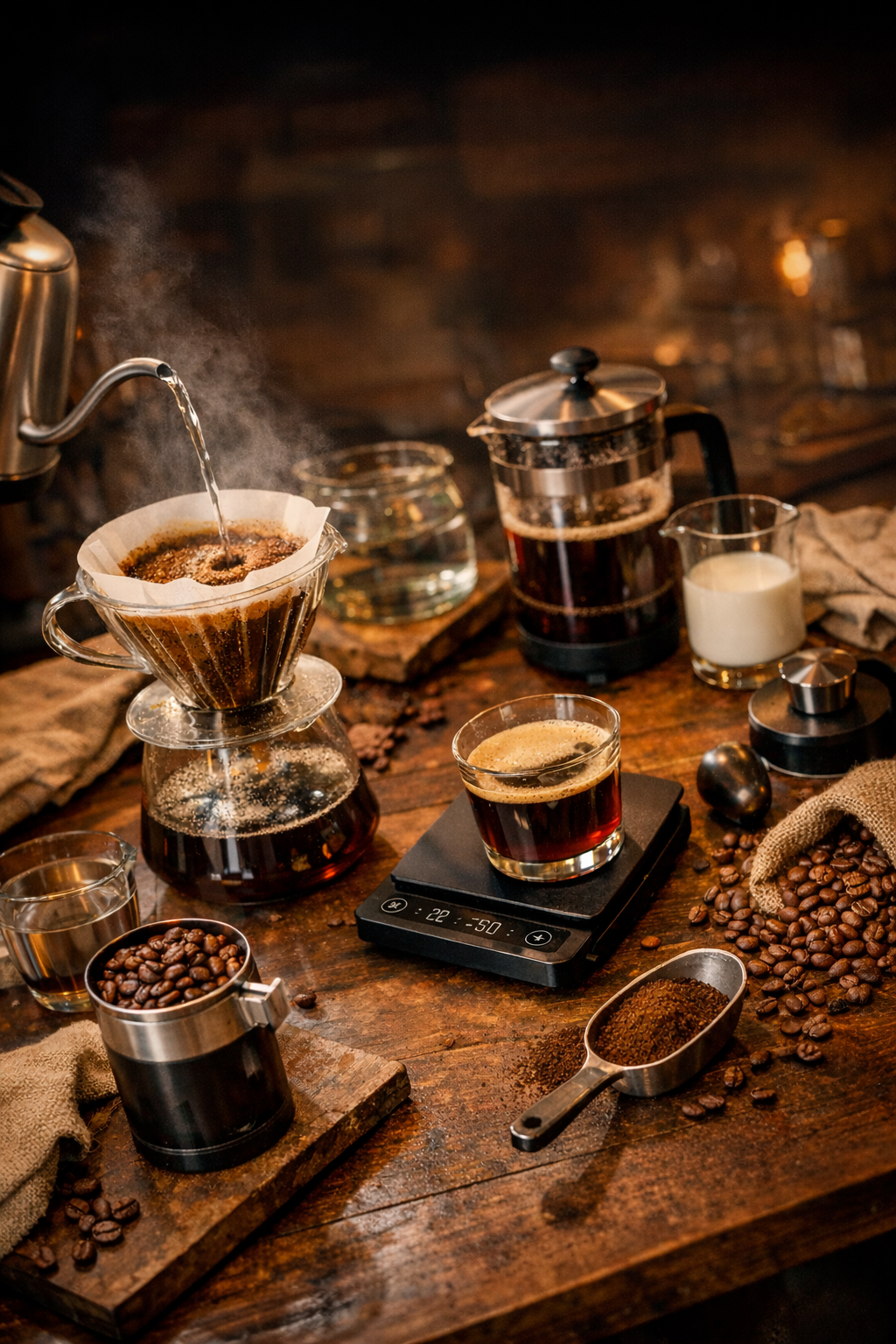
Overdosing coffee is a common mistake.
More coffee does not automatically mean more flavour. It often means muddier flavour. When too much coffee is used, water struggles to move through evenly, leading to imbalance.
A lighter hand often reveals sweetness and clarity that were previously buried. Many traditional drinks featured in 20 Must-Try Classic Coffee Beverages from Around the World were historically brewed with restraint, prioritising balance over intensity.
Control Time Before You Control Technique
Brewing time is a quiet but powerful variable.
If water moves through coffee too quickly, extraction is incomplete. If it lingers too long, bitterness dominates. Instead of chasing advanced techniques, focus on keeping time consistent.
Whether you are using a pour-over, immersion brewer, or manual device, repeatability matters more than precision. Brewing the same way each time allows you to taste changes clearly and adjust intelligently.
This is one reason why cafés often appear effortless. Their processes are stable, not complicated.
Clean Equipment Changes Everything
Coffee residue builds up faster than most people realise.
Old oils cling to grinders, brewers, and filters, muting aroma and introducing stale flavours. Even excellent technique cannot overcome dirty equipment.
Regular rinsing and occasional deep cleaning restore clarity immediately. Many people are surprised by how much brighter coffee tastes after this step alone.
Pay Attention to Milk, Even When Coffee Comes First
Milk does not just soften coffee. It transforms it.
Temperature, texture, and type of milk dramatically affect flavour perception. Milk that is overheated becomes flat and artificially sweet. Milk that is under-textured feels thin and disconnected.
Understanding how milk behaves is essential for espresso-based drinks, something explored deeply in The Perfect Espresso (Italy), where balance between coffee and milk is treated as a dialogue rather than an afterthought.
Slow Down the First Sip
Coffee changes as it cools.
Flavours that feel sharp at first may soften. Sweetness often emerges later. Drinking too quickly compresses the experience and masks nuance. This way of tasting is central to A Beginner’s Guide to Understanding Specialty Coffee: From Beans to Brewing, where attention is treated as part of the craft.
Better Coffee Is Usually Quieter Coffee
Improvement does not always feel dramatic.
Better coffee often tastes calmer. More settled. Less demanding. Instead of loud bitterness or sharp acidity, it feels cohesive and complete.
And the most satisfying part is this: all of these changes happen without switching beans, buying new gear, or chasing trends. They happen by listening more closely to what is already in your cup.