Cocktail Archive: Pimm’s Cup (United Kingdom)
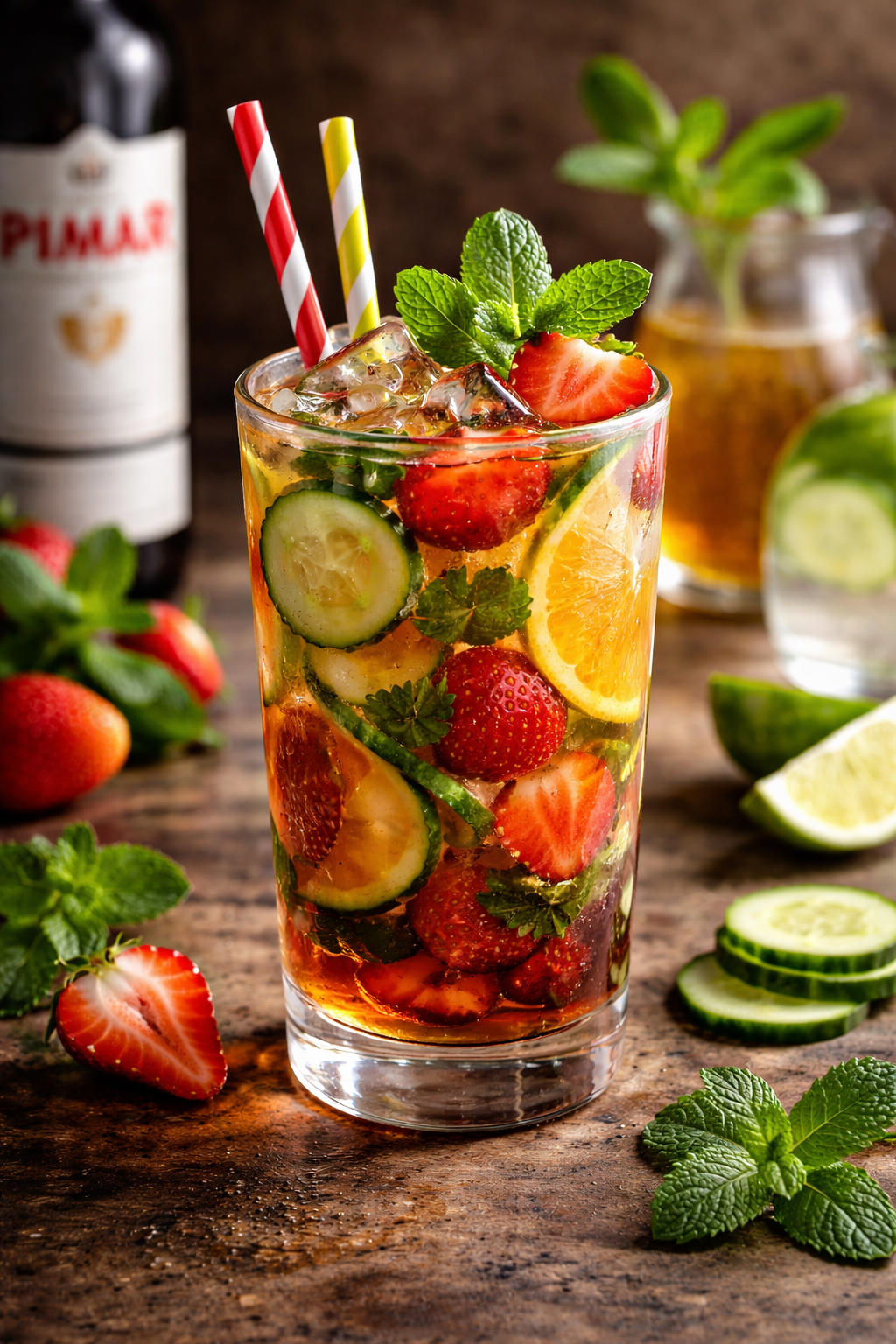
Pimm’s Cup is summer distilled into a glass. It feels social by nature, built for long afternoons, shared tables, and conversations that drift without urgency. This is not a cocktail designed to impress through technique. It succeeds through ease, familiarity, and rhythm.
Developed in nineteenth century London, Pimm’s Cup began as a house drink meant to be consumed slowly. The base liqueur is lightly spiced and gently bitter, designed to welcome fresh fruit, herbs, and a lengthening mixer. The result is cooling rather than cold, refreshing without sharpness.
In contrast to structured aperitifs like the Americano or bitter-driven classics such as the Negroni, Pimm’s Cup favours softness and sociability. It does not ask for attention. It encourages return.
The drink’s charm lies in its adaptability. Served tall and generously filled with ice, it changes as fruit releases aroma and dilution brings everything into balance. Each sip feels slightly different, which is precisely the point.
Ingredients
Pimm’s No. 1
Lemonade
Fresh fruit
Fresh herbs
Ice
Equipment Needed
Tall glass
Bar spoon
Ice
Method
Fill a tall glass generously with ice.
Add Pimm’s No. 1.
Top with chilled lemonade.
Add fresh fruit and herbs.
Stir gently to combine.
Serve immediately.
Notes
Pimm’s Cup is defined by proportion and freshness rather than precision. Fruit should enhance aroma, not overwhelm the drink. Herbs should stay bright and lightly handled. Overstirring flattens the experience.
Compared to sparkling aperitifs like the Aperol Spritz, Pimm’s Cup feels less formal and more communal. It is meant to be refilled, revisited, and shared.
Presentation plays a meaningful role. Colour, height, and clarity shape perception before the first sip. For thoughtful finishing touches, the art of garnishing offers practical guidance. Capturing the layered freshness of the drink is explored further in how to photograph cocktails for social media.
To continue exploring classic cocktails shaped by culture and occasion, visit The Drink Journal or learn more about the editorial philosophy behind these archives on our About page.