
Yakoboku, Kumamoto
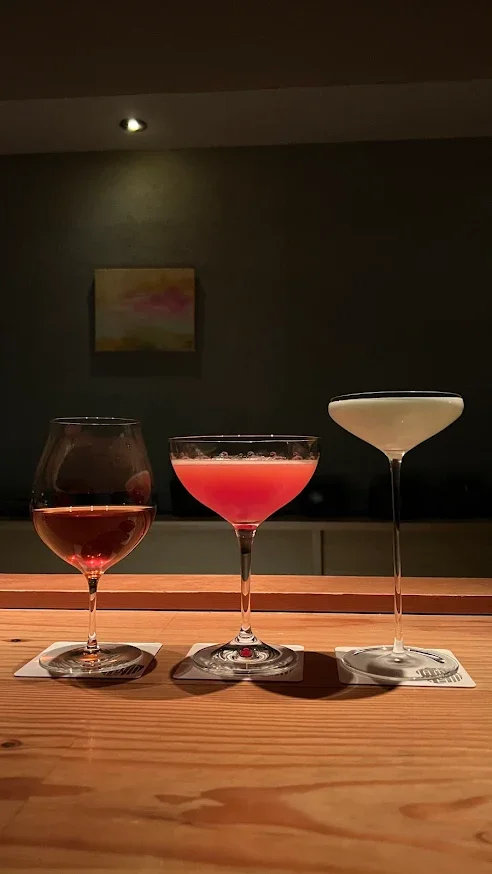
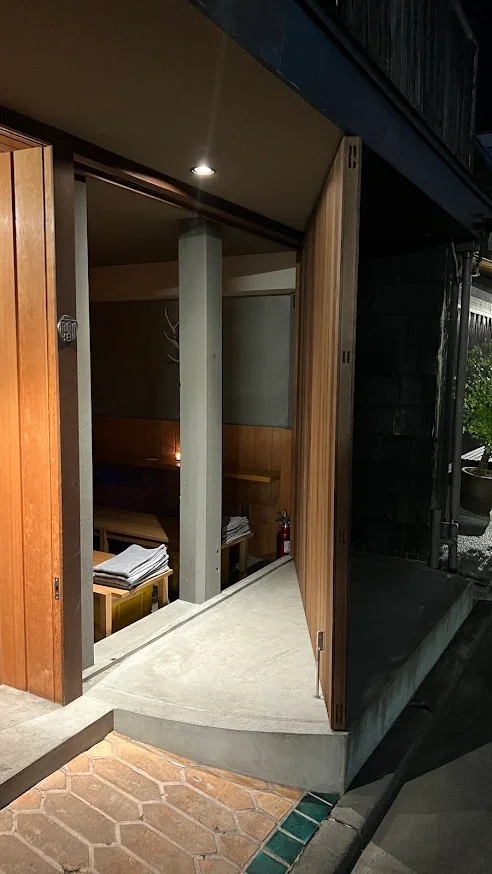
Inside the Experience
You don’t enter Yakoboku so much as slip quietly into it. Minamitsuboi-machi is still damp from the evening rain, lanterns reflecting off the asphalt, when you find the narrow wooden hallway that seems to lead nowhere. No signage. No invitation. Just silence, cedar, and a sense that you’re going somewhere deliberately hidden.
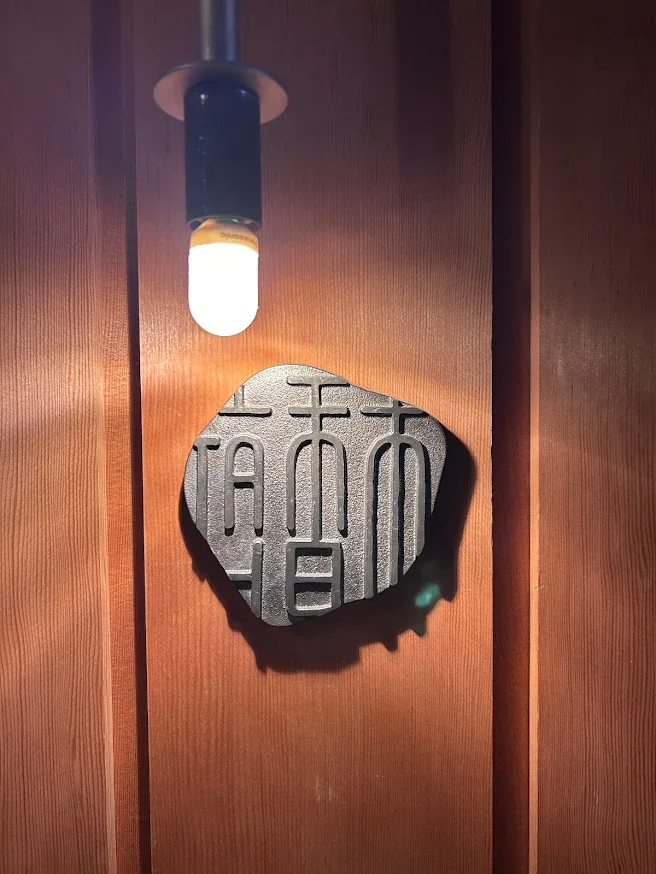
Halfway down the corridor, a faint symbol glints on the right. Slide the door open—and the world compresses.
Inside, Yakoboku feels like the inside of a handcrafted music box: camphor counter glowing softly under warm light, a lattice of old ryokan timber, and bartenders who move with that crisp, almost balletic efficiency Japan does better than anyone. Fifteen seats, no distractions, no clutter. It’s the kind of room where you lower your voice without being asked.
Shinya Koba stands behind the counter like he never left Singapore—precise, composed, quietly amused. Every gesture is deliberate: cutting ice, zesting citrus, measuring wax-infused spirits with the gentleness of someone threading a needle. Each drink lands in front of you like something carved rather than poured.
And somewhere between the first sip and the second, it hits you: Yakoboku is not a bar trying to be a bar. It’s a bar trying to be Kumamoto.
And succeeding.
What People Say Most Often
“The one bar in Kyushu worth a detour—maybe the entire trip.”
“Tiny, immaculate, deeply personal.”
“Local flavours done with global-level technique.”
“The cocktails feel like they belong to this city.”
“Hospitality so effortless, you forget you don’t speak Japanese.”
“I’m jealous of the people who live close enough to make this their regular.”
Editorial Snapshot
Overview
Yakoboku is a night-blooming kind of place—quiet, fragrant, and quietly transformative. Set inside a former ryokan in Kumamoto’s old entertainment district, it’s a fifteen-seat sanctuary built entirely around wood, warmth and intention.
Owner-bartender Shinya Koba, after years in Singapore, returned home to create a cocktail bar that didn’t borrow Tokyo trends or chase global gimmicks. Instead, Yakoboku is an homage to Kyushu: its farms, its craft traditions, its vanishing candle artisans, and its deep shochu culture.
There’s no concept wall, no thematic sermon. Just drinks with a point of view and a room that rewards people who pay attention.
The Experience
The door closes behind you and the tempo shifts. Conversations lower to murmurs; the room settles like freshly shaken snow.
The bar stretches out in front of you—long, clean, warm. Every detail feels intentional: the split-grain of the camphor; the clay cup that somehow stays cold to the touch; the quiet choreography between Koba and his team, handing tools back and forth like passing threads through a loom.
Guests speak softly. Locals nurse a favourite shochu highball. A couple from Tokyo watches their drinks being built, wide-eyed, as Koba explains the orchard where the shiranui citrus came from. A visiting cocktail nerd tries to prolong their stay by stretching out each sip.
Yakoboku isn’t flashy. It doesn’t need to be. It’s the rare kind of bar that lets the craft breathe. The longer you sit, the more the room reveals itself—like night jasmine releasing scent hour by hour.
Signatures & Standouts
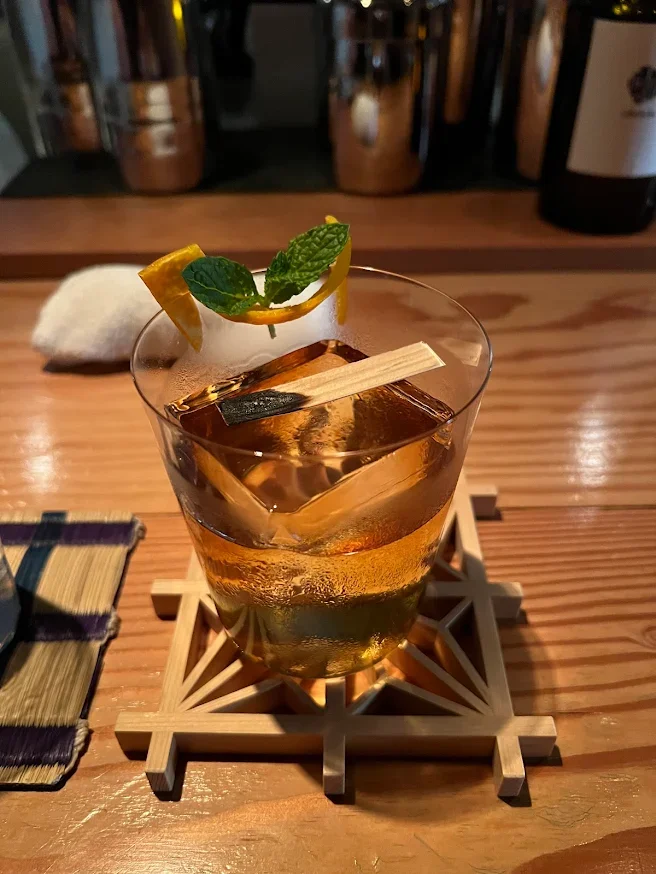
Kyushu Old Fashioned
The drink that defines the bar. A thoughtful build of:
Homemade amaro
Hinoki wood
Infused wax from Kumamoto candle makers
It’s smoky, aromatic, and deeply local—an Old Fashioned with roots instead of riffs.
Yakoboku (Signature)
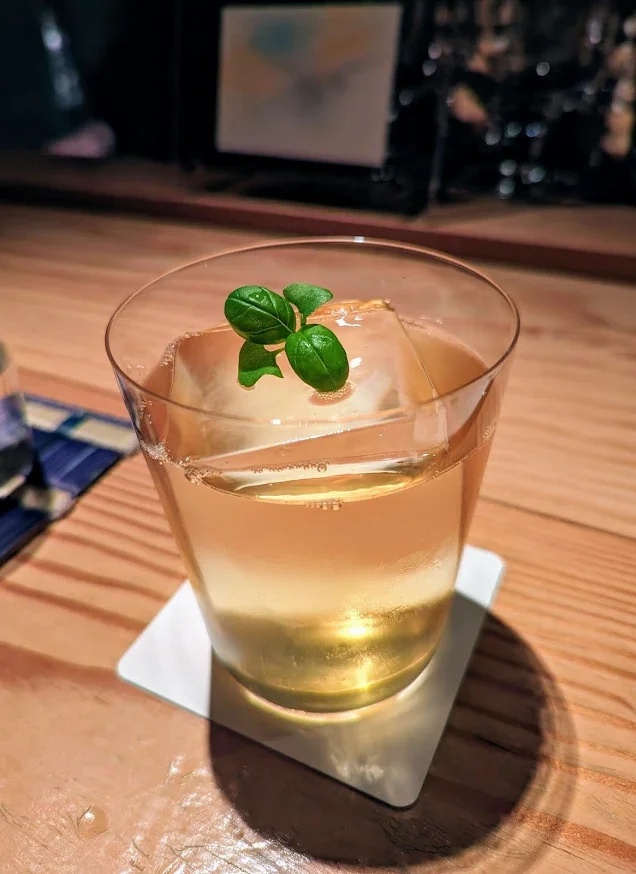
Named for the night jasmine. Lightly aromatic, quietly citrus-forward, served in a stone-textured pottery cup that stays cold from start to finish. A small mystery in your hand.
Beni
Guests describe it as “refreshing and rich,” “a perfect second drink,” and “the one you remember unexpectedly.” It feels like a polished gemstone—bright, clean, elegant.
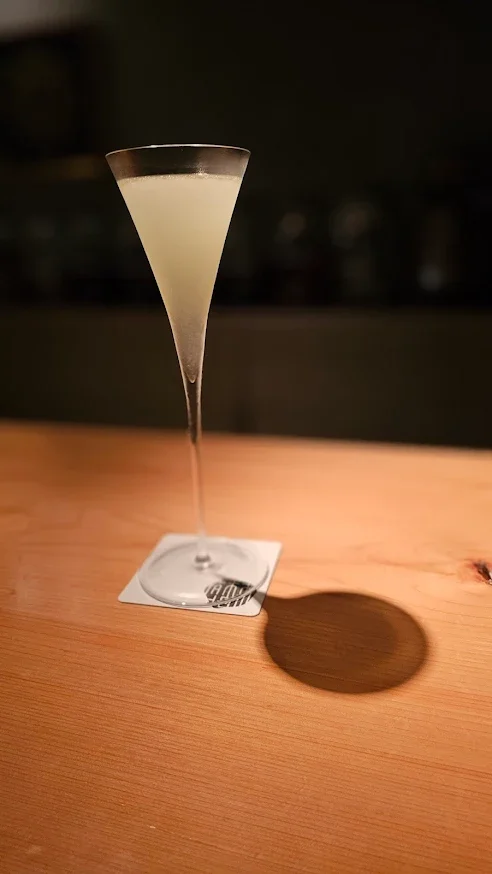
Phoenix Martini
A martini that surprises you before you can pretend to be unimpressed. A little zing, a whisper of sweetness, an exacting balance. One of the room’s quiet stunners.
Shochu Pistachio Espresso Martini
A low-ABV take that swaps vodka for Kyushu shochu and folds in pistachio for delicacy. Somehow both lighter and more characterful than the original.
Seasonal and Cult Favourites
Blue Painting
Tepache Machador
Yakoboku’s Last Word
And rotating serves built around whatever Kyushu is producing that month
Even the chocolates and grilled cheese get mentioned as “shockingly good.”
Why People Love It
A bar with a soul. Everything is done with care, nothing done for show.
Kyushu in a glass. You taste the region, not just the recipe.
A master at work. Koba’s technique is sleek, modern, and humble.
Atmosphere you can exhale into. Warm, slow, deeply calming.
Global-level cocktails in an unexpected city. The outlier that rewrites the map.
Hospitality that feels personal, not rehearsed. A rare balance of formality and friendliness.
Good to Know
Finding it:
A wooden hallway, almost empty. Walk in. The door on the right is the one you want. If you miss it, congratulations—you’ve had the authentic Yakoboku initiation.
Size:
Fifteen seats. When they’re full, they’re full. Arrive early, and hope for luck.
Reservations:
Inconsistent; mostly walk-in. Locals snag the early seats; travellers fill in the rest.
Price:
¥2,000–5,000 per person depending on how deep you let yourself go. Most people go deeper than planned.
Best for:
Solo drinkers, couples, and anyone who wants a bar that feels like a secret kept by the city itself.
Where to Find It
Yakoboku
5−21 1F 夜香木
Minamitsuboimachi, Chuo Ward
Kumamoto 860-0848, Japan
A bar that opens like a flower—quiet, understated, fragrant only after dark. For Kumamoto, for Kyushu, for cocktail lovers everywhere, Yakoboku is the night-bloom worth chasing.
