Tea Collection: Lishan High Mountain Oolong (Taiwan)
What is Lishan High Mountain Oolong?
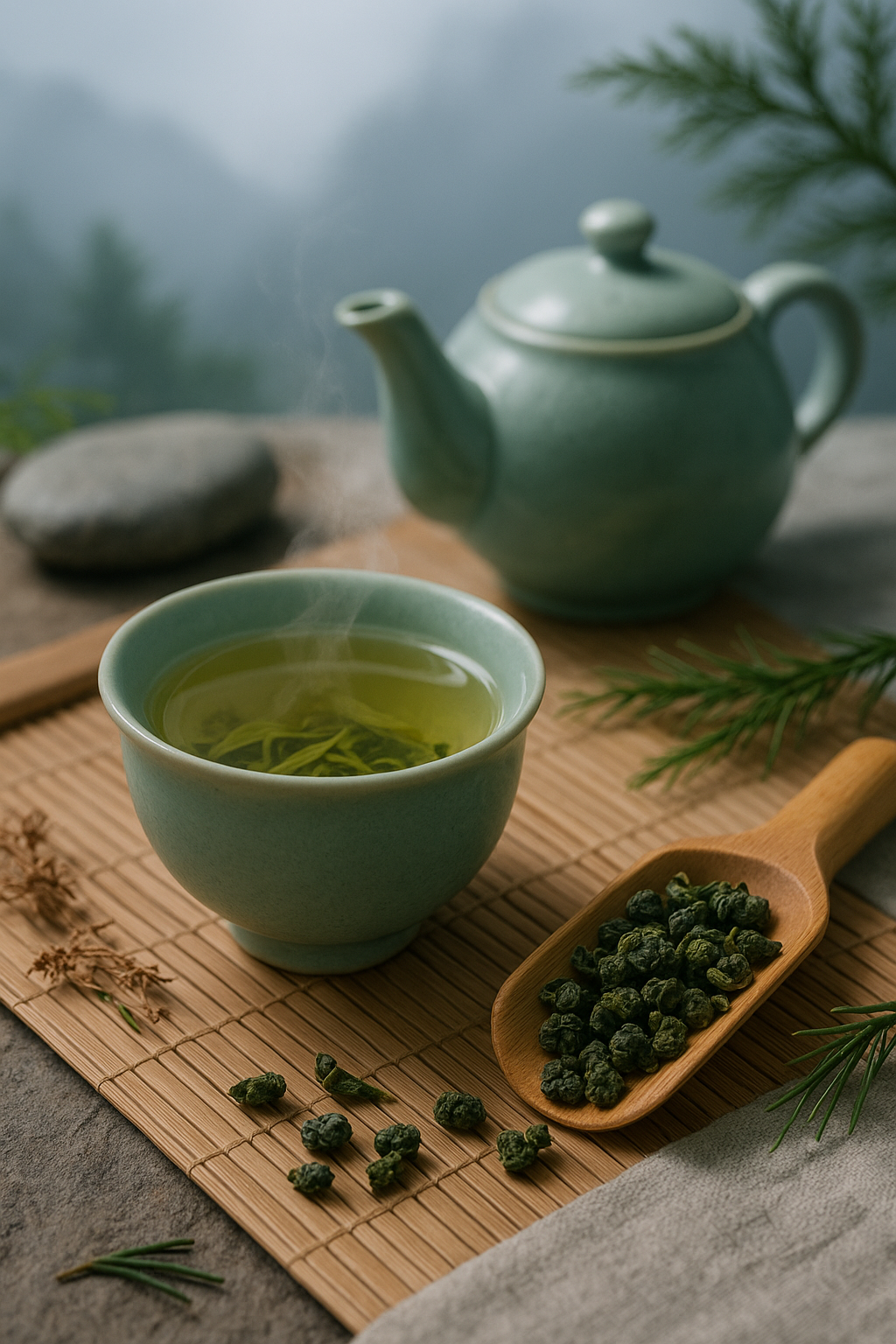
Lishan High Mountain Oolong is one of Taiwan’s crown jewels — a tea grown in the cold, thin air of梨山 (Líshān, “Pear Mountain”), where mist drifts through pine forests and tea gardens sit above the clouds. At altitudes often exceeding 2,000 meters, the tea trees grow slowly, concentrating their sugars and aromas into supple, jade-green leaves.
Brewed, the liquor glows pale gold.
The aroma is soft and buttery, with notes of orchid, alpine flowers, fresh cream, and a gentle sweetness that lingers long after the sip.
Where lower-elevation oolongs may lean toward roasted or fruity profiles, Lishan expresses altitude itself — crisp, airy, pure.
This style represents the pinnacle of Taiwan’s high-mountain tea tradition, a lineage that also includes iconic teas such as Dong Ding Oolong and the honeyed charm of Oriental Beauty. Together, they paint a portrait of a country whose oolong craftsmanship is both diverse and deeply refined.
To appreciate Lishan fully, it helps to contrast it with teas that highlight different interpretations of floral or aromatic expression. The perfumed delicacy of Jasmine Silver Needle shows how blossoms contribute fragrance externally, while Lishan’s fragrance comes entirely from the leaf and its environment. Meanwhile, teas such as Sencha reveal how different production methods — steaming vs. rolling and oxidation — transform the expression of a green, high-elevation harvest.
And for readers who want to explore oolongs within a larger cultural context, our guides — The Art of Asian Tea and The Modern Tea Lover’s Guide — illuminate the traditions that frame teas like Lishan’s ethereal elegance.
Lishan High Mountain Oolong is a tea that tastes like altitude — clean, bright, endless.
Ingredients
6 g Lishan high mountain oolong
120–150 ml water (90–95°C)
Equipment Needed
Gaiwan or Taiwanese teapot
Kettle
Fairness pitcher (optional)
Tasting cup
Method
Heat your vessel and cup.
Add the rolled Lishan leaves.
Rinse quickly (1–2 seconds) to awaken the aroma.
Steep the first infusion for 20–30 seconds at 90–95°C.
Decant fully into a cup.
Increase steeping time by 5–10 seconds with each infusion.
Expect 6–8 infusions — high mountain oolongs are beautifully persistent.
Notes
Lishan’s character shifts subtly across infusions.
The first brings fresh alpine florals; the second reveals creaminess; later steeps uncover soft vegetal undertones and mineral clarity.
For drinkers exploring Lishan in a comparative tasting, pairing it with Tie Guan Yin offers insight into how roasting and oxidation create structure and warmth. Meanwhile, the fruity depth of Lychee Black Tea contrasts beautifully with Lishan’s cool, mountain-born elegance.
To refine technique and bring out Lishan’s full aroma, it may be helpful to review How to Choose the Right Brewing Method — especially when experimenting with vessel shape and water temperature.
Lishan High Mountain Oolong is serenity in motion:
clouds passing over ridgelines, pine forests whispering below, and the quiet patience of leaves shaped by cold air and altitude.