
Tea Collection: Shou Mei (China)
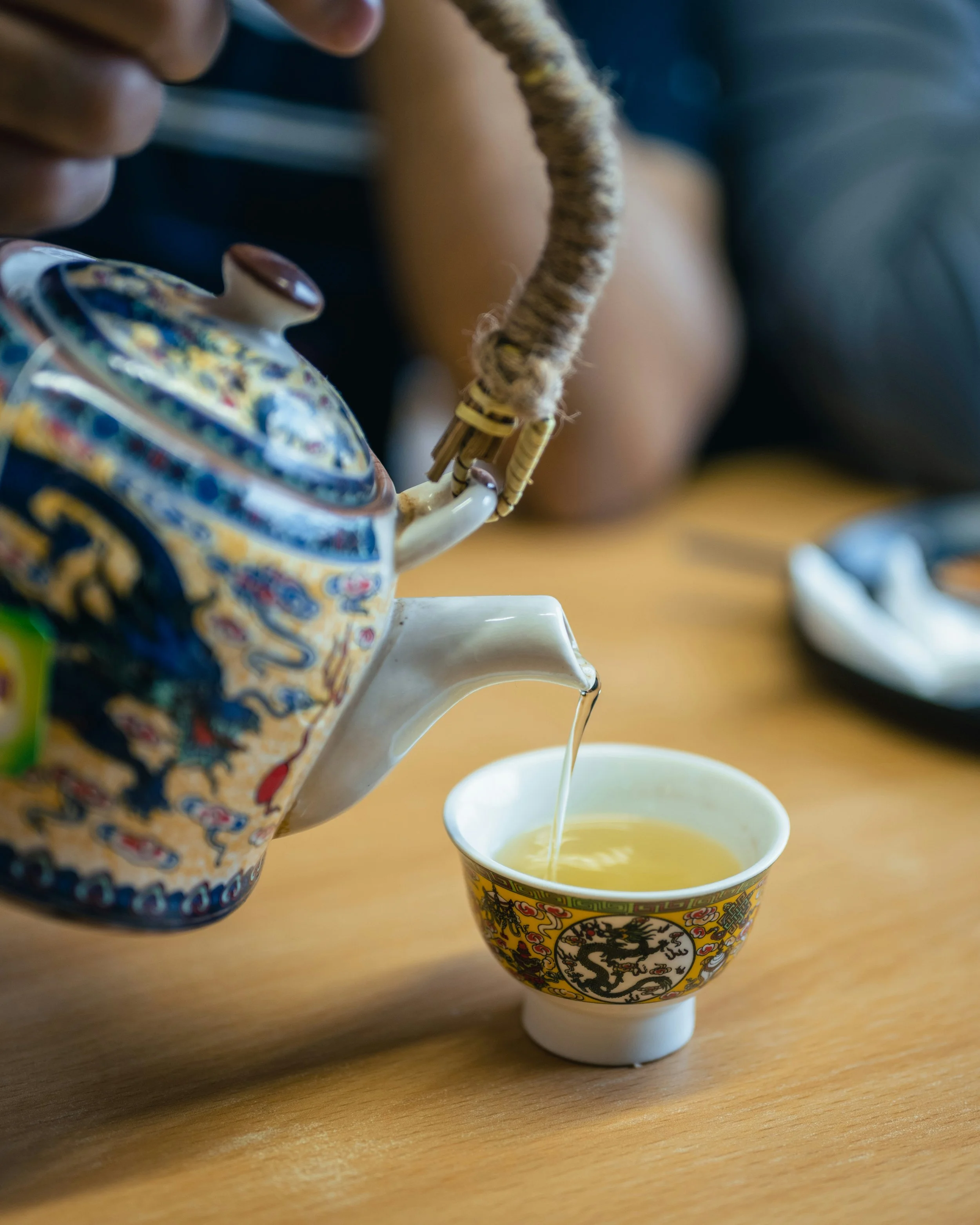
Shou Mei is the quiet, late-season white tea that carries the warmth of the sun in its leaves. Harvested from mature buds and larger leaves, it sits deeper on the spectrum than Silver Needle or Bai Mudan, offering a fuller body and a gentle oxidation that leans into honey, wood, and dried fruit. It is the tea you drink when you want stillness, but not silence — a cup that feels aged in both patience and light.
In Fujian, where traditional white teas are celebrated like poetry, Shou Mei is often enjoyed for the way it softens across the afternoon. Its aroma is mellow and comforting, with a warmth that drifts into the room like dry autumn leaves on a table. Unlike the ethereal delicacy of Jasmine Silver Needle , Shou Mei embraces its age and size, bringing more depth, sweetness, and a distinctly woody character.
It is a tea shaped by time rather than haste. Brewed gently, the liquor turns amber-gold — an echo of Shou Mei’s name, “Longevity Eyebrow.” It feels familiar yet textured, offering small layers of jujube, pear skin, and soft bark. Shou Mei often becomes the bridge for drinkers moving from elegant white teas toward the earthy world of pu-erh, much like the way our Chrysanthemum Pu-erh Blend introduces floral softness to darker brews .
For those exploring China’s white tea lineage, Shou Mei is the comforting chapter — grounded, unfussy, and generous with warmth.
Ingredients
3–4 g Shou Mei
180–220 ml water (90–95°C)
Equipment Needed
Gaiwan or teapot
Kettle
Strainer (optional)
Tasting cup
Method
Warm the gaiwan or teapot.
Add the Shou Mei leaves.
Pour hot water over the leaves.
Steep for 1–2 minutes for the first infusion.
Strain and serve.
Increase steep time slightly with each subsequent infusion.
Notes
Shou Mei benefits from slightly hotter water than delicate white teas.
Its robust leaves offer 4–6 infusions, each sweeter than the last.
For a cultural deep dive into traditional brewing, explore The Art of Asian Tea on TDJ .
If you enjoy the deeper, roasted edges of this cup, you may also appreciate Tie Guan Yin and its warm, gentle complexity .
Drinkers who prefer sweeter herbal tones may enjoy transitioning to Rooibos Vanilla, a caffeine-free alternative with similar warming notes .
