Coffee Classics: Singapore Kopi (Singapore)
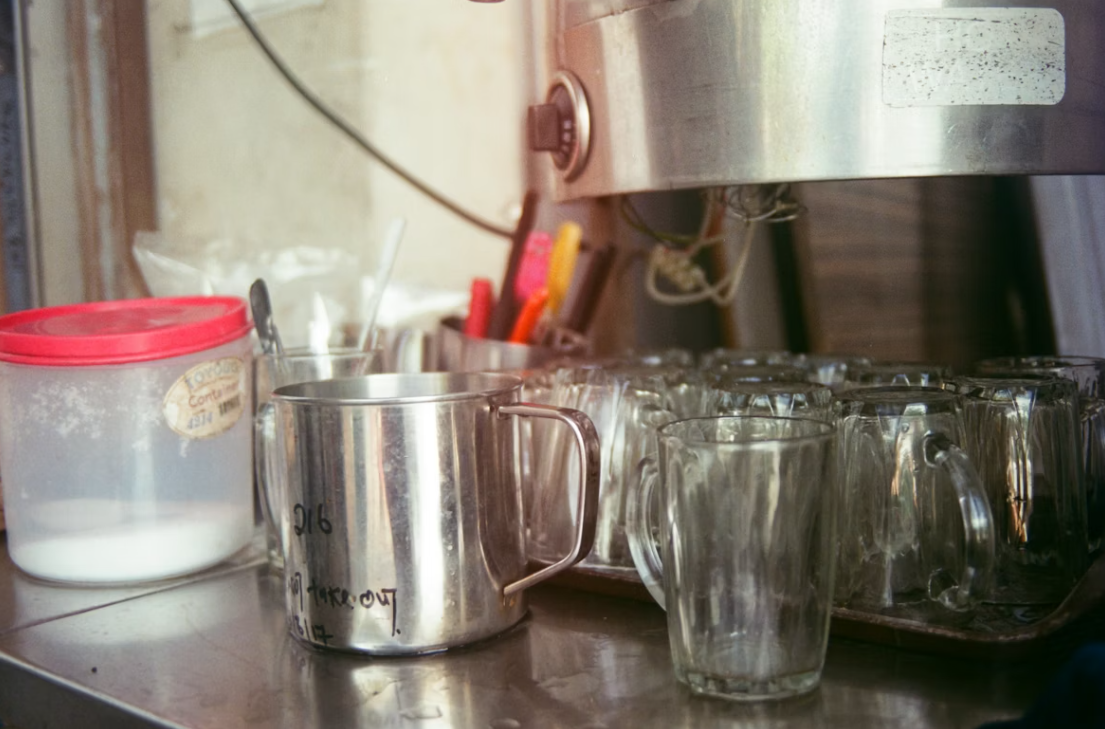
Singapore Kopi is a cornerstone of the city’s culinary identity. You find it in hawker centres, kopitiams, corner stalls, and old neighbourhood shops where the smell of roasted beans and caramelised sugar drifts into the morning air. Kopi is bold, sweet, generous, and comforting. It is a drink that reflects the rhythm of Singapore’s daily life, from early market breakfasts to quiet afternoon breaks.
Traditionally, kopi beans are roasted with sugar and margarine, creating a dark, glossy finish and a flavour profile unlike Western arabica-forward coffees. The result is thick, aromatic, and full-bodied. The brew is prepared using a long, sock-like cloth filter called a kopi sock, which gives the drink its smooth texture and deep colour. The way kopi is strained and re-poured resembles the calm, attentive movements found in places like Glasshouse Coffee at the Palace Gardener, where the quiet flow of water, steam, and light shapes the atmosphere.
The base drink, simply called “kopi,” contains condensed milk that provides both sweetness and creaminess. Variations arise from different combinations of milk, sugar, and thickness. A “kopi kosong” leaves out all sugar and milk. A “kopi siew dai” uses less sweetness. A “kopi gao” is strong, concentrated, and robust. Understanding how roast levels and brewing choices affect flavour is easier with guides like A Beginner’s Guide to Specialty Coffee, which provide context for how kopi’s preparation contrasts with espresso traditions.
Kopi culture is communal. It thrives in lively spaces where clatter, conversation, and quick movements shape the moment. Yet it can also be enjoyed quietly, much like the slower, more contemplative spaces found in Ogawa Coffee. No matter the setting, kopi is warm, familiar, and grounding, a small cup that carries the comfort of routine.
Thick aroma rising.
Milk swirling into darkness.
A flavour shaped by the city.
Ingredients
For one strong serving:
2 tablespoons Singapore-style kopi grounds (dark roast with sugar-roasted beans)
180 to 200 ml hot water
1 to 2 tablespoons condensed milk
Optional ingredients based on style:
Evaporated milk (for kopi “C”)
No milk (for kopi “O”)
Less sugar (for kopi “siew dai”)
Equipment Needed
Essential
Kopi sock (cloth filter)
Produces kopi’s signature smooth body.
Long-handled pot or stainless kopi pot
Designed for pouring from height to aerate the brew.
Stove or hot plate
Steady, medium heat works best.
Optional
Thermometer
Helps maintain water between 90 and 96°C.
Secondary pot
For reheating or adjusting strength.
Method
1. Heat the Water
Bring water to just below boiling.
Ideal temperature is around 95°C to extract kopi’s dark, caramelised flavours without burning the grounds.
2. Add Grounds to the Kopi Sock
Place the kopi sock inside the pot and add the grounds.
Shake gently to ensure an even layer so the water passes through cleanly.
3. Pour Water Through the Sock
Slowly pour hot water through the kopi sock.
Let the liquid collect in the pot below, then lift the sock and repeat the pour.
This repeated pouring helps aerate the coffee and creates kopi’s distinctive smoothness.
4. Adjust Strength
Taste a small spoonful.
If you want a stronger brew, pour the liquid back through the grounds once more.
If milder, add a bit of hot water.
5. Add Condensed Milk
Place 1 to 2 tablespoons of condensed milk in the bottom of a cup.
Pour the hot kopi over it and stir gently until the drink turns a rich, deep caramel colour.
6. Serve Immediately
Serve hot.
Kopi thickens as it cools, so enjoy it fresh for the best flavour.
Notes
Kopi grounds differ from Western-style beans. They are roasted with sugar and margarine, which gives the brew body and sweetness.
Pouring from height helps aerate the coffee and cool it slightly before serving.
For an immersive brewing comparison, How to Choose the Right Brewing Method highlights how different extraction methods influence flavour.
Kopi pairs beautifully with kaya toast or soft-boiled eggs, classic Singapore breakfast staples.
The balance between condensed milk and coffee is key. Too much milk hides the caramelised flavour. Too little makes the drink overly sharp.