Cedele Becomes “Sidello” Before Landing in the B-Tier
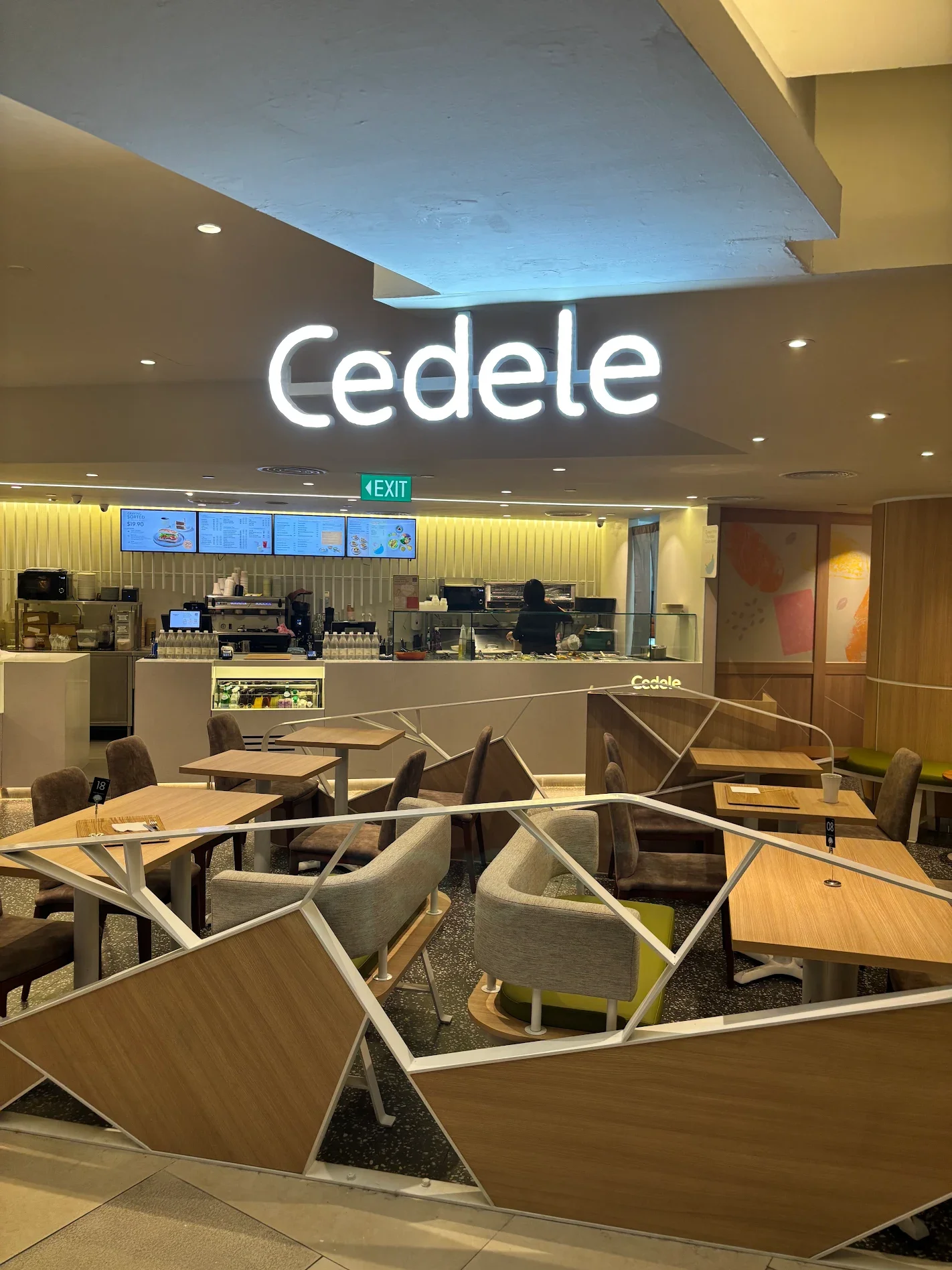
Episode 21 of the World’s Best Kopi search begins with what is rapidly becoming a Geowin tradition.
She cannot pronounce the name of the cafe.
This time, the victim is Cedele.
Cedele became “Cadelle.” Then “Cadeli.” Then “Kadella.” Somewhere along the way, we may even have heard something approaching “Kadello.”
At The Drink Journal, we have learned not to interrupt this process. Sometimes the best approach is simply to let Geowin work through every possible combination of consonants and vowels until something sticks.
This time, however, she decided to seek professional assistance.
She walked up to the counter and asked the staff how they pronounce the name.
Their answer sounded like:
“Se-deli.”
So that settles it. The Drink Journal will henceforth be calling it Sedeli.
It came from the staff. It must be correct.
Hopefully.
Geowin Attempts Mandarin—and Investigative Journalism
The ordering process gave us another unexpected moment when Geowin approached the counter speaking Mandarin to order her iced latte.
Then, apparently still bothered by the name, she asked the staff directly how the cafe should be pronounced.
This may represent the most investigative work conducted in the World’s Best Kopi series so far.
The answer did not stop her from generating several more versions of the name throughout the episode, but at least an official pronunciation had now entered the record.
Eventually, Geowin ordered an iced latte for S$7.50.
That puts Cedele—or Sedeli, Cadeli, Sidello, or whatever we are calling it by the end of this article—toward the more expensive side of the iced coffees featured in the series.
The drink arrived with another familiar feature.
A paper straw.
“Very Environmentally Friendly, Very Nice, Very Demure”
Geowin immediately pointed out the paper straw.
Her assessment?
“Very environmentally friendly, very nice, very demure.”
We will allow that statement to stand without further analysis.
Then came Taste Test Round One.
After drinking the latte, Geowin’s reaction was considerably less enthusiastic than her commentary on the straw.
The coffee was fine.
And that was essentially the problem.
“Okay, regular coffee you can get anywhere,” she said.
There was “nothing really special about it.”
It was average.
Not offensive. Not undrinkable. Not something that produced the same immediate “why is it so bland?” reaction that Tiong Bahru Bakery managed in Episode 20.
But there was also very little about Cedele’s iced latte that persuaded Geowin it deserved to stand apart from an ordinary cafe coffee.
She gave the original drink 4.5 out of 10.
For more stories following Singapore’s cafes and drinking culture, explore the wider editorial coverage at The Drink Journal.
Now, Time for the Fun
A 4.5/10 leaves plenty of room for improvement.
So out came the familiar white bottle.
Geowin added Kopi-O and went back for another taste.
Throughout World’s Best Kopi, this experiment has been particularly useful with coffees that Geowin describes as average rather than actively unpleasant. A drink with no obvious major flaw can sometimes benefit considerably from simply having another flavour introduced.
The Drink Journal has explored what sets Kopi-O apart in the wider coffee-liqueur category, and Cedele provides another example of the recurring pattern.
Better Balance Between Sweetness and Bitterness
The difference was noticeable, although not dramatic.
Geowin described the second version as “a little bit better.”
More specifically, she noticed a better balance between the sweetness and bitterness of the drink.
That is an important distinction from simply making the latte sweeter. The Kopi-O appears to have added enough additional flavour to give the drink more structure without overwhelming what was already there.
The original coffee had been average.
The modified coffee was still fairly ordinary—but better balanced and slightly more interesting.
That improvement raised Geowin’s score from 4.5 to 5 out of 10.
Readers interested in why the bottle keeps appearing throughout the series can also explore why Kopi-O is emerging as Singapore’s defining coffee liqueur.
A Solid B-Tier for “Sidello”
And that brings us to the final verdict.
5 out of 10.
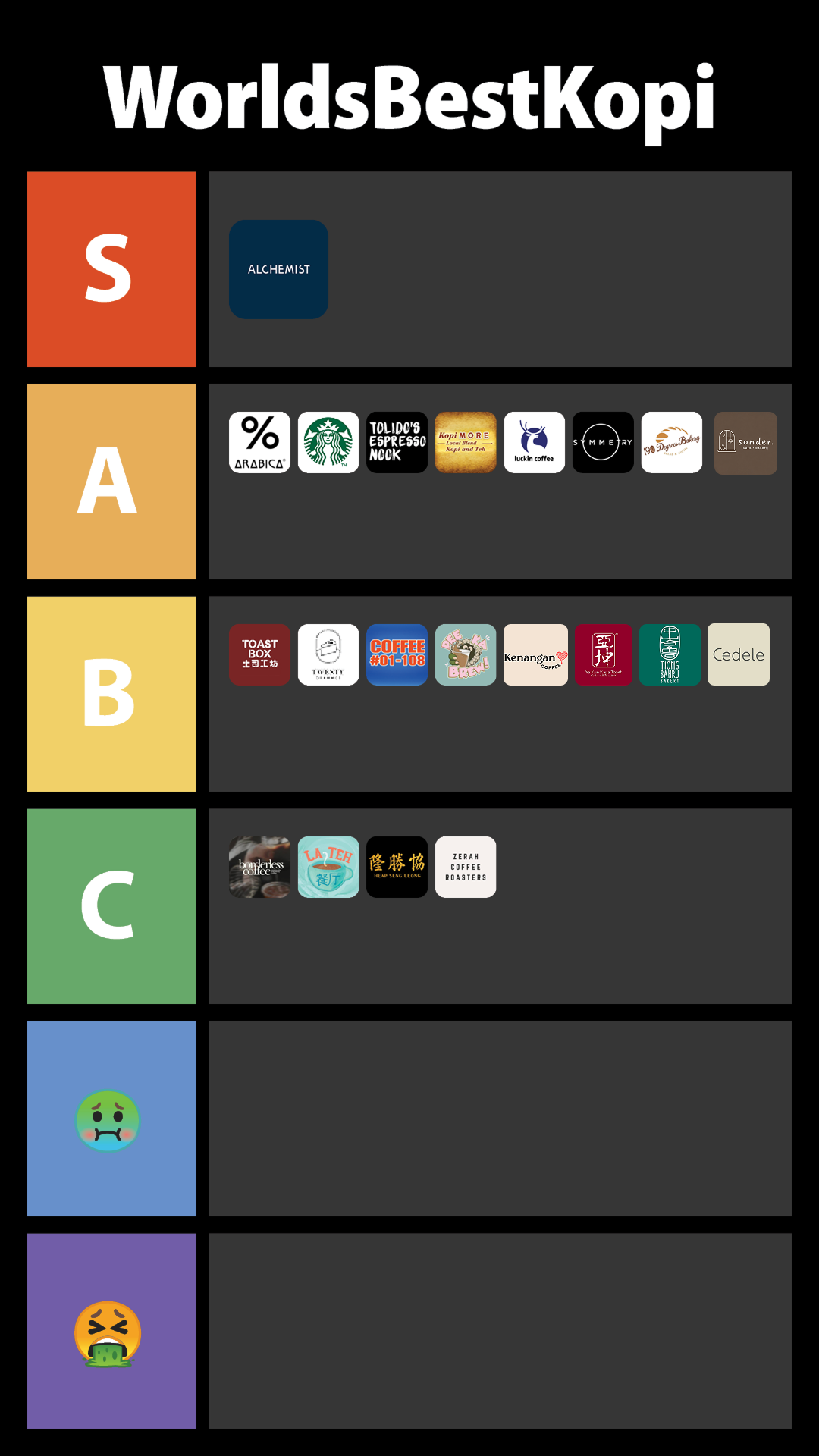
Geowin places Cedele firmly into the B-tier of the World’s Best Kopi Tier List.
Or, as the episode eventually gives us:
A solid B-tier for Sidello.
At this stage, attempting to preserve the cafe’s actual name may be a lost cause.
The ranking itself makes sense. Cedele’s iced latte was not bad enough to collapse into the lower tiers, but there was nothing sufficiently distinctive about the original drink to move it toward the top of the list either.
The Kopi-O addition improved the balance and rescued another half-point, but this remains very much a middle-of-the-pack coffee.
The Search—and Pronunciation Lessons—Continue
Episode 21 ends with Cedele sitting comfortably in the B-tier.
The iced latte costs S$7.50, delivers a perfectly acceptable everyday coffee experience and improves slightly once Kopi-O introduces more balance between sweetness and bitterness.
For more on the bottle behind the experiment, read The Drink Journal’s editorial look at Kopi-O in modern drinks.
Twenty-one coffees down.
Seventy-nine remain.
And perhaps by Coffee #100, Geowin will have learned how to pronounce Cedele.
We make no promises.